What Insurance Should a CNC Machine Rigger Actually Carry?
Most owners assume "the rigger has insurance" is enough, without realizing there are two distinct coverages involved. Here's the gap that actually matters.
All guides
What Insurance Should a CNC Machine Rigger Actually Carry?
Most owners assume "the rigger has insurance" is enough, without realizing there are two distinct coverages involved. Here's the gap that actually matters.
Finding a Qualified CNC Machine Rigger: What to Check Before You Hire
A machine weighing several tons, worth six figures, isn't something to hand off to whoever answers the phone first. Here's what actually matters when vetting a rigger.
Finding a Qualified CNC Repair Technician: What to Check and Ask Before You Hire
How to match a technician to your brand, control and symptom, which questions to ask before and after the repair, and when to skip the repair.

Independent CNC Repair Tech vs. Manufacturer Service: Which Should You Call?
Both can do excellent work, but they're genuinely different experiences with different tradeoffs worth understanding before you pick up the phone.

Rigging Mistakes That Damage CNC Machines (And How to Avoid Them)
A machine can run perfectly for years and develop expensive problems overnight because of a single bad rigging job. Here's what actually causes it.
Signs Your CNC Machine Needs a Repair Tech, Not Just Routine Maintenance
Some problems go beyond what regular upkeep can address. Knowing the difference saves you from ignoring a real issue too long.
My New Machine Shop Failed: What Do I Do With Barely Used Equipment?
How to value, document and sell low-hour equipment after a young shop closes, with a six-week timeline.
The 2026 Machine Tool Market: What's Actually Driving Value Right Now
Order value just hit a record high while unit sales keep falling. Here's what that split actually means for what your machine is worth today, and where this market is headed next.

Retiring and Selling Your Shop's Equipment: Depreciation Recapture and Capital Gains Basics
Selling decades of depreciated equipment at retirement can trigger tax consequences owners don't expect. This isn't tax advice, but here's the general shape of what to ask your accountant about.
Retiring With No One to Take Over the Shop: What Happens to Your Equipment
You built this shop over decades and now it's time to stop, but there's no son, daughter, partner, or employee ready to take the keys. Here's how owners in that exact spot actually work through it.
Sell the Business or Just Liquidate the Equipment? What Retiring Shop Owners Need to Decide First
These are two very different transactions, with different buyers, different timelines, and very different amounts of your own involvement after the sale. Here's how to tell which one actually fits your situation.
How Much Is 30 Years of Shop Equipment Actually Worth When You're Ready to Retire
Original purchase price and sentimental value don't set market value. Here's how equipment you've owned for decades actually gets priced when you're ready to sell.
Auction Sites vs. a Direct Buyer: Getting Real Value for Your School's Retired CNC Machines
GovDeals and PublicSurplus are the default for a lot of institutions, but they're not always the best return on a specific piece of CNC equipment. Here's how to weigh the two.
What to Do With Your CNC Program's Surplus Equipment: A Guide for Colleges and Vocational Schools
Aging or outgrown CNC lab equipment is a different disposition problem than a shop closing down. Here's how to think through it, budget cycles, grant restrictions, and all.
Donating Your Old CNC Equipment to a Trade School vs. Selling It: Which Is Actually Worth More?
A tax deduction sounds appealing until you actually run the numbers against a cash sale. Here's how to compare the two honestly before deciding what happens to a machine you're retiring.
Grant-Funded CNC Equipment: What Your Program Can (and Can't) Do When It's Time to Upgrade
If federal or state grant dollars paid for your lab equipment, there are usually rules about what happens when you're ready to replace it. Here's what to check before you sell, donate, or scrap anything.
An Executor's Guide to CNC Equipment in an Estate: Duties, Deadlines, and a Fair Valuation
As executor, you have a fiduciary duty to get fair value for estate assets, including machinery you've probably never had to price before. Here's what that responsibility actually involves.
A Family Member's Guide to Selling a Deceased Relative's Machine Shop Equipment
If you don't know a VMC from a lathe, that's fine. You don't need to become an expert overnight to get a fair deal.
Should Your Family Keep the Shop Running or Sell the Equipment? Deciding After a Death in the Family
There's no single right answer here, but there is a clearer way to think through it than making the call in the middle of grief.
What Happens to a Machine Shop's Equipment When the Owner Dies
Losing a family member is hard enough without also being responsible for a shop full of machinery you may not understand. Here's what actually happens next, and what your options are.
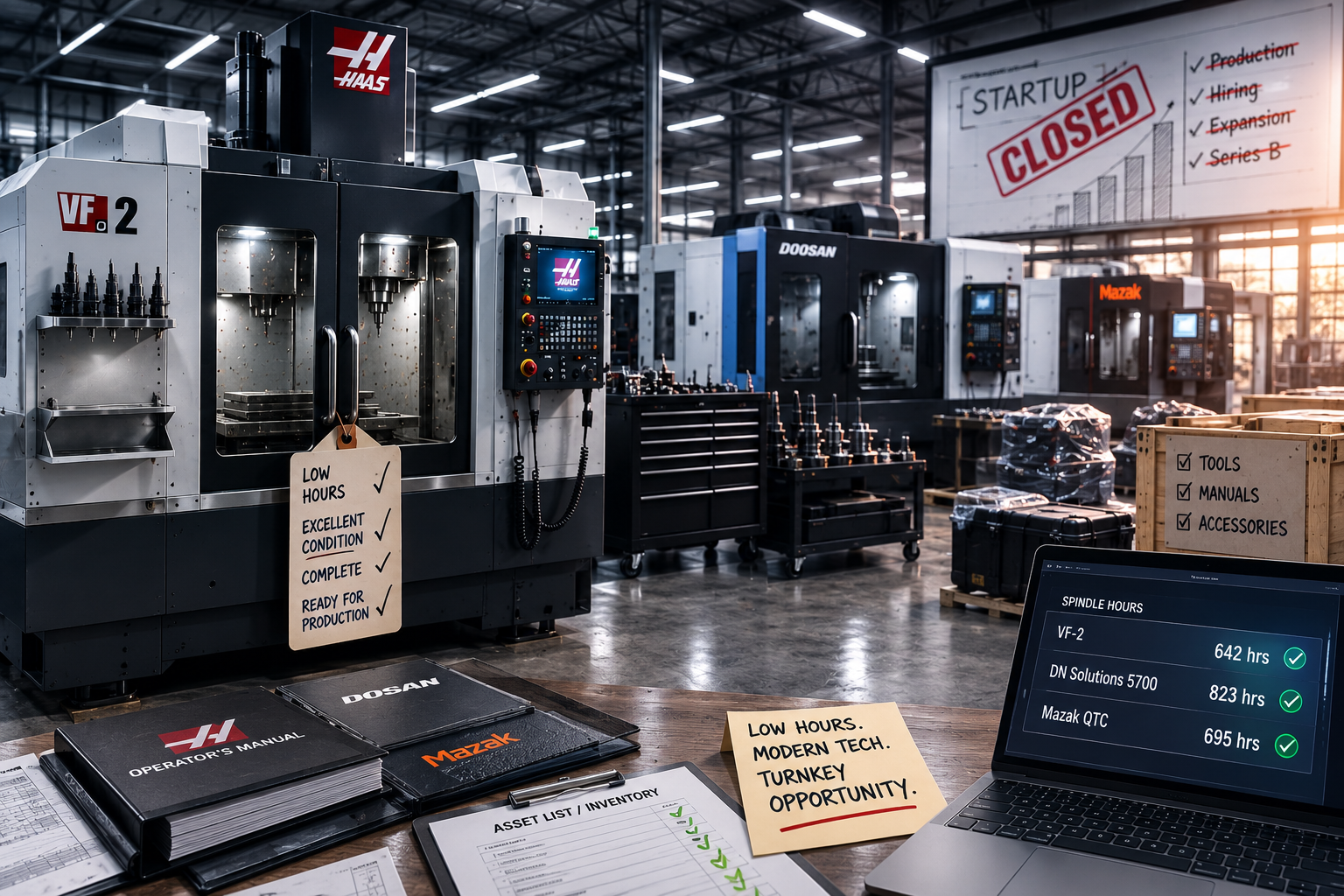
Low-Hour CNC Equipment From a Closed Startup Shop: Why It's Worth More Than You Think
A machine that ran for a year or two before the doors closed isn't the same used machine as one that's been in production for a decade. Here's how much that actually matters, and how to prove it to a buyer.
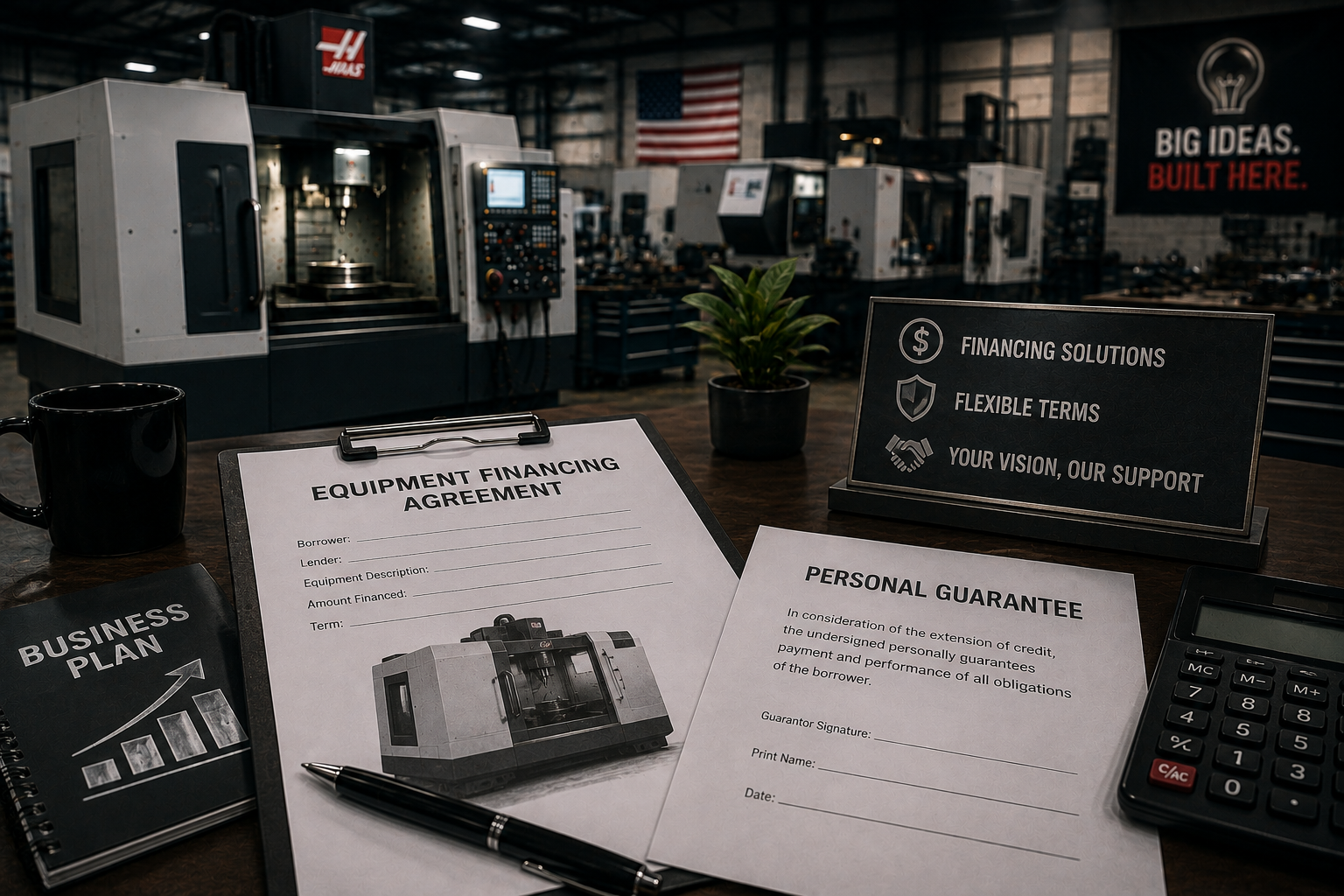
Startup Equipment Financing and Personal Guarantees: What You're on the Hook for When the Shop Doesn't Survive
Most new-shop equipment loans come with a personal guarantee attached, whether you registered that at signing or not. Here's what that actually means once the business doesn't survive.

Machine Select vs. Machine Tool Search: Which One Should You Use to Find Used CNC Equipment?
There's more than one way to shop for used machine tools online now. Here's how Machine Select and Machine Tool Search actually work, and which one fits how you buy.

Asset Recovery vs. Special Assets: Who Handles Machine Tool Collateral at Your Institution
Different institutions call this function different things. Here's what Asset Recovery and Special Assets actually each handle, and how they work together on a machine tool disposition.
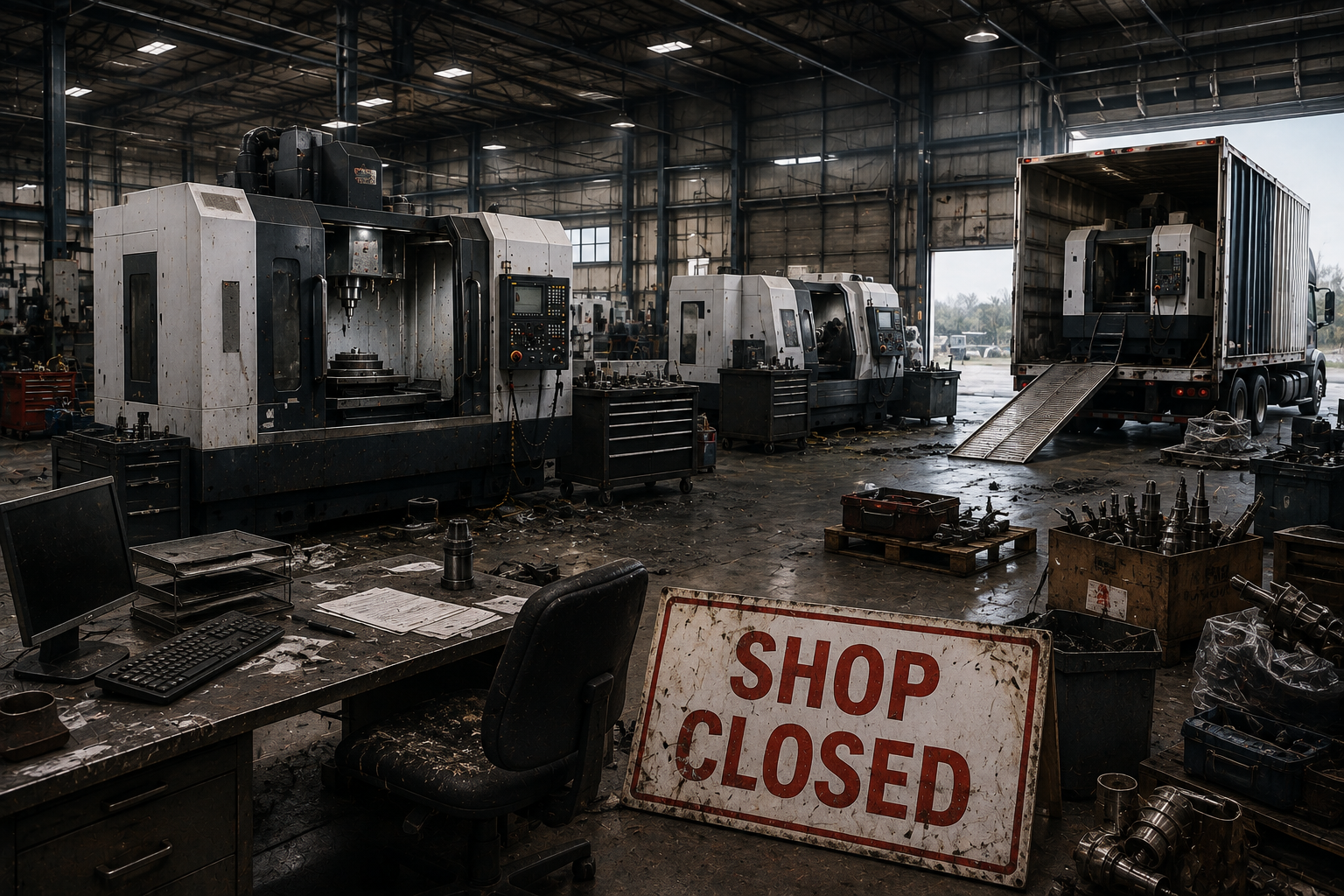
Your New Machine Shop Didn't Make It. Here's What Happens to the Equipment Now
Closing a shop that never made it past year one or two is a different problem than a normal wind-down. The equipment is usually newer, more heavily financed, and the clock is often already running.
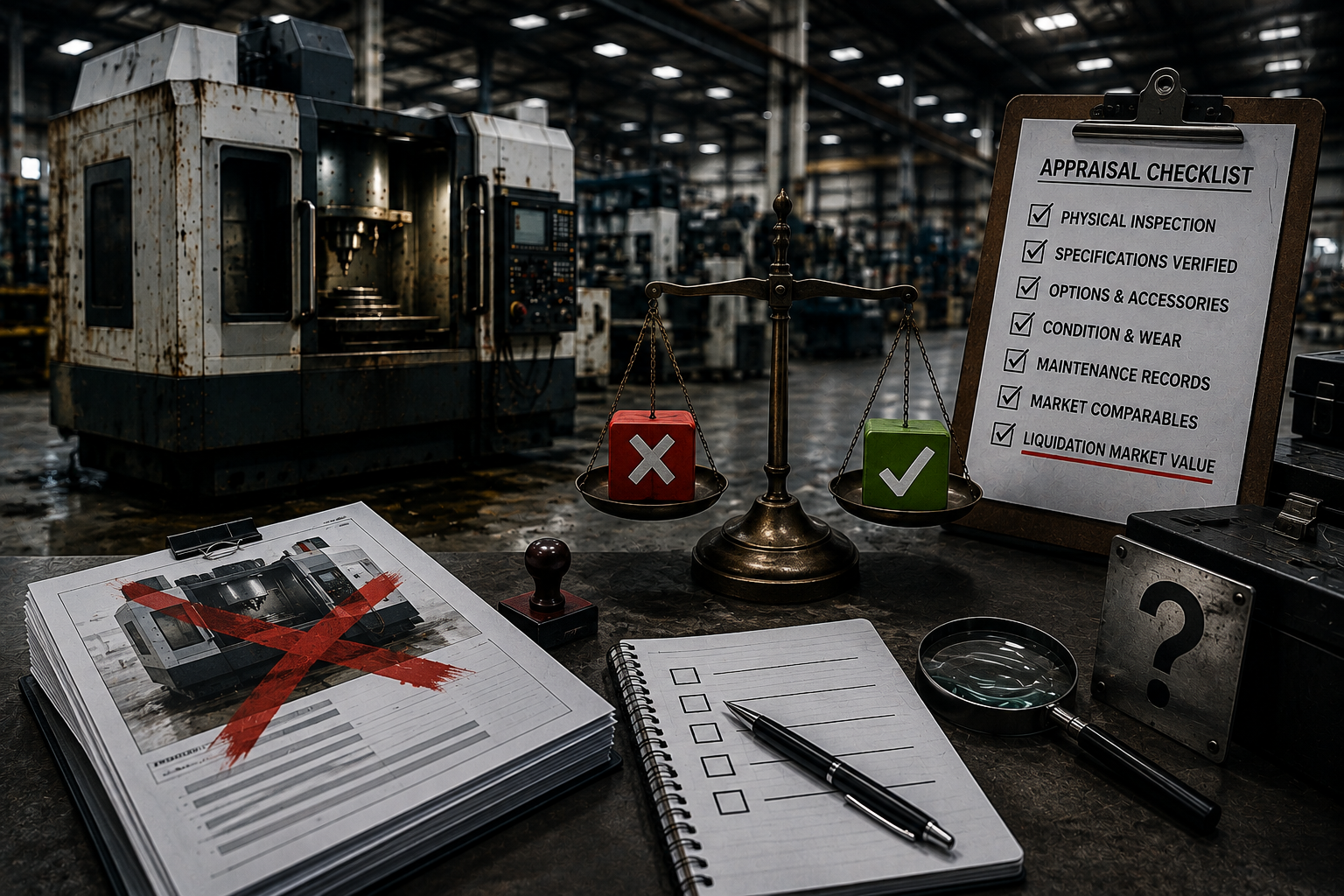
Why Machine Tool Collateral Appraisals Go Wrong (And What Lenders Should Ask For)
A weak appraisal doesn't usually fail on the final number, it fails on what went into getting there. Here's where machine tool appraisals commonly go wrong, and what to ask for instead.
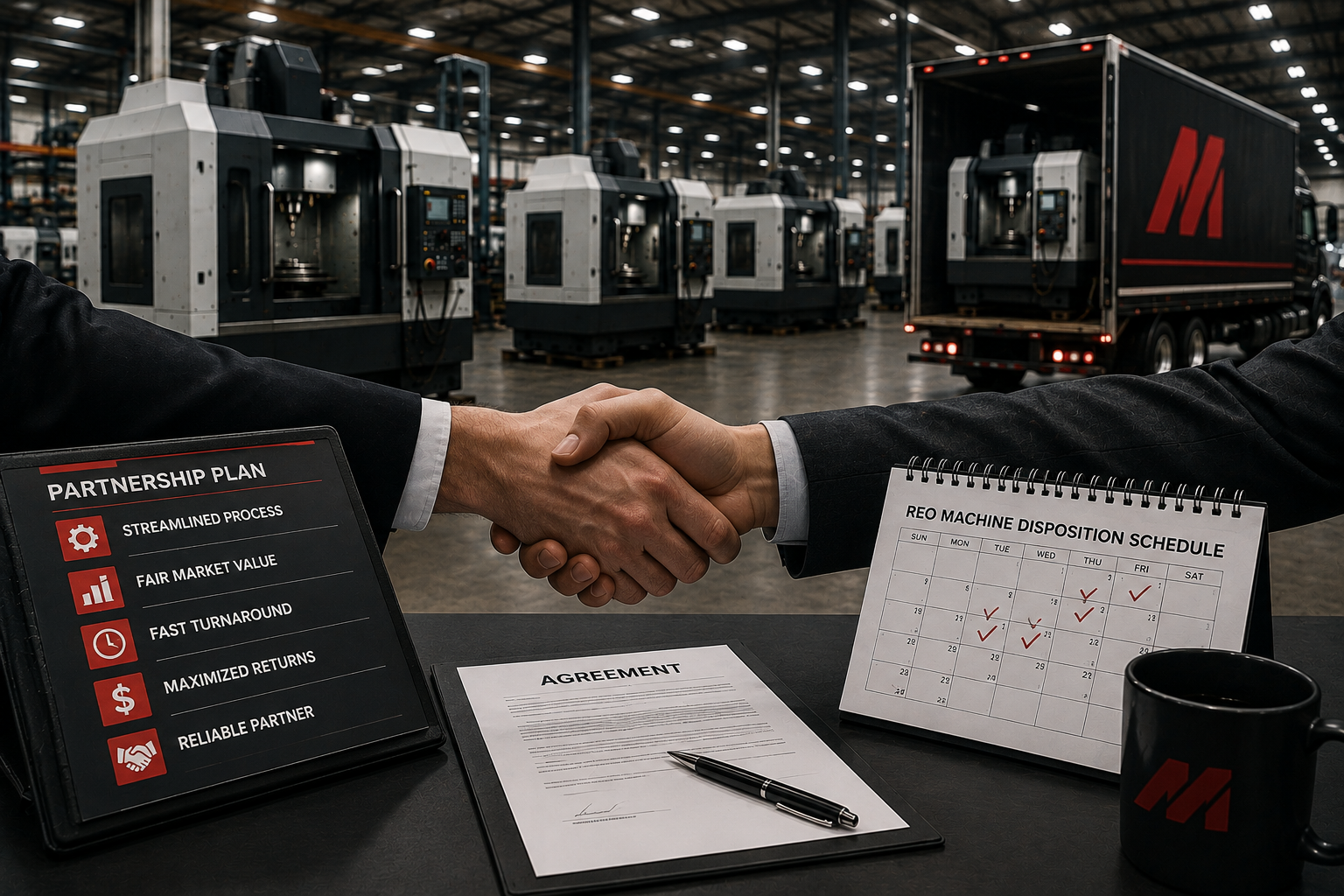
Setting Up a Standing Remarketing Relationship for Recurring Machine Tool Repossessions
If machine tool collateral crosses your desk a few times a year, not just once, re-vetting a new vendor every single time wastes real time. A standing relationship fixes that.
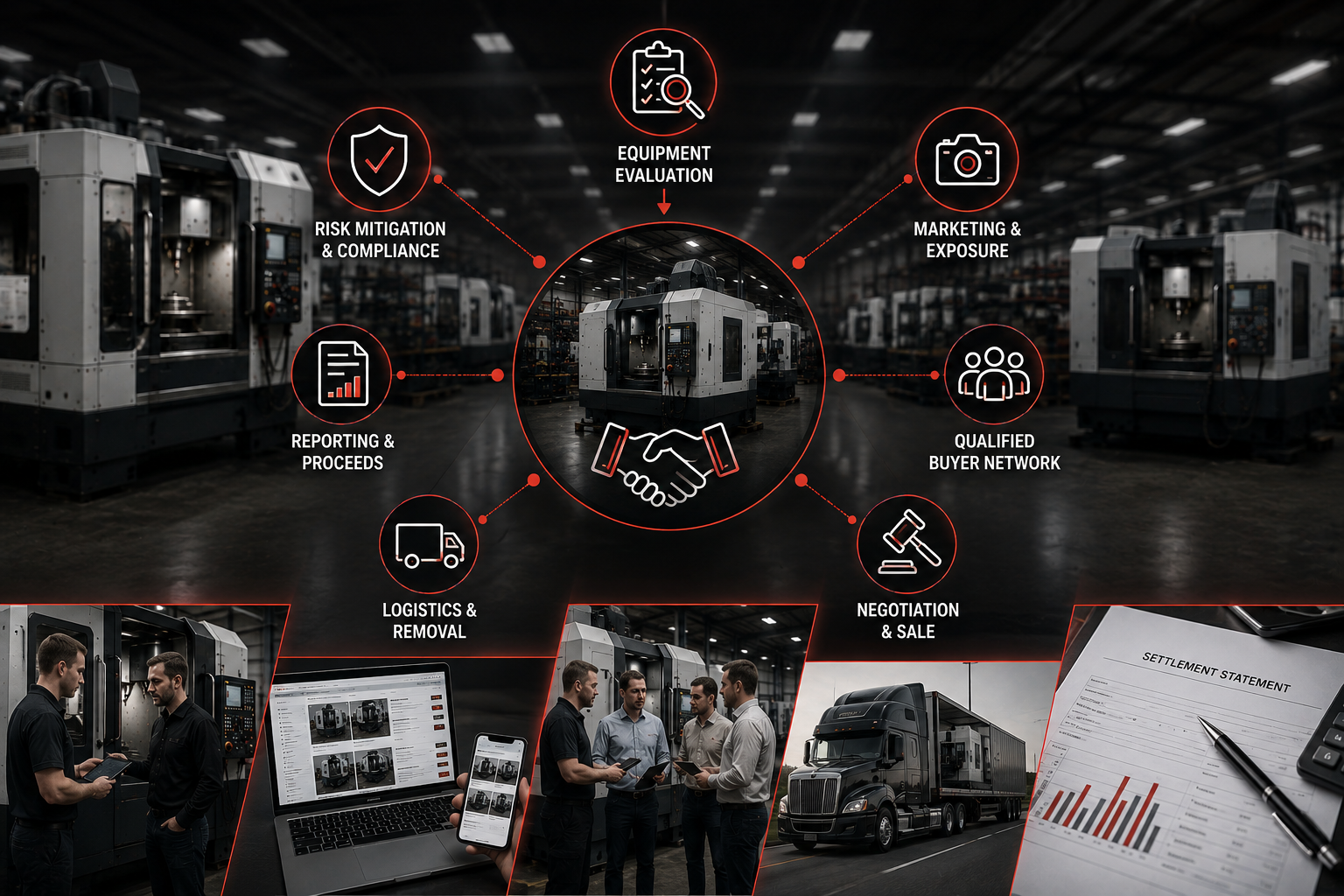
What Is a Machine Tool Remarketing Company? A Quick Guide for Lenders New to Equipment Collateral
First time a CNC machine has come back as collateral? Here's a plain explanation of what a machine tool remarketing company actually does, and why this equipment category works differently than most.
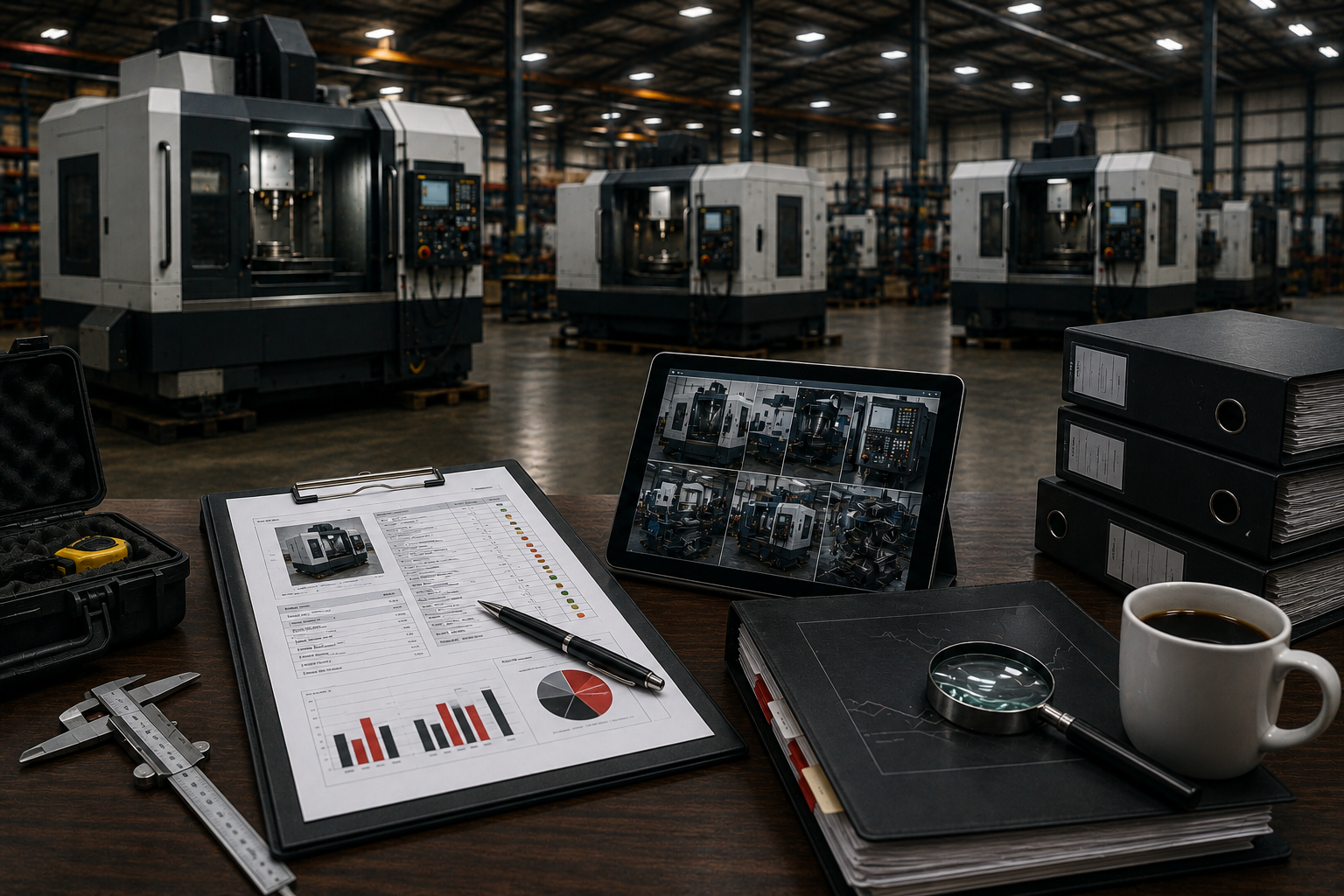
Desktop Valuation vs. Full Inspection Appraisal: Getting an Accurate Read on Repossessed CNC Equipment
Every disposition decision downstream depends on an accurate valuation. Here's the real difference between a desktop and an on-site appraisal, and when each one is the right call.
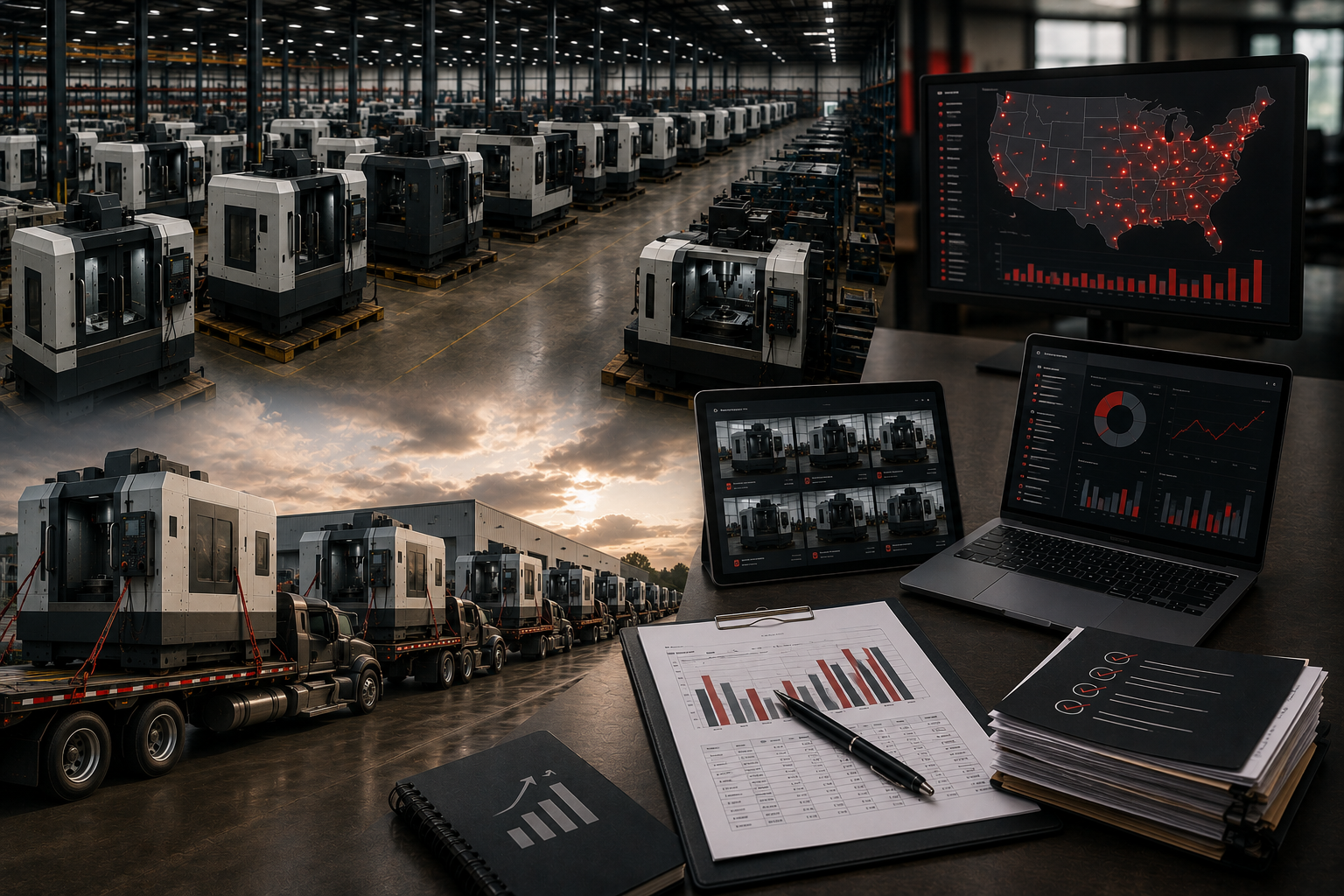
Handling High Volume Repossession Portfolios: Machine Tool Disposition at Scale
Liquidating one machine and liquidating forty are different problems. At volume, market saturation, consistency, and reporting all become real risks that a one-off process wasn't built to handle.
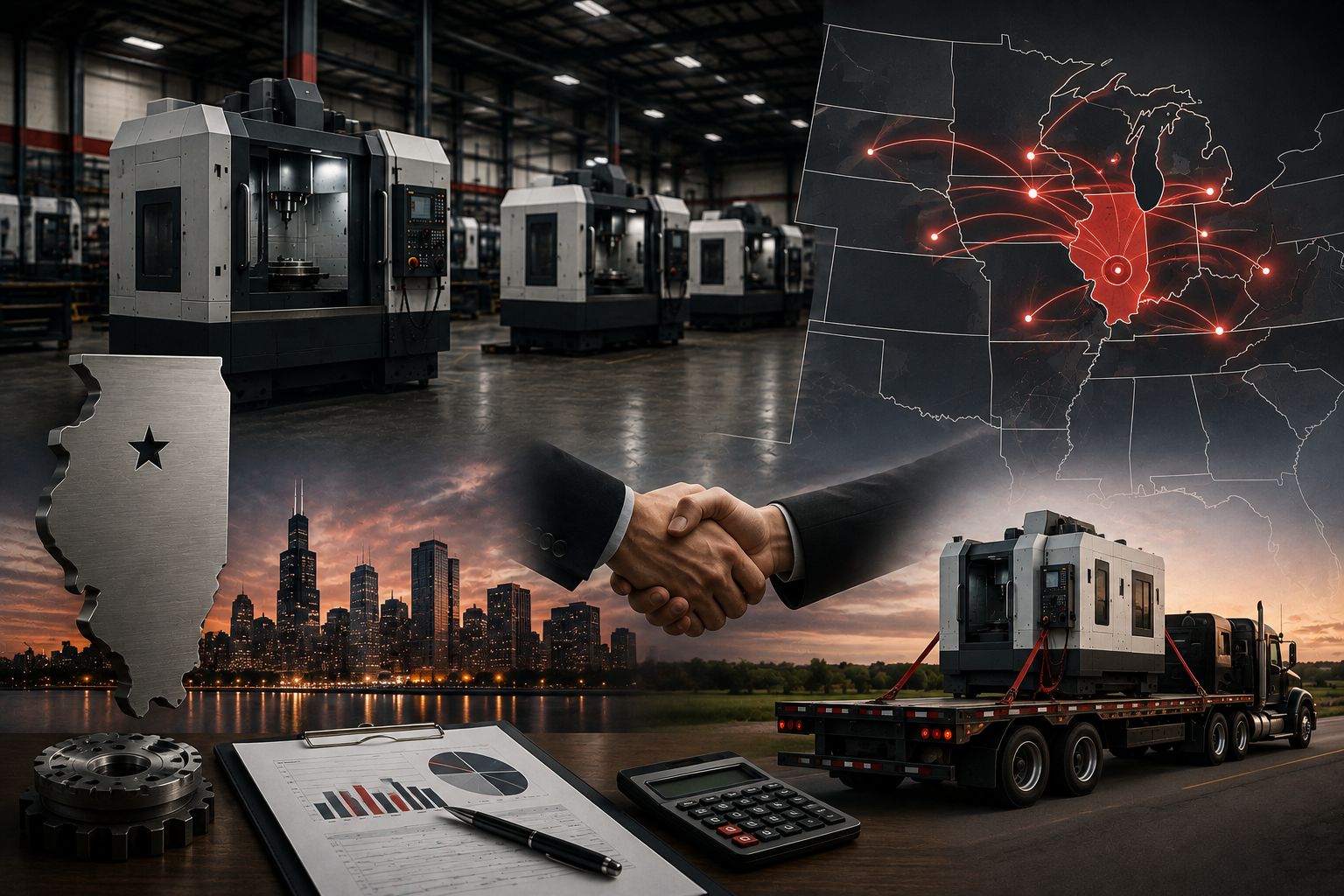
Illinois and Midwest Equipment Finance Companies: Local Machine Tool Remarketing Partner
A remarketing partner based in the Midwest, at the center of a genuinely dense CNC manufacturing base, means faster on-site response without losing nationwide buyer reach when a machine needs to move.

Credit Union Guide to Repossessed Commercial Equipment Disposition
A member business loan gone bad puts a credit union in a different position than a typical repossession. Here's how to handle CNC and machine tool collateral without a dedicated special assets team, and without burning the member relationship.

ABL Lenders: Liquidating Machine Tool Collateral Without Tanking the Portfolio Value
How one machine tool liquidation gets handled can affect more than that single sale. Here's how to protect the borrowing base and future appraisal marks on the rest of the equipment collateral.
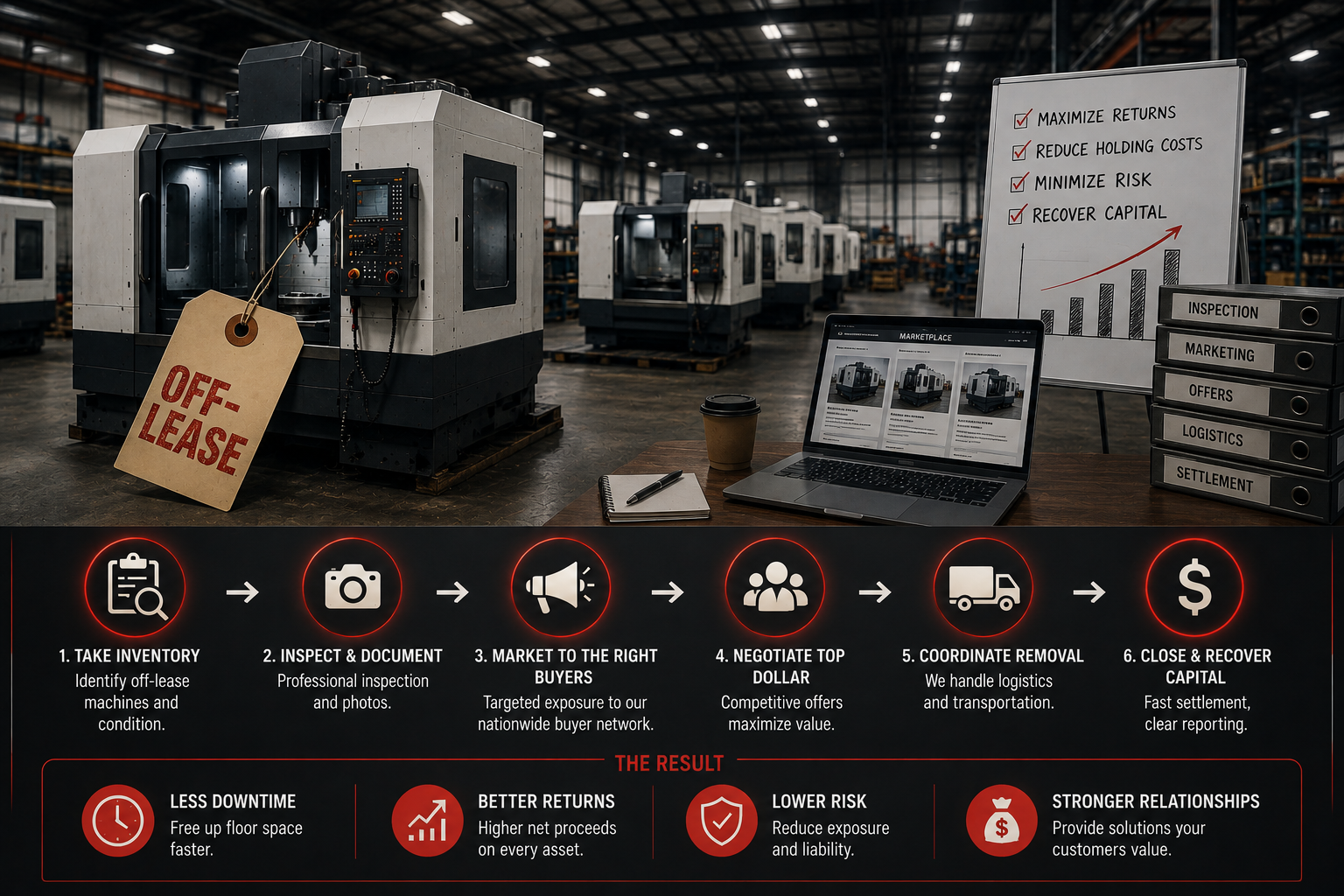
Equipment Leasing Companies: What to Do With Off-Lease CNC Machines Nobody Renewed
A lease that ends without a renewal or a buyout leaves a leasing company holding a machine it needs to move, ideally without damaging the customer relationship or eating into residual value along the way.
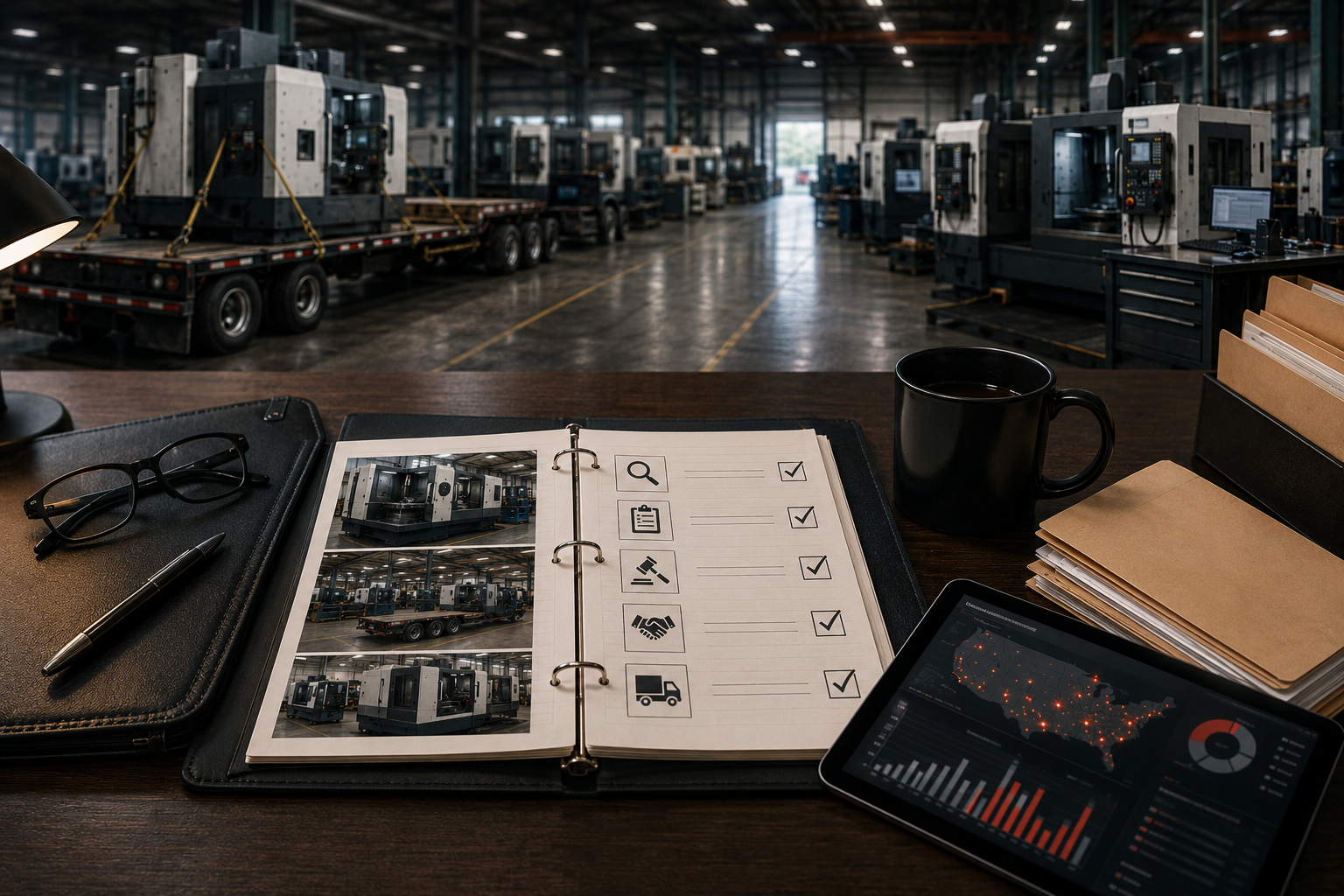
A Special Assets Officer's Guide to Repossessed Machine Tool Disposition
From repossession to closed file, here's the full process for disposing of CNC and machine tool collateral, with the compliance, vendor, and speed considerations that actually matter at each stage.
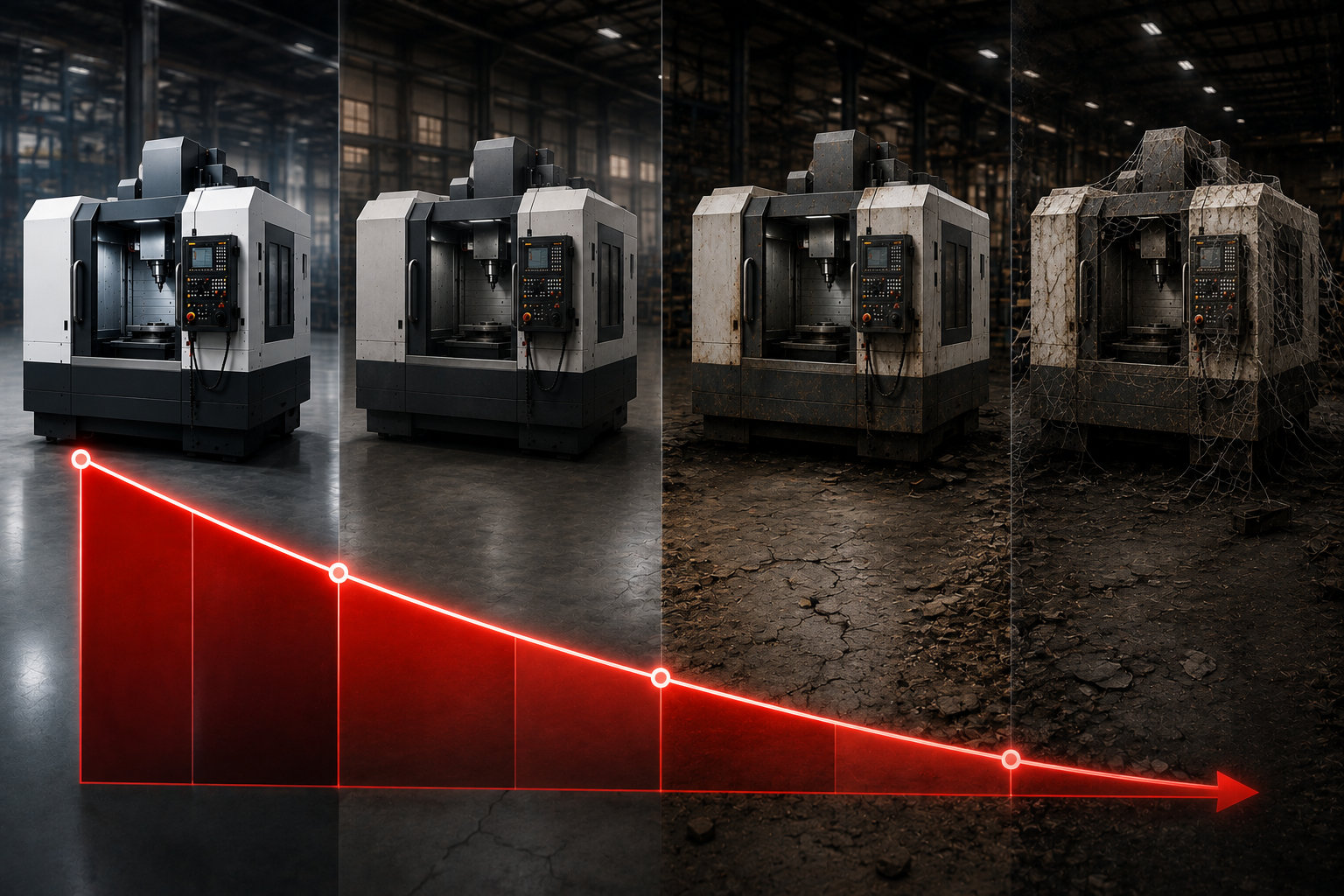
What Happens to a Repossessed CNC Machine's Value the Longer It Sits
How storage, deterioration and timing erode recovery on repossessed CNC equipment, and what the UCC requires of the sale.
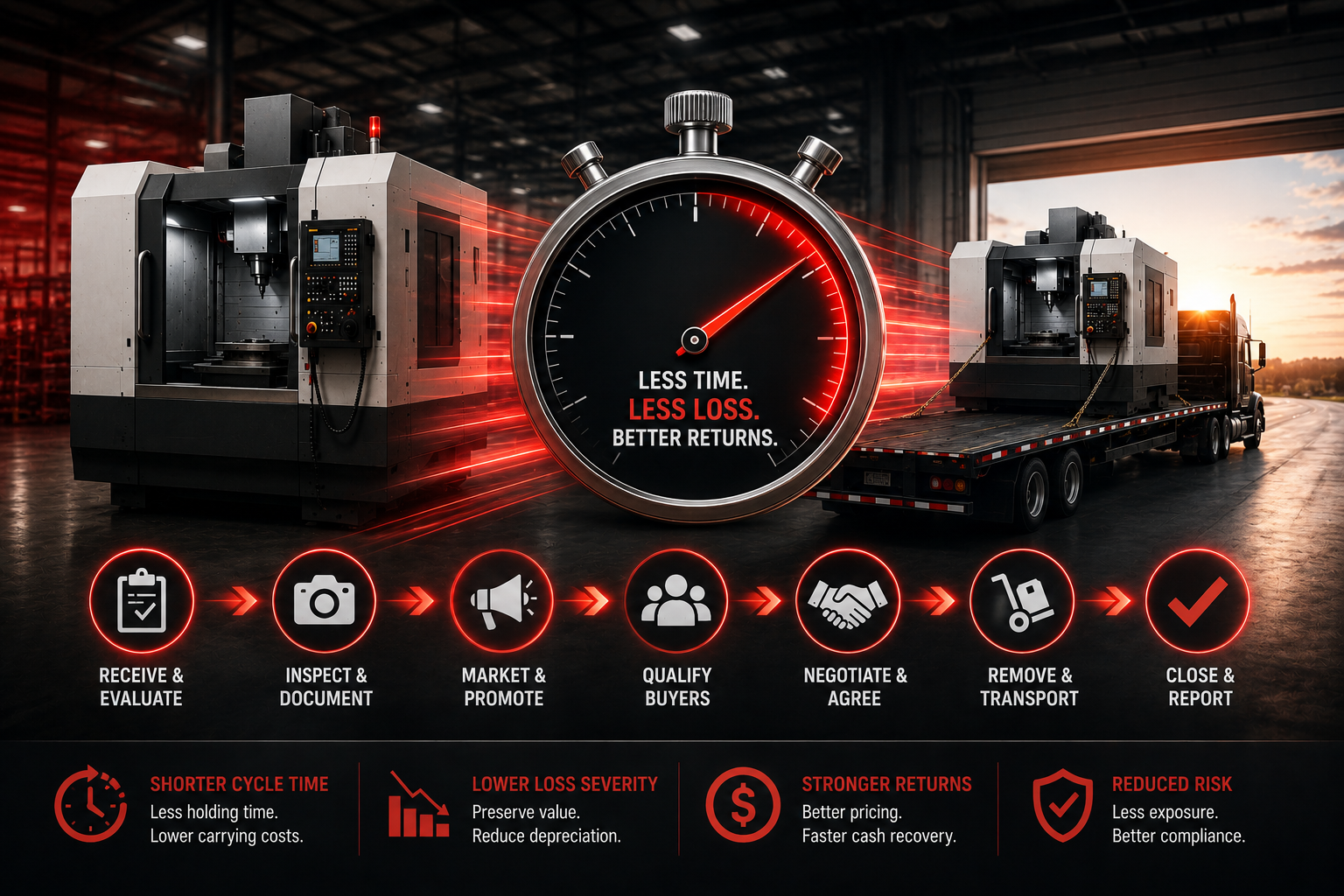
Reducing Cycle Time on Machine Tool Collateral Disposition
As covered in our guide on remarketing speed and loss severity, delay costs money. Here's where cycle time actually gets compressed at each stage of a machine tool disposition.
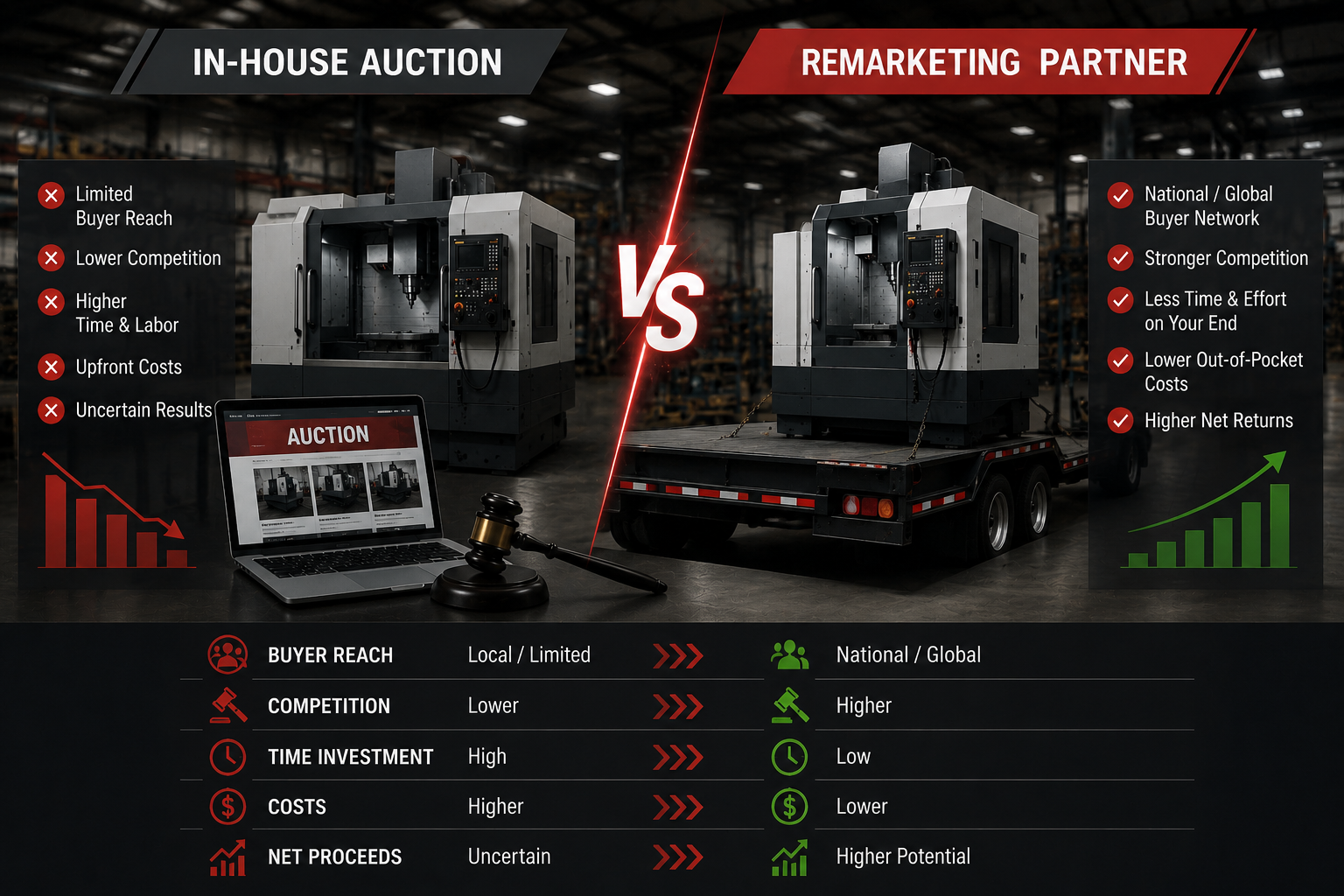
In-House Auction vs. Remarketing Partner: What Actually Nets More on Repossessed Machine Tools
Running the auction yourself feels like more control. In practice, the buyer reach and time investment usually tip the math the other way. Here's an honest comparison.
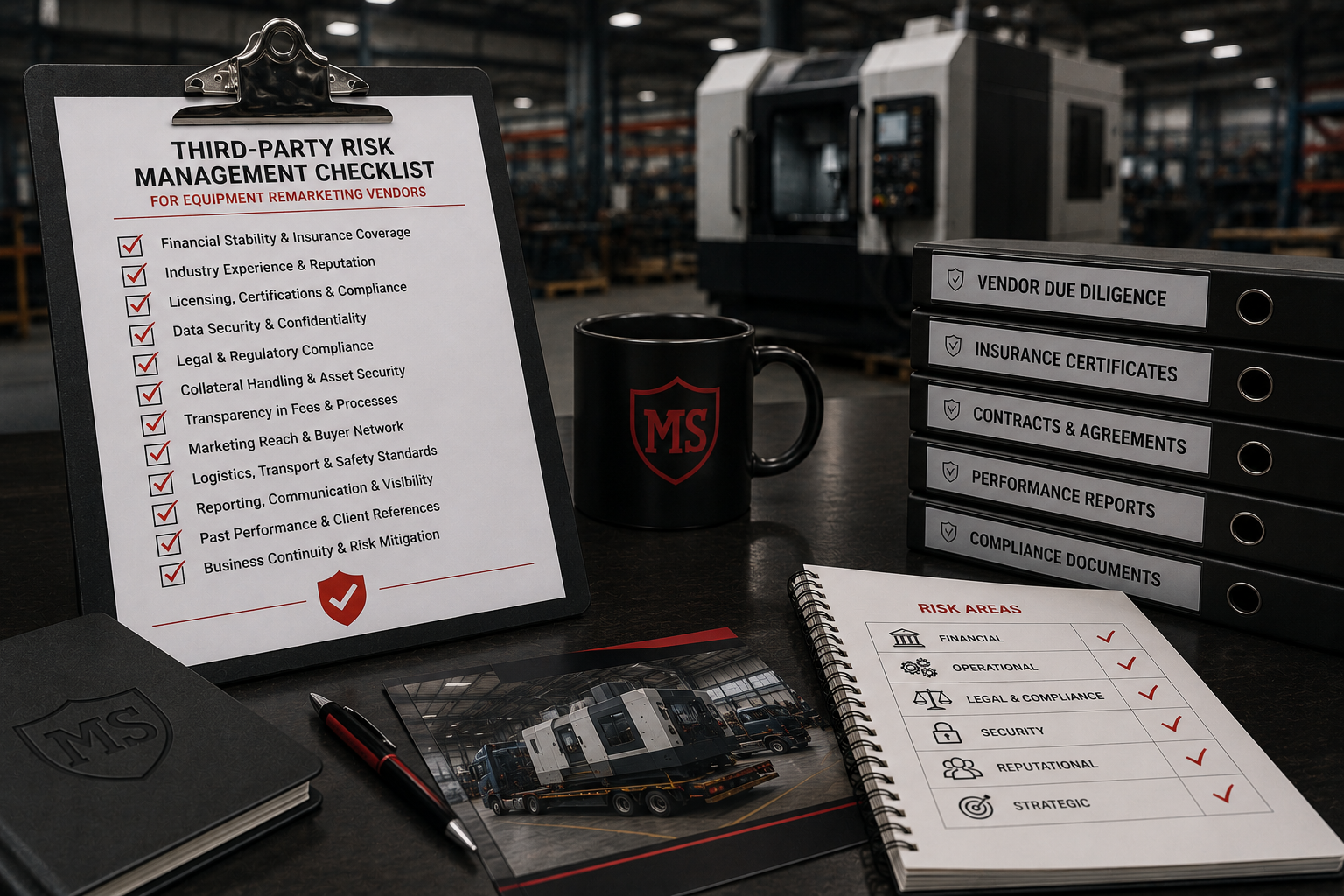
Third-Party Risk Management Checklist for Equipment Remarketing Vendors
Onboarding a remarketing vendor usually has to clear your institution's Third-Party Risk Management process before the first machine ever gets listed. Here's what that review typically covers.
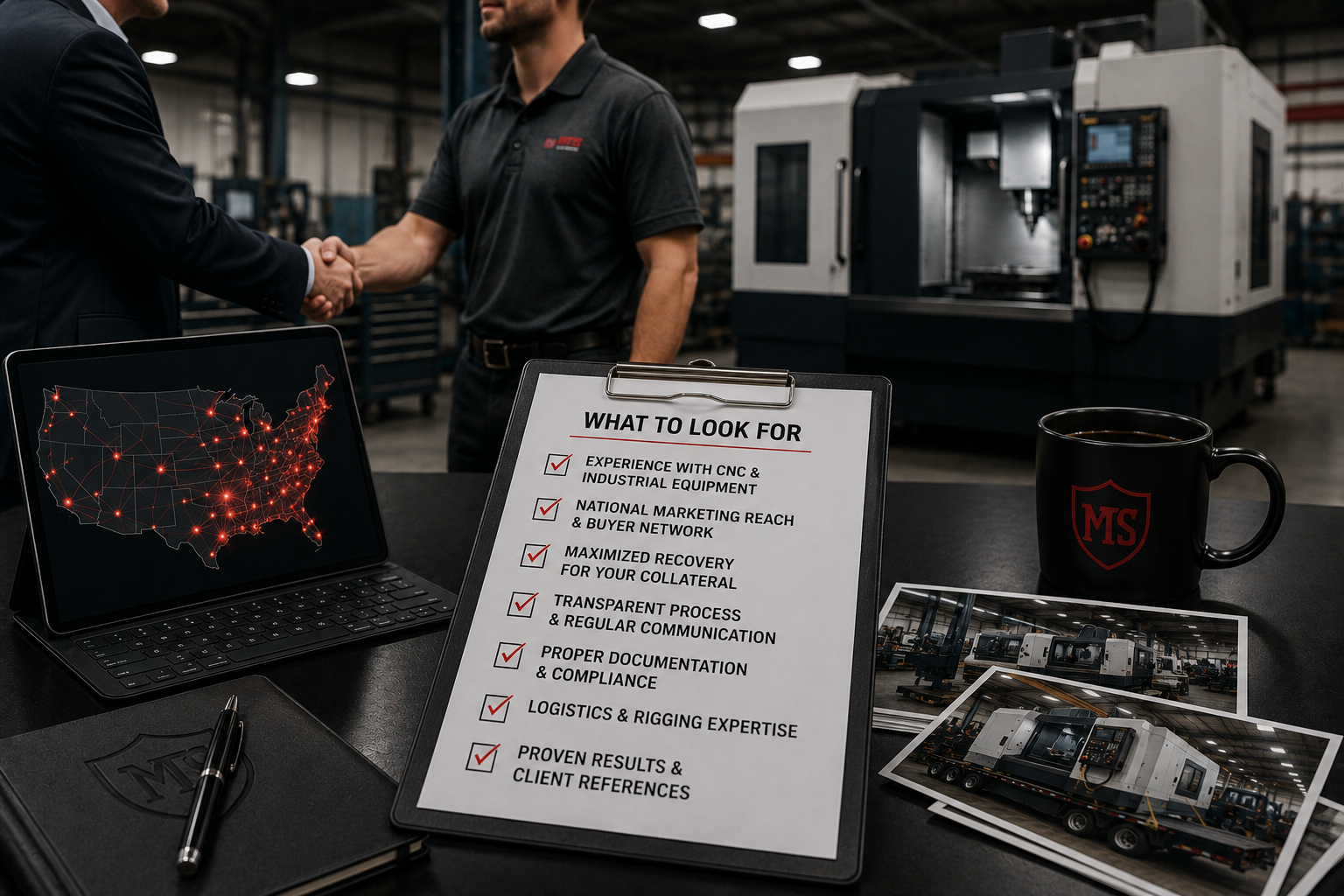
What Banks Should Look for in a CNC Equipment Remarketing Partner
Not every remarketing vendor is built for industrial equipment. Here's what actually separates a partner who can move CNC and machine tool collateral well from one who's just another general auction listing.
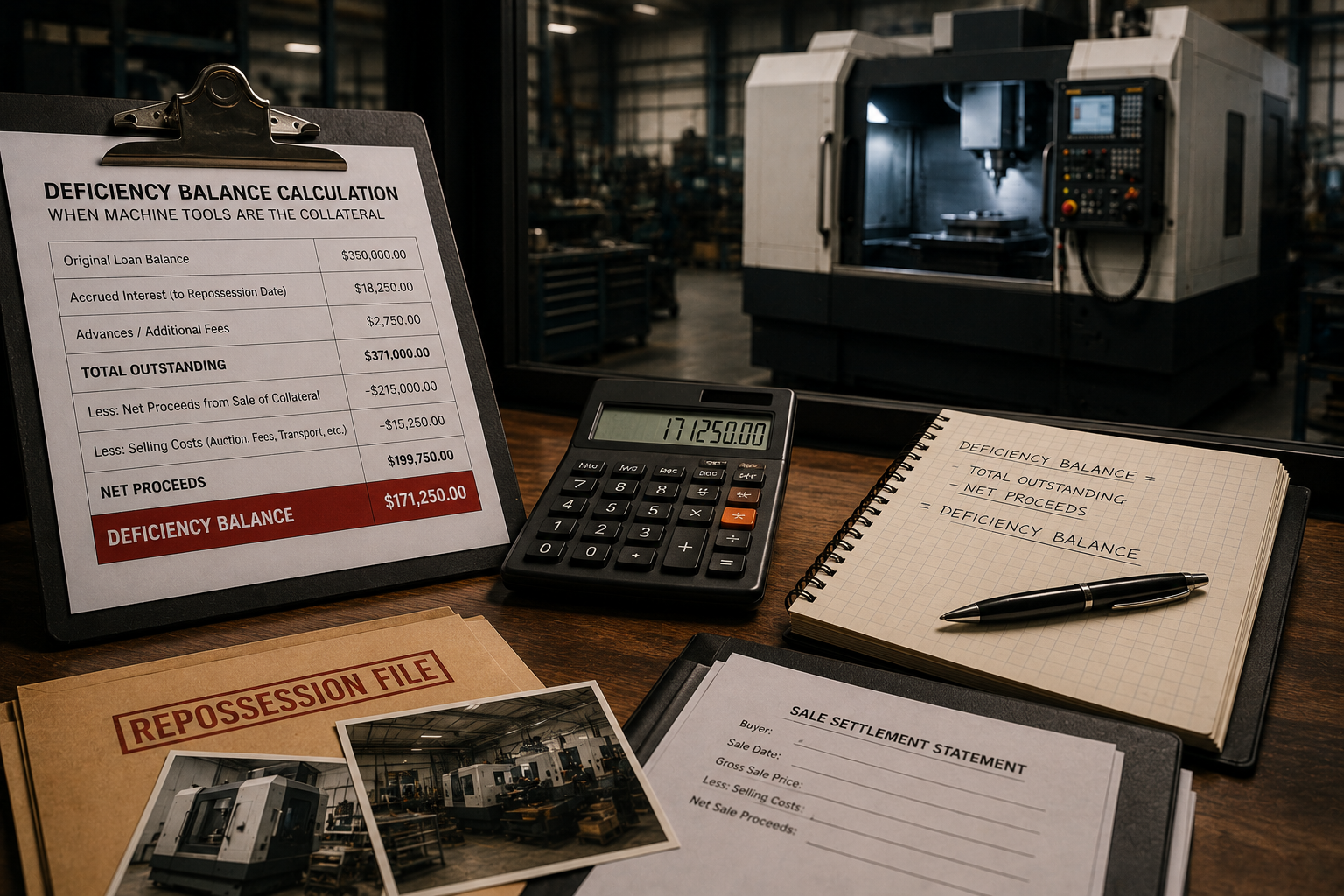
How Deficiency Balance Calculations Work When Machine Tools Are the Collateral
The deficiency balance is more than total debt minus sale price. Here's how the calculation actually works under UCC Article 9, and where machine tool collateral tends to introduce errors.
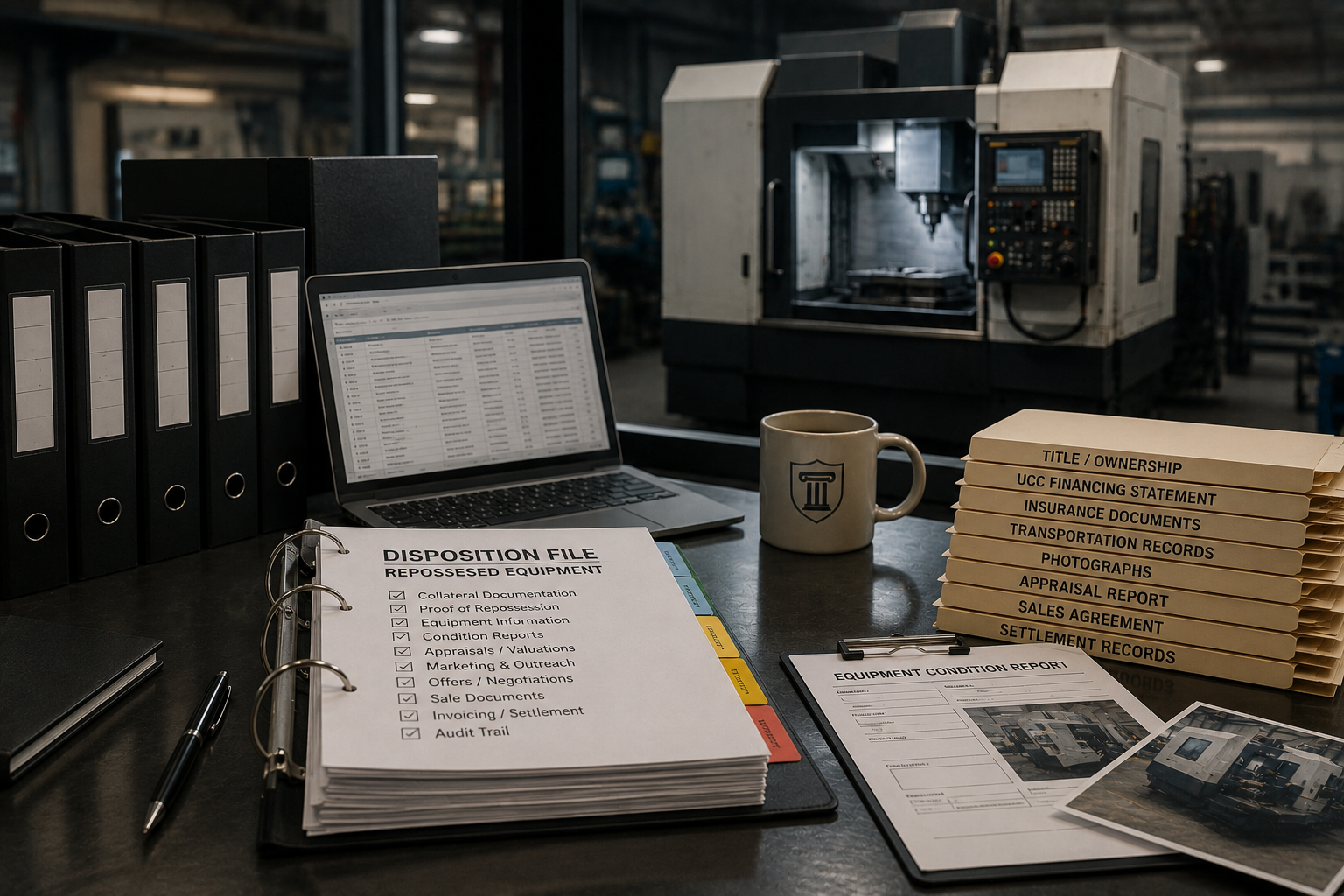
Documentation Special Assets Officers Need for Repossessed Equipment Disposition Files
If a repossessed equipment sale ever gets reviewed, internally, by a regulator, or in court, the file is what protects the institution. Here's what a complete disposition file actually needs.
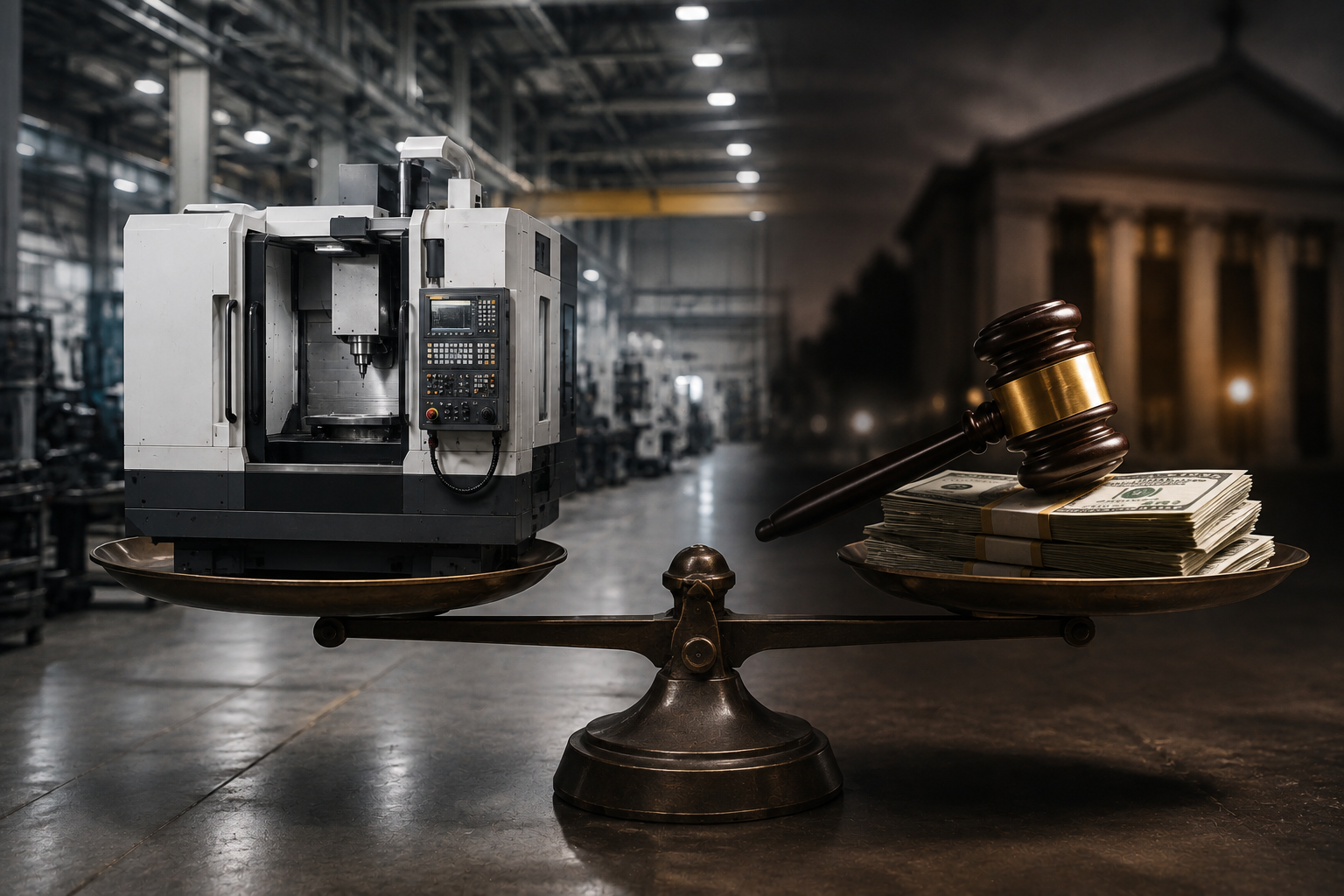
What "Commercially Reasonable" Actually Means When Disposing of Repossessed CNC Equipment
UCC Article 9 requires every aspect of a collateral disposition to be commercially reasonable, not just the final price. Here is what that standard actually requires when the collateral is a CNC machine.
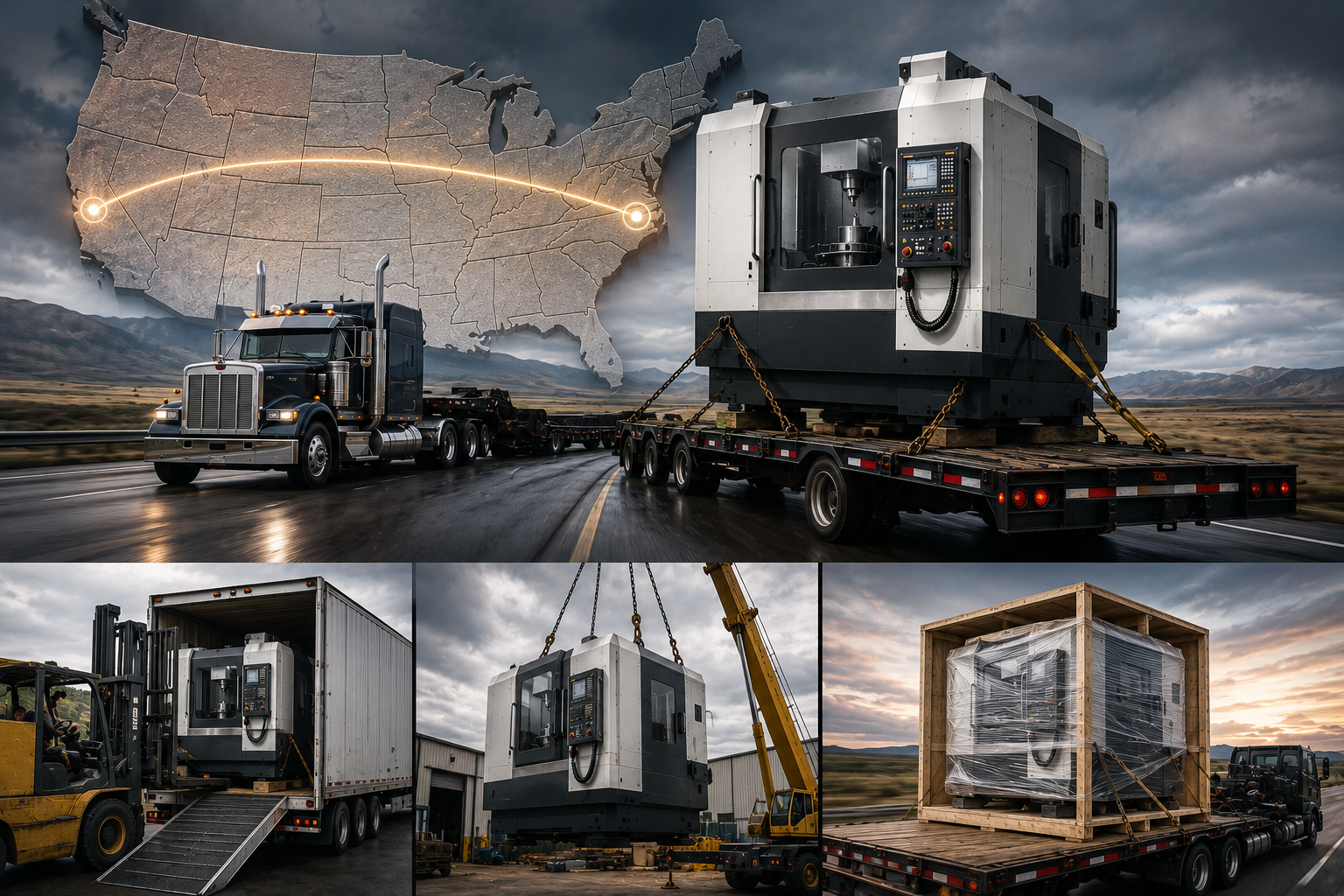
Relocating Into a Reshoring State: What the New Work Mix Means for Your Equipment
Shops relocating into states riding the reshoring wave often find the work waiting for them looks different from what they left behind. That changes which machines are worth bringing along.
How Much It Costs to Move a CNC Machine Across State Lines
What drives rigging and freight cost, what shop owners report paying, and how permits and "loaded on the truck" offers change the math.
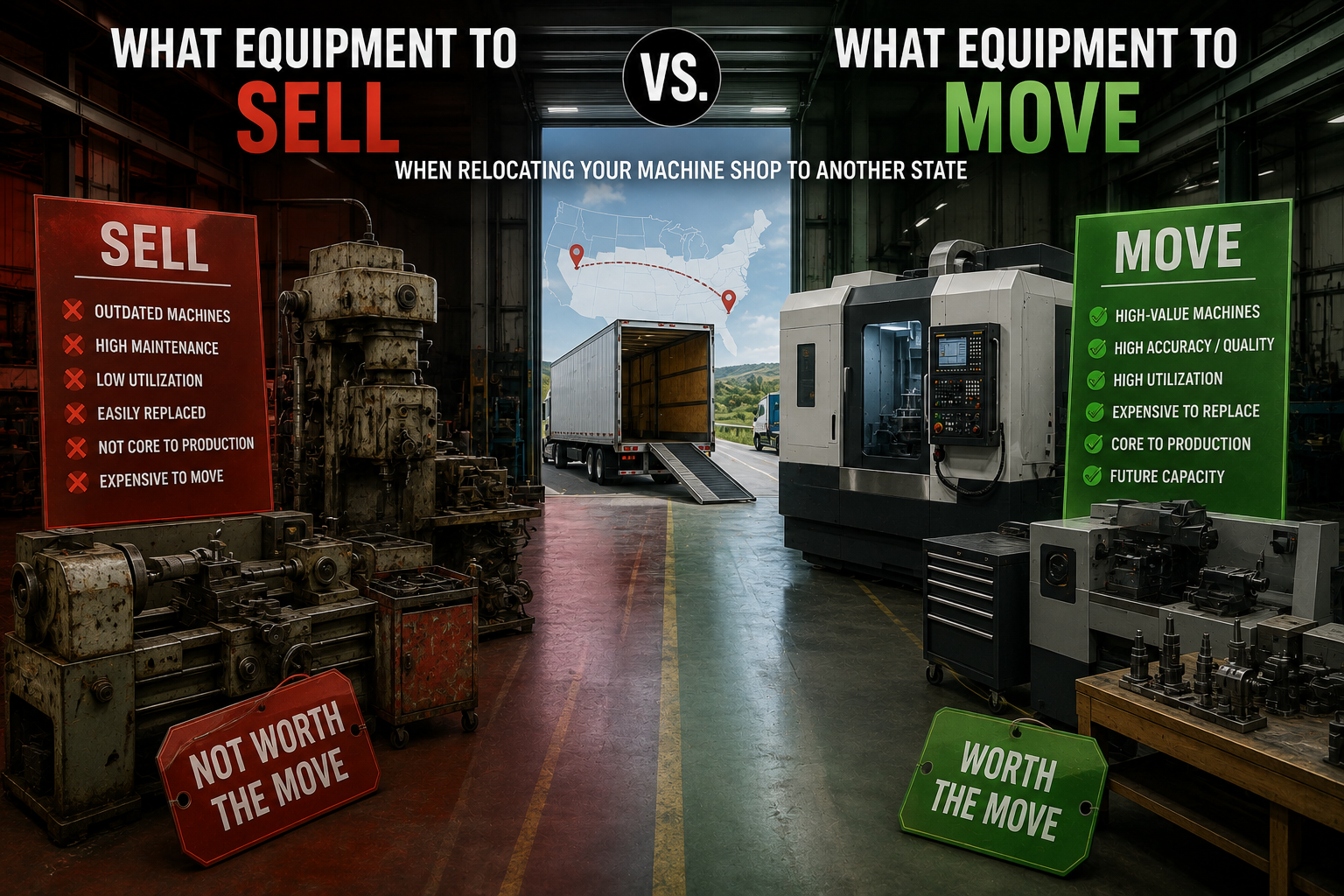
What Equipment to Sell vs. Move When Relocating Your Machine Shop to Another State
An interstate move is one of the few times you get to rebuild your equipment list from scratch. Here's how to decide what earns a spot on the truck and what gets sold before moving day.
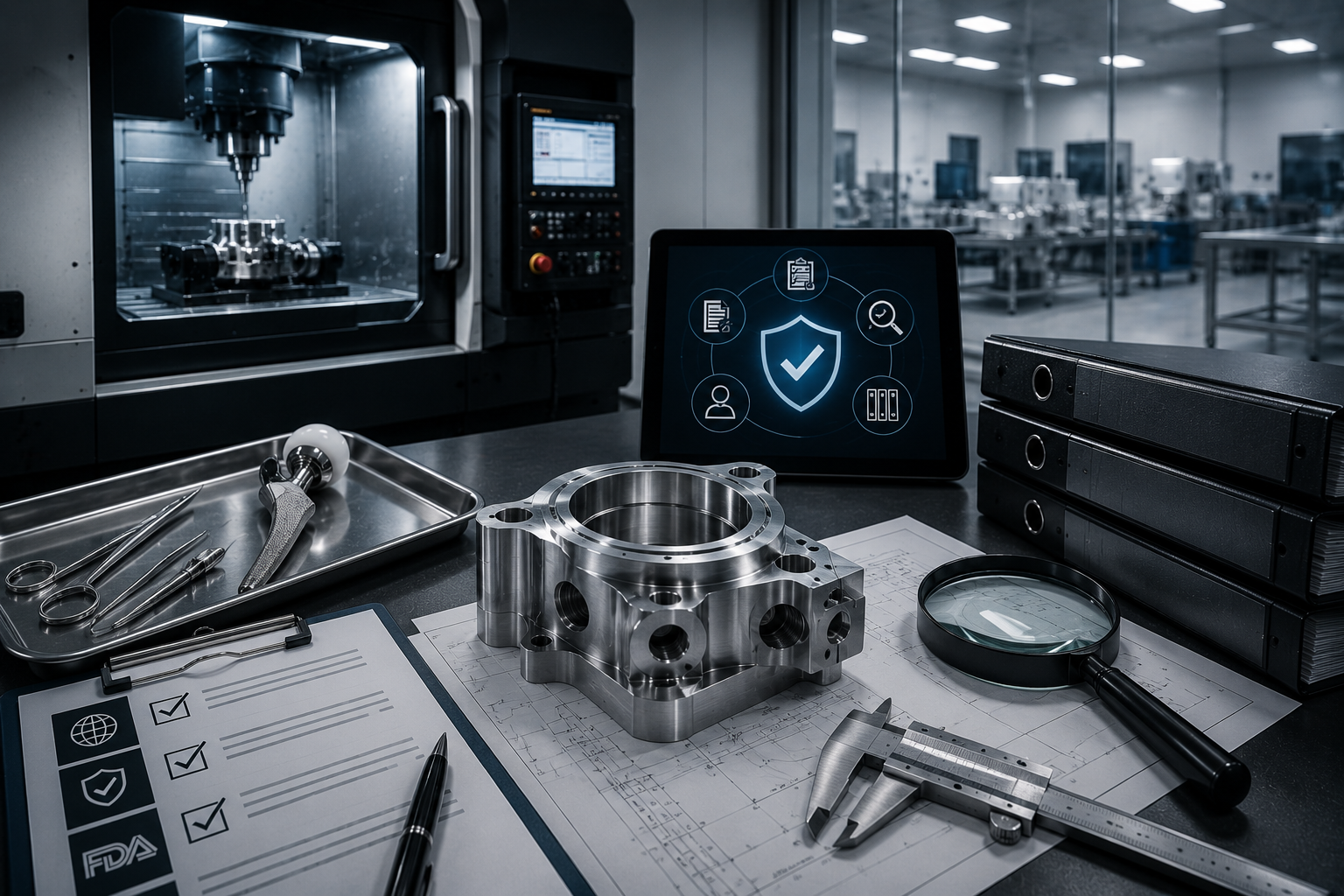
ISO 13485, FDA, and Traceability Considerations When Selling Medical Device Manufacturing Equipment
Most equipment in a medical device shop is just equipment. Some of it genuinely carries recordkeeping and validation questions. Here's the framework for figuring out which is which.
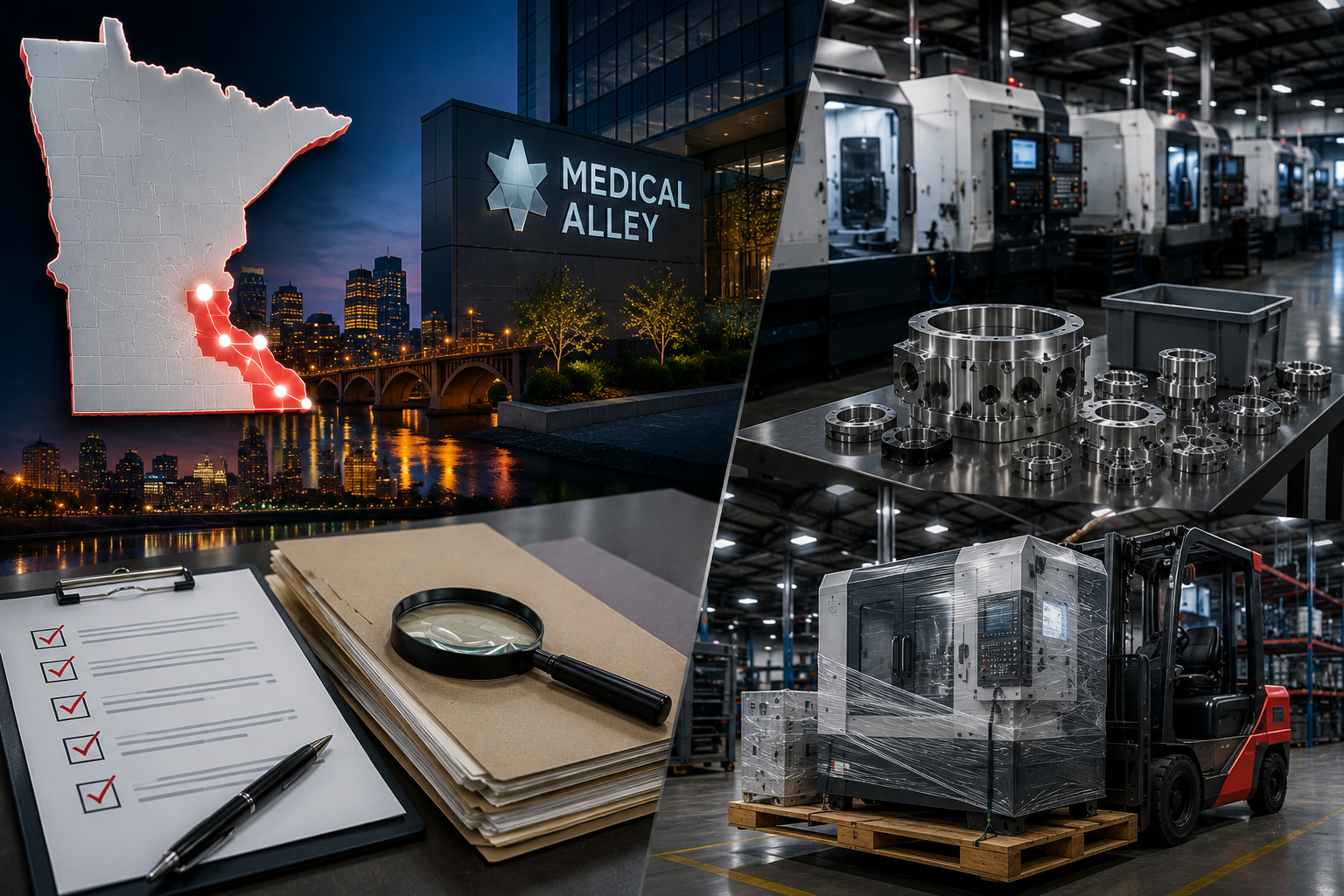
Minnesota's Medical Alley: What to Know About Liquidating Medical Device Manufacturing Equipment There
Minnesota's Medical Alley is one of the densest medical device manufacturing clusters in the world. That changes the buyer pool, the logistics, and a few regulatory specifics compared to a less concentrated market.
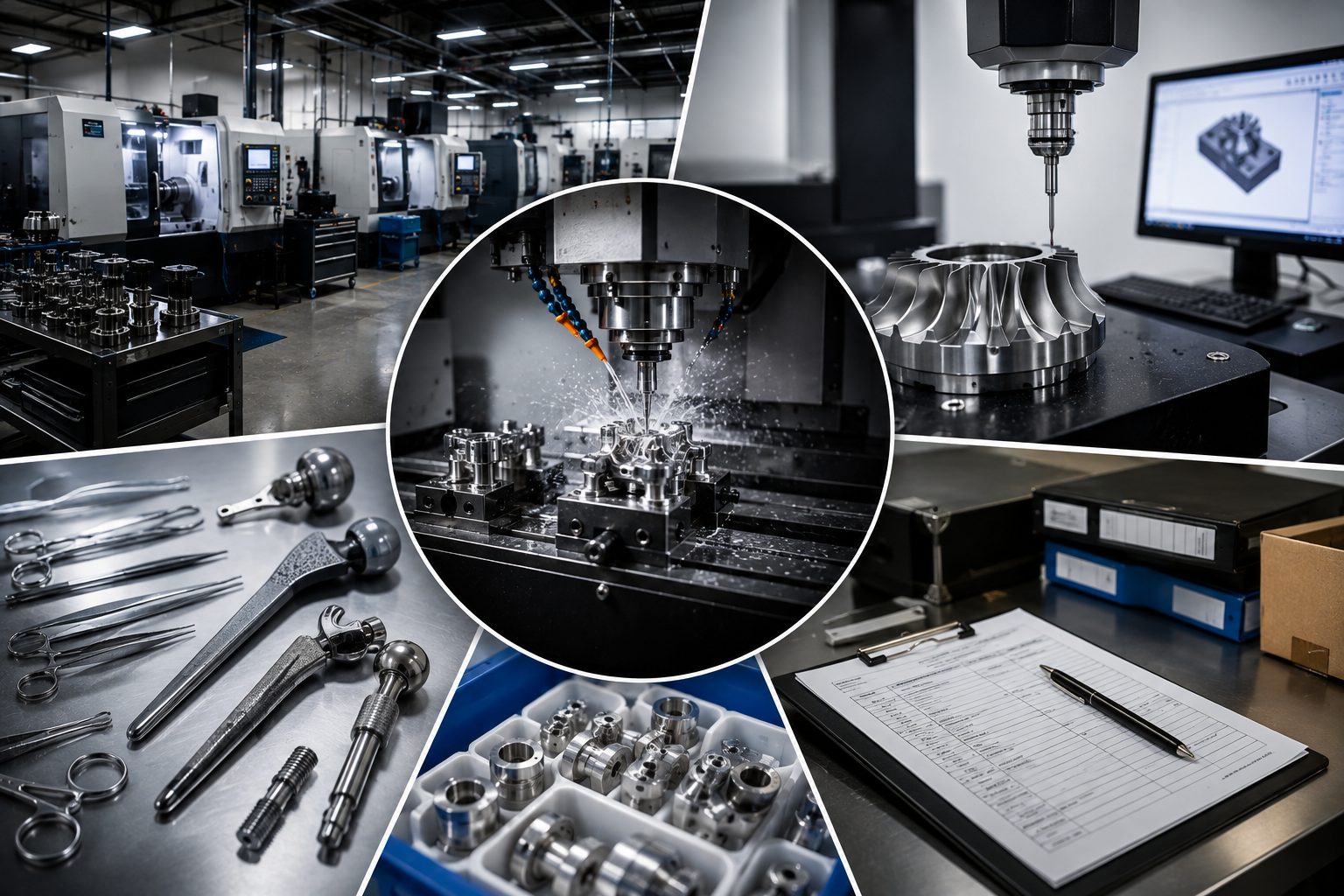
Liquidating a Medical Device Machine Shop: What Makes It Different
FDA traceability, ISO 13485 considerations, and equipment validated for regulated production mean a medical device shop liquidation isn't a standard plant closure. Here's what to get right before equipment starts moving.
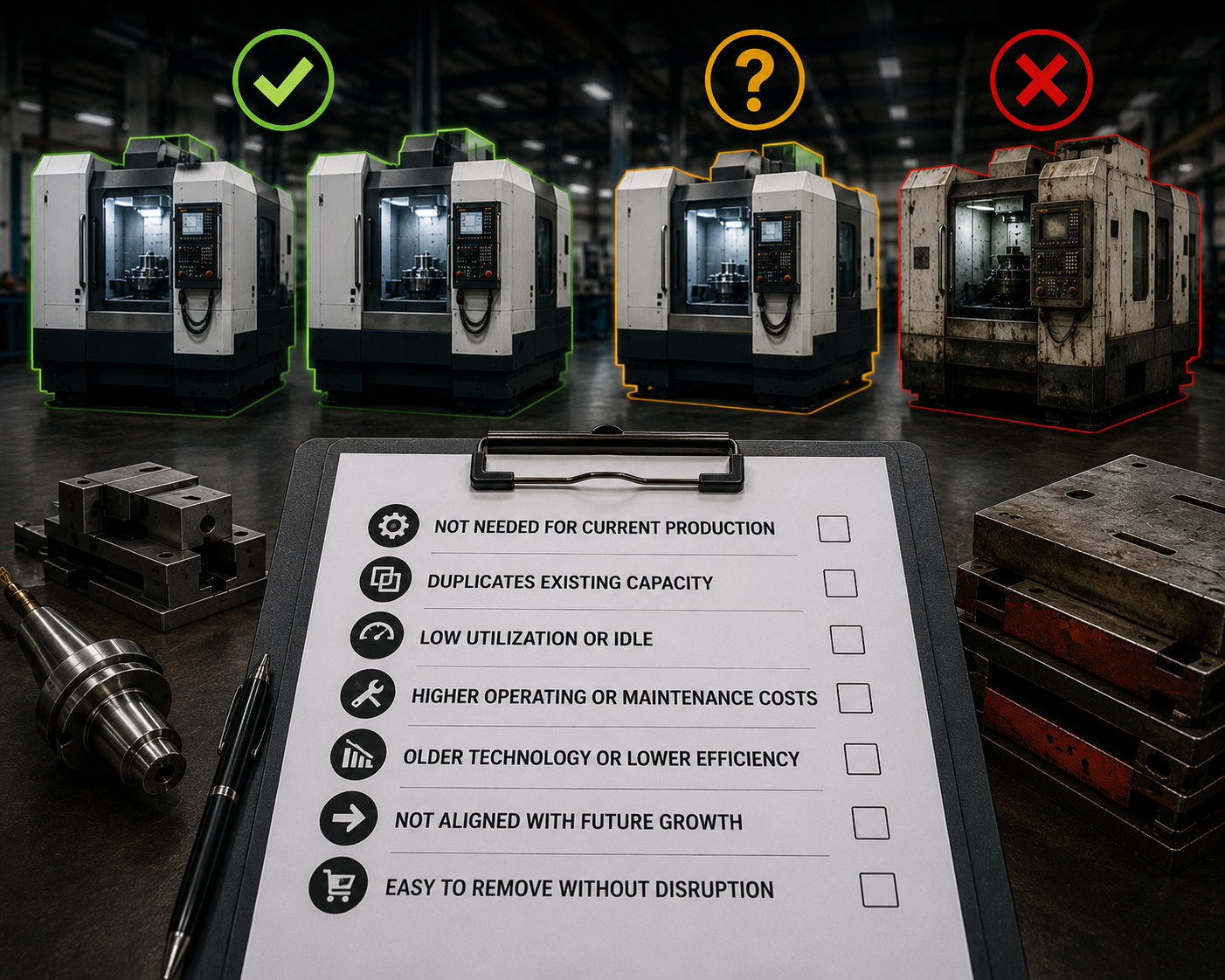
What Counts as Redundant Machinery? A Practical Checklist
"Redundant machinery" gets used loosely. Before deciding what to do with equipment you suspect is redundant, here's a practical checklist for figuring out which machines actually qualify.
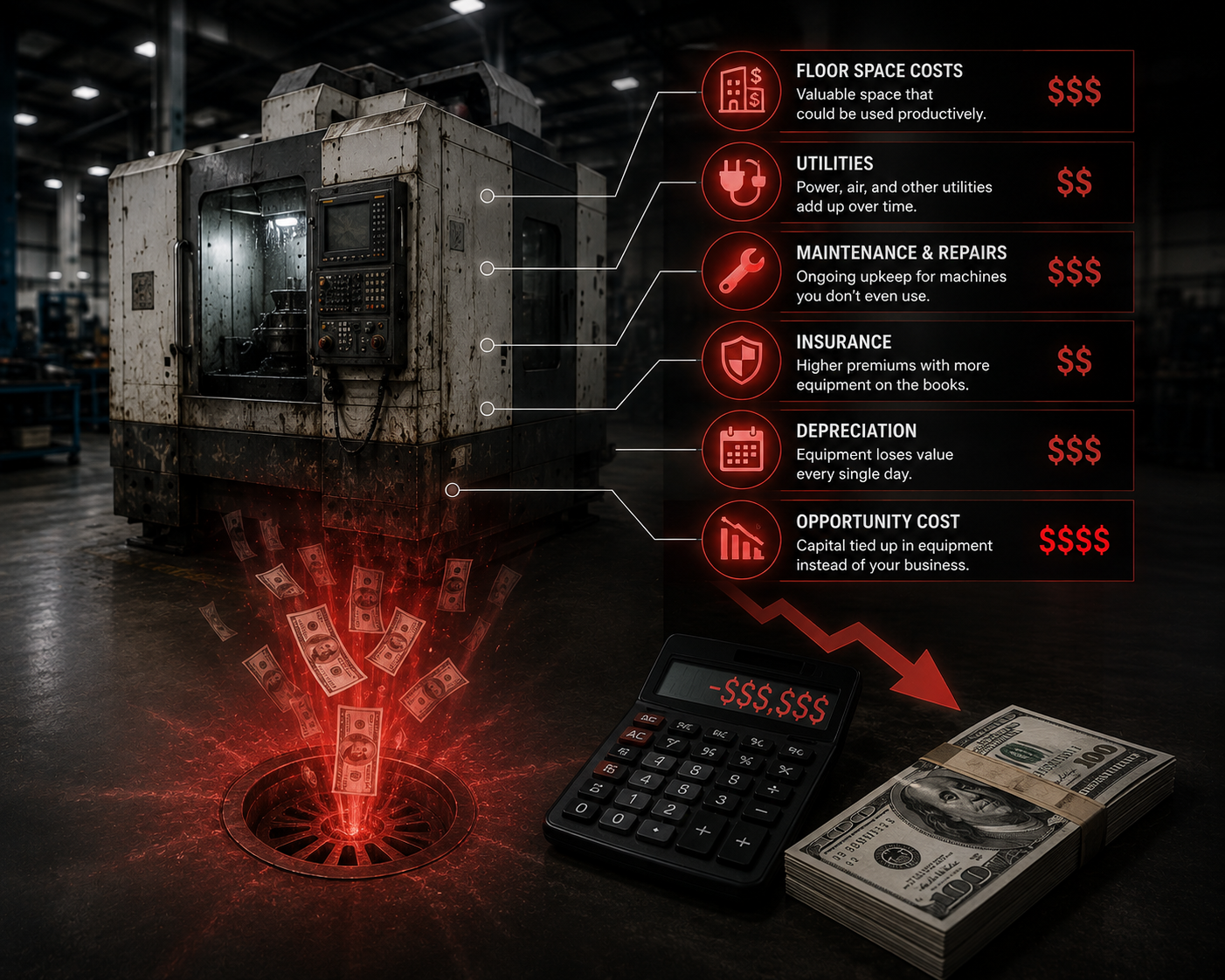
The Real Cost of Holding Onto Redundant Machinery Too Long
It's tempting to let idle equipment sit "just in case," but redundant machinery isn't free to keep. Here's where that carrying cost actually comes from.
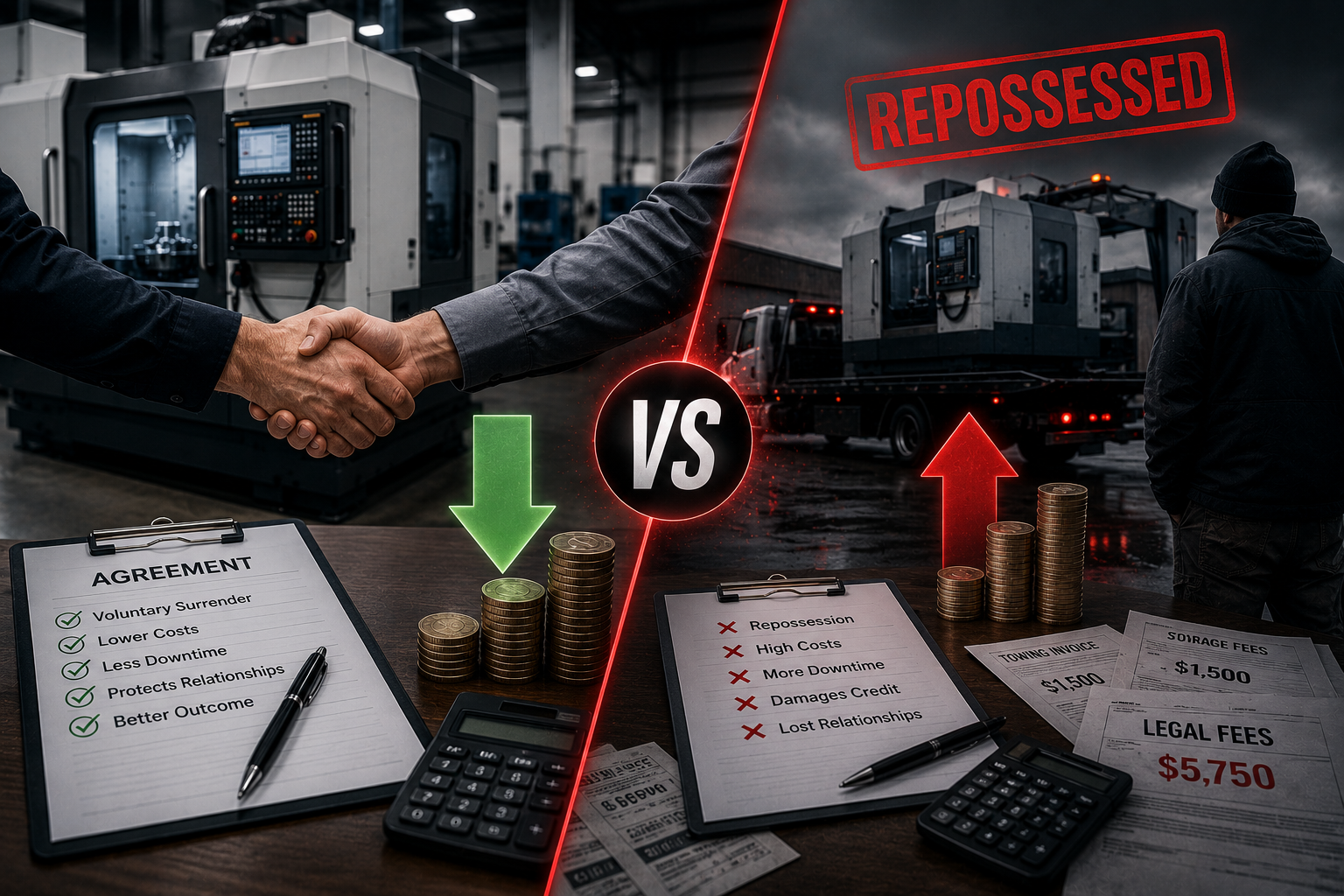
Voluntary Surrender vs. Repossession: Which Costs You Less?
How the two paths differ in timing, fees, sale price and deficiency, with an illustrative example and the UCC rules on proceeds.

What Happens to Your Credit After Voluntary Surrender vs. Repossession
We've covered whether voluntary surrender is better than repossession, this post goes deeper on exactly what shows up on your credit file with each path, and for how long.
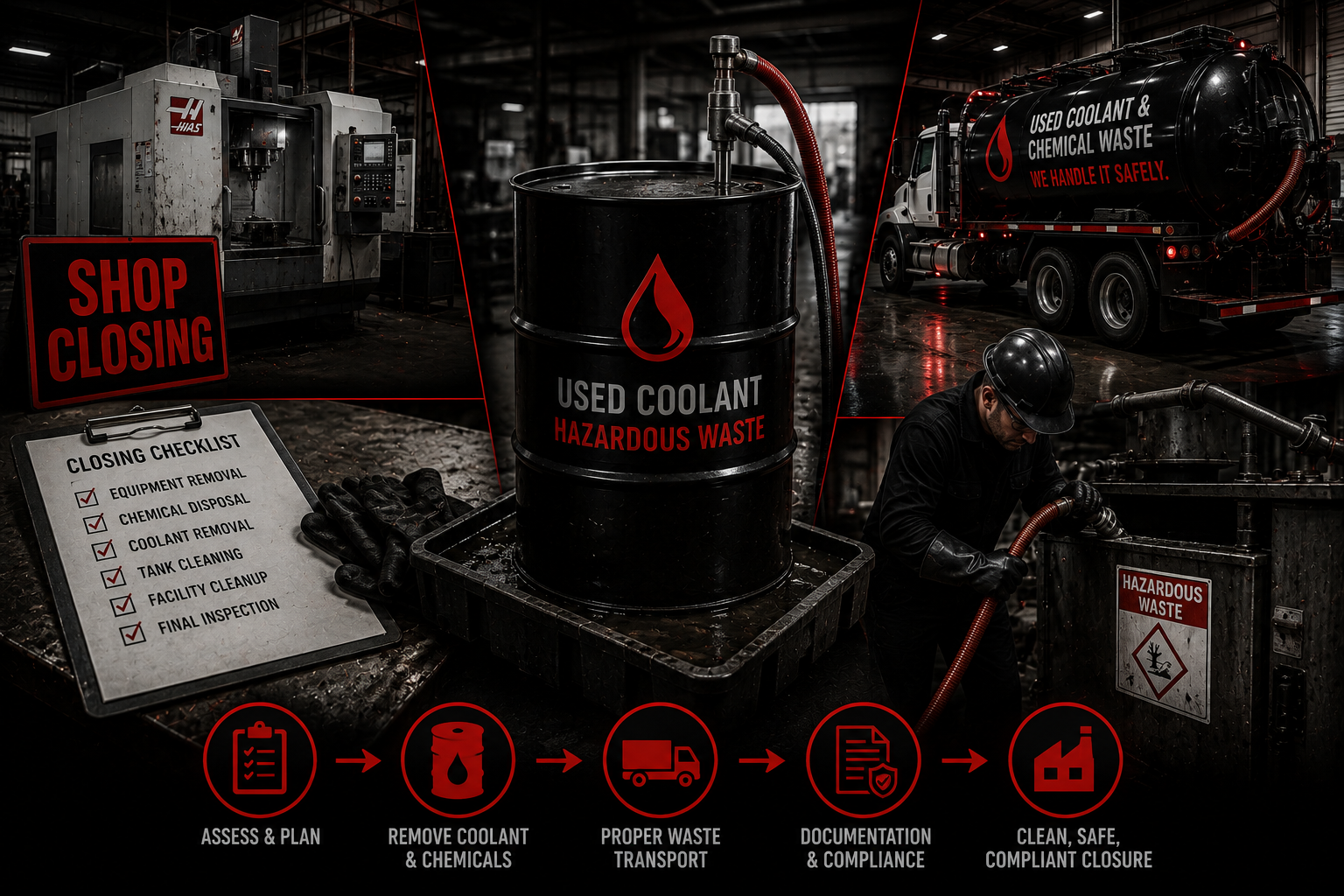
Coolant and Chemical Waste When Closing a Machine Shop: Illinois and Wisconsin Rules
How to classify spent coolant, who can haul it, and what differs between Illinois and Wisconsin, with citations to the actual rules.
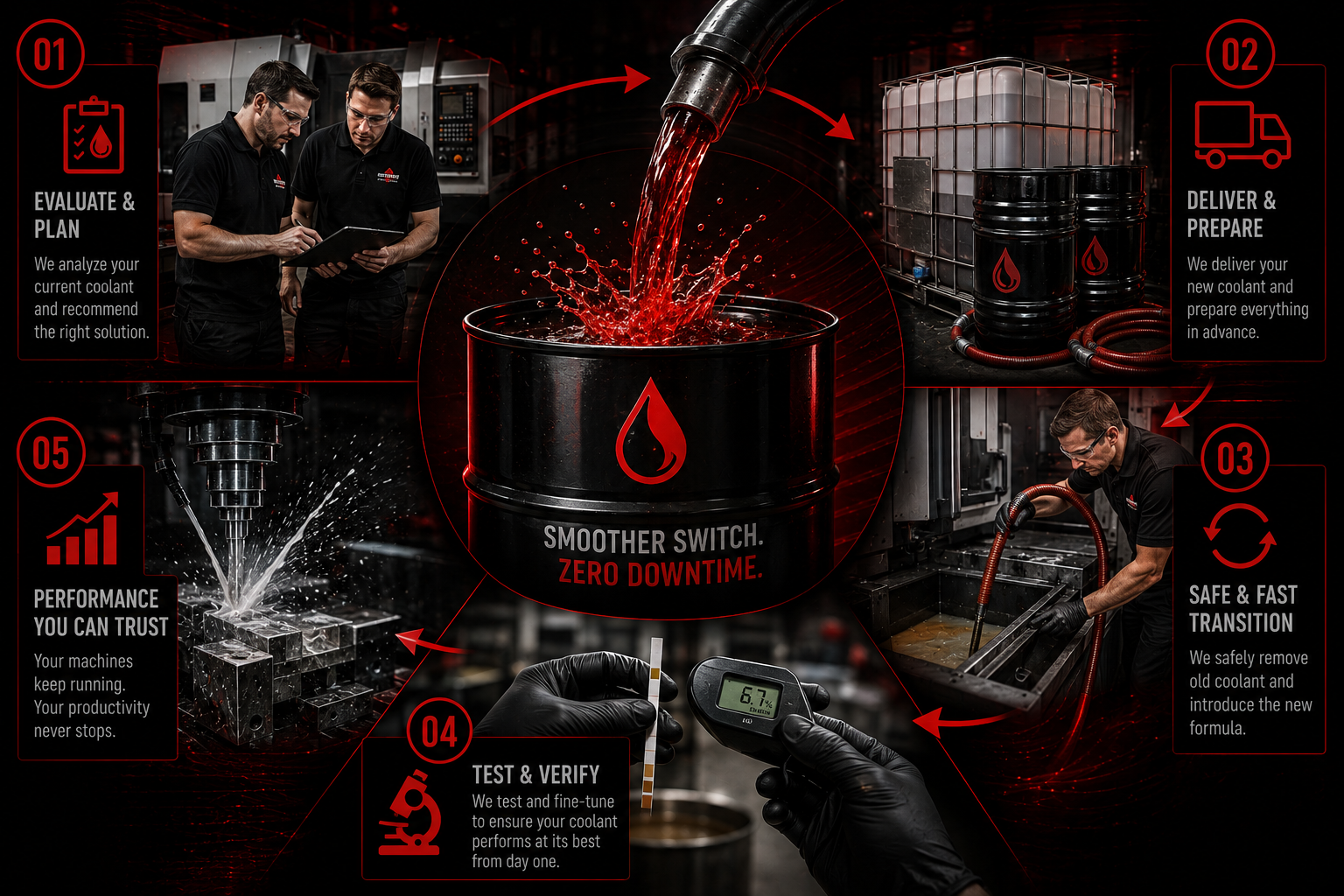
How to Switch CNC Coolant Suppliers Without Any Downtime
The biggest reason shops stay with a coolant they're unhappy with is fear of the switch itself. Done right, it's a lot less disruptive than most owners expect.
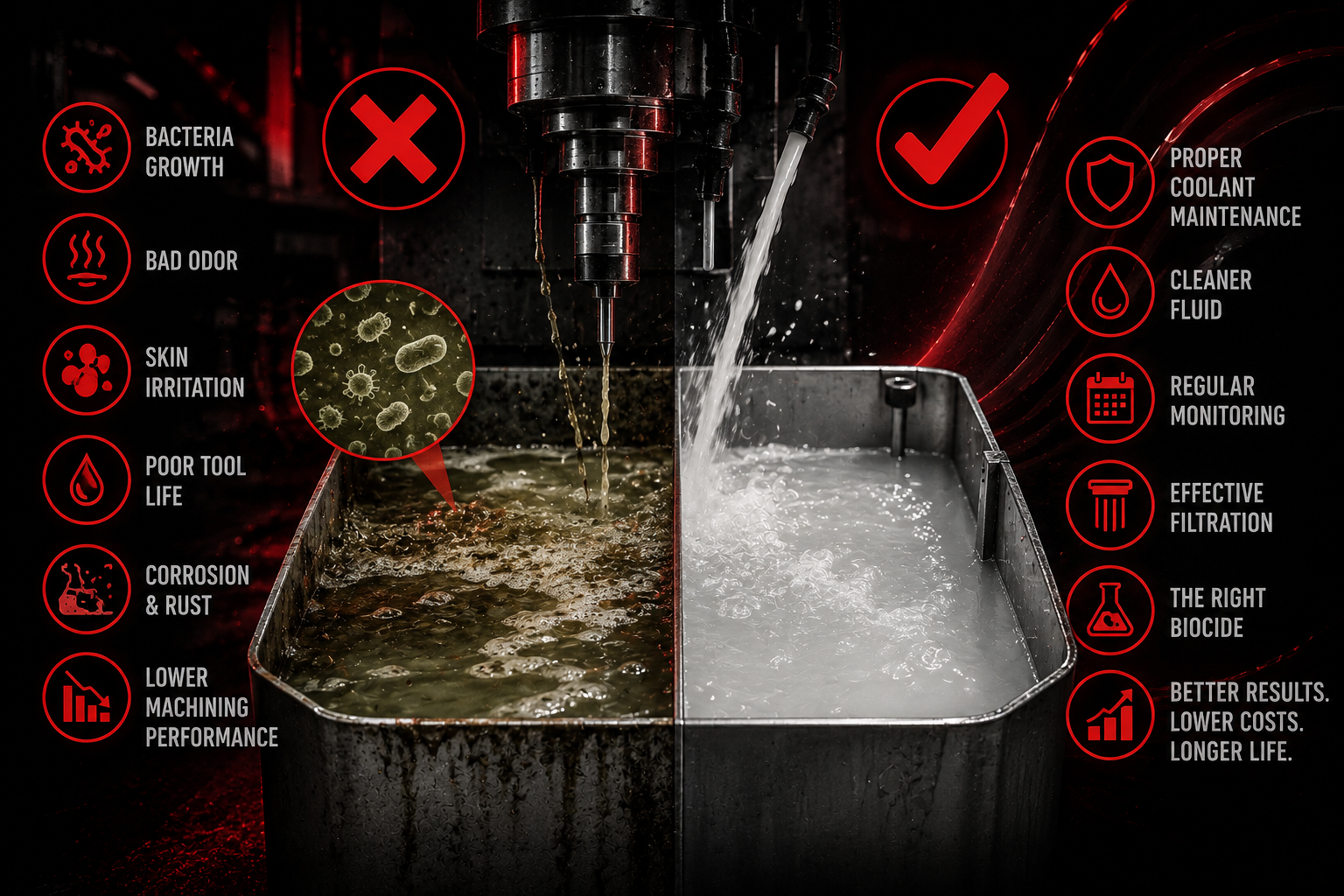
Why Your CNC Coolant Keeps Going Rancid (And How to Actually Fix It)
Clean the sump, add fresh coolant, and the smell's back in three weeks. That's not a one-time cleaning failure, it's usually a sign the fluid or the routine doesn't actually match your shop.
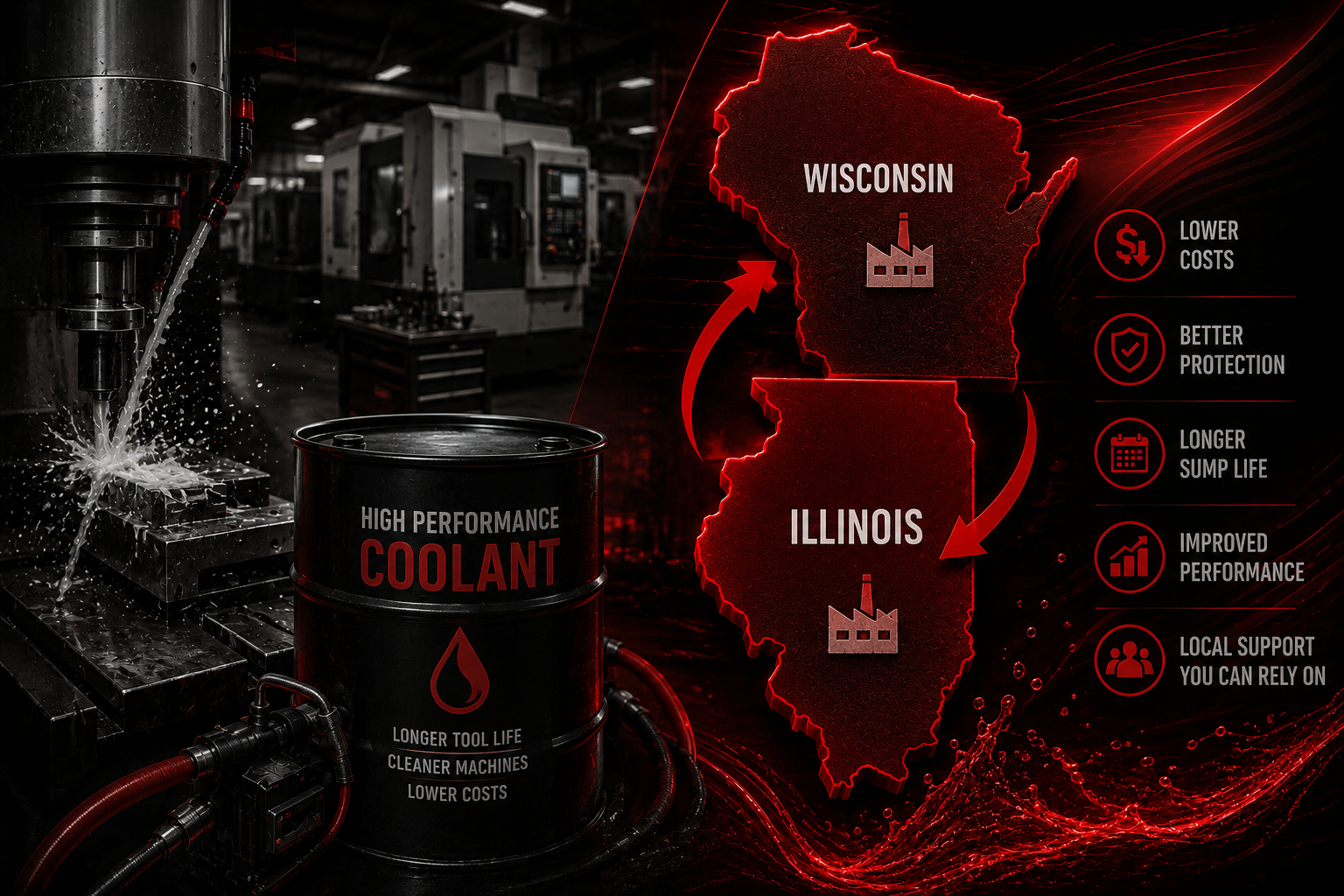
Why Illinois and Wisconsin Machine Shops Are Switching Coolant Suppliers
Most shops don't go looking for a new coolant supplier, they get pushed into it. Here's what actually matters when you're evaluating a switch, and why local blenders have a real edge.
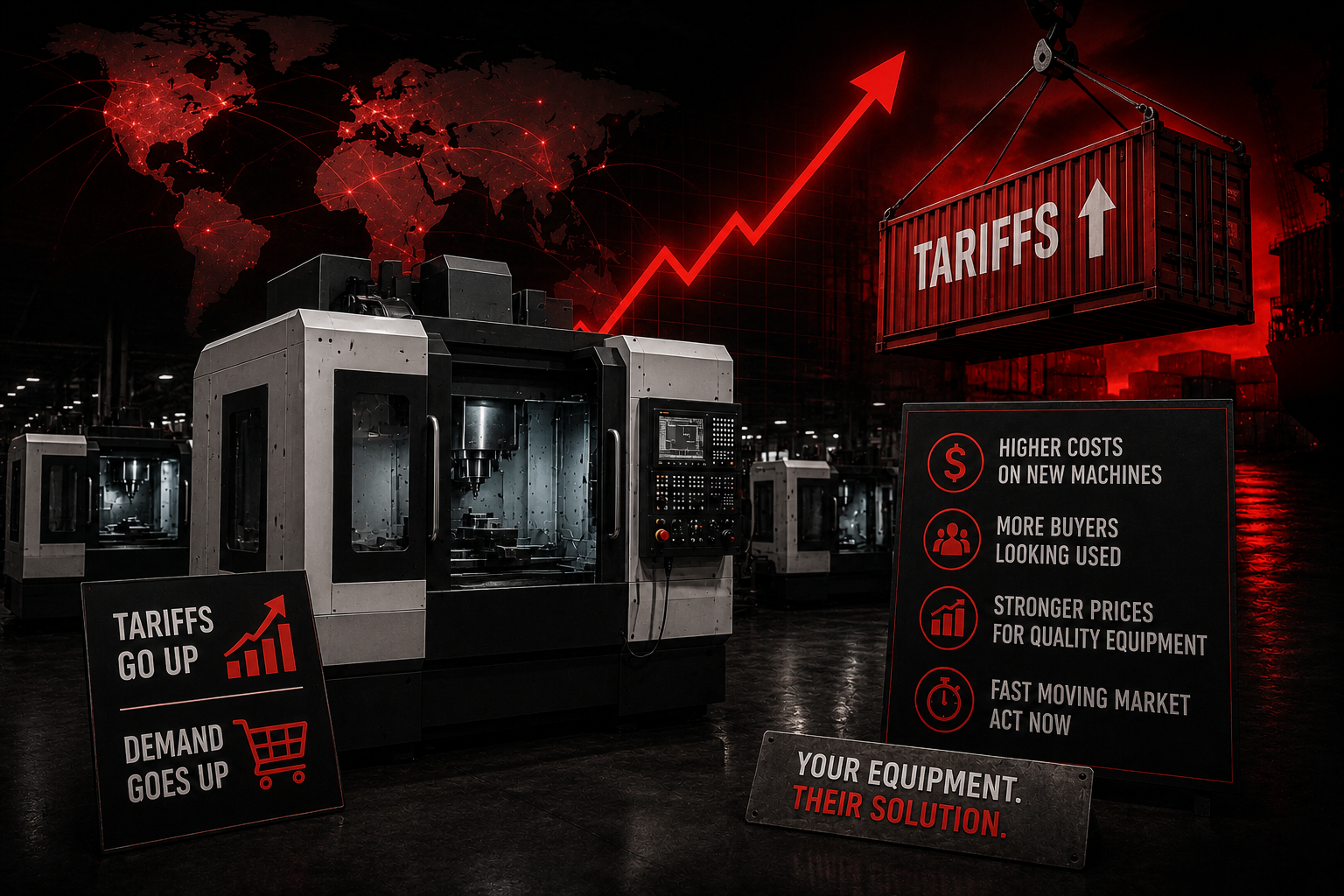
Tariffs Are Driving Up Demand for Used CNC Equipment, Here's What That Means If You're Selling
New machine prices are climbing as tariffs push more buyers toward the used market. Here's what that means for timing if you're sitting on equipment and weighing whether to sell.
A Facilities Manager’s Guide to Equipment Disposition During a Portfolio Company Wind-Down
The fund-level strategy conversation happens in board meetings. The actual equipment disposition happens on the floor, and it usually lands on you. Here's the tactical version.
Divesting a Non-Core Manufacturing Unit: What to Do With the Equipment
Does the equipment go with the unit if there's a going-concern buyer, or get separated and sold on its own? Here's how to think through the sequencing.
What Happens to the Equipment When a PE-Backed Manufacturing Company Gets Liquidated
Secured lenders, asset-based loan agreements, and fund-level pressure to close out all shape how equipment actually moves. Here's what's happening around the decision, from the ops side, not the deal side.
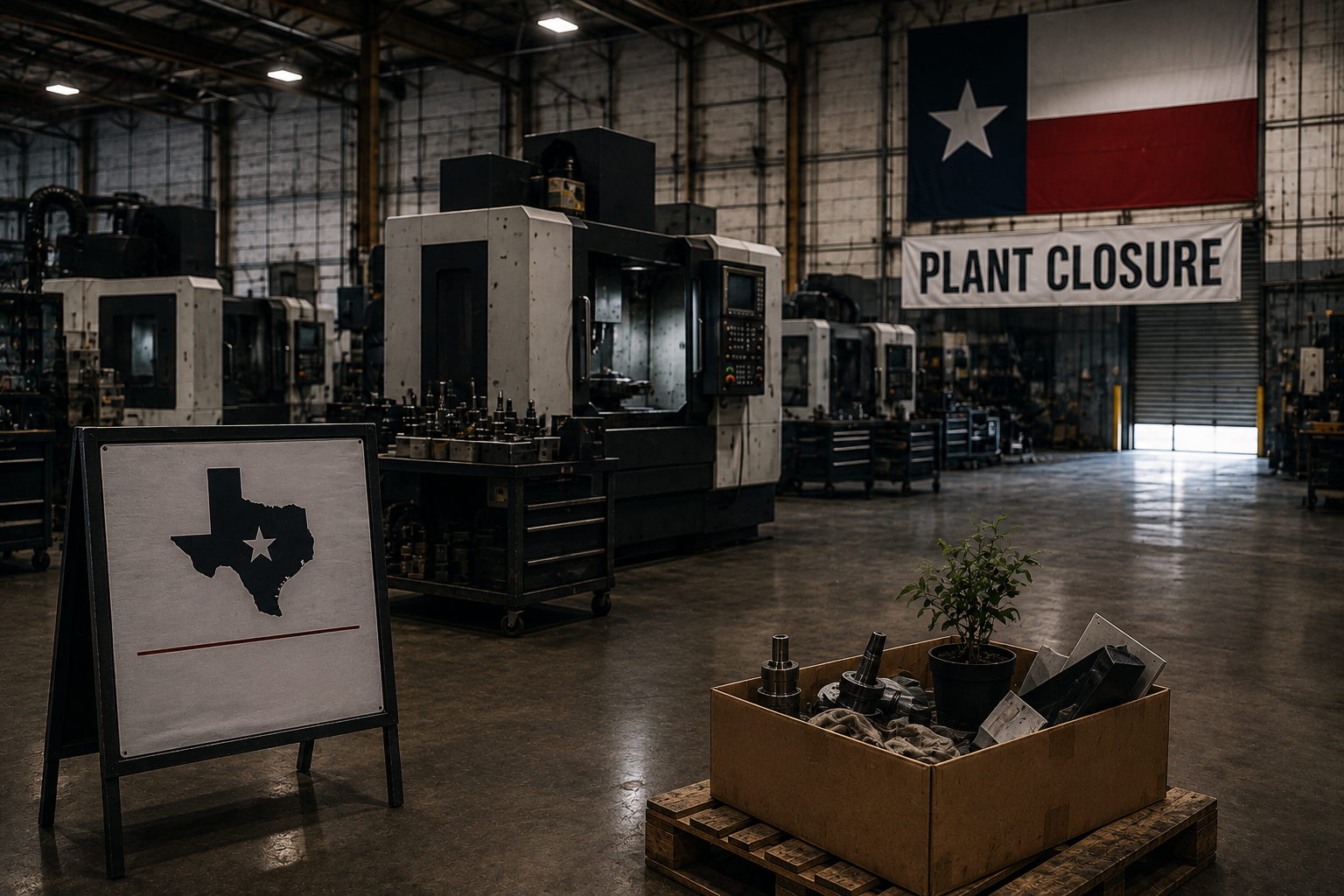
Texas Manufacturing Plant Closures: What to Know Before You Call an Auctioneer
Texas has one of the largest, most diverse manufacturing bases in the country. That changes the buyer pool, the logistics, and a few regulatory specifics compared to a smaller industrial market.
ITAR, Export Control, and Certification Considerations When Selling Aerospace Machine Tools
Most equipment in an aerospace shop is just equipment. Some of it genuinely isn't. Here's the framework for figuring out which is which, and why this deserves real professional review.
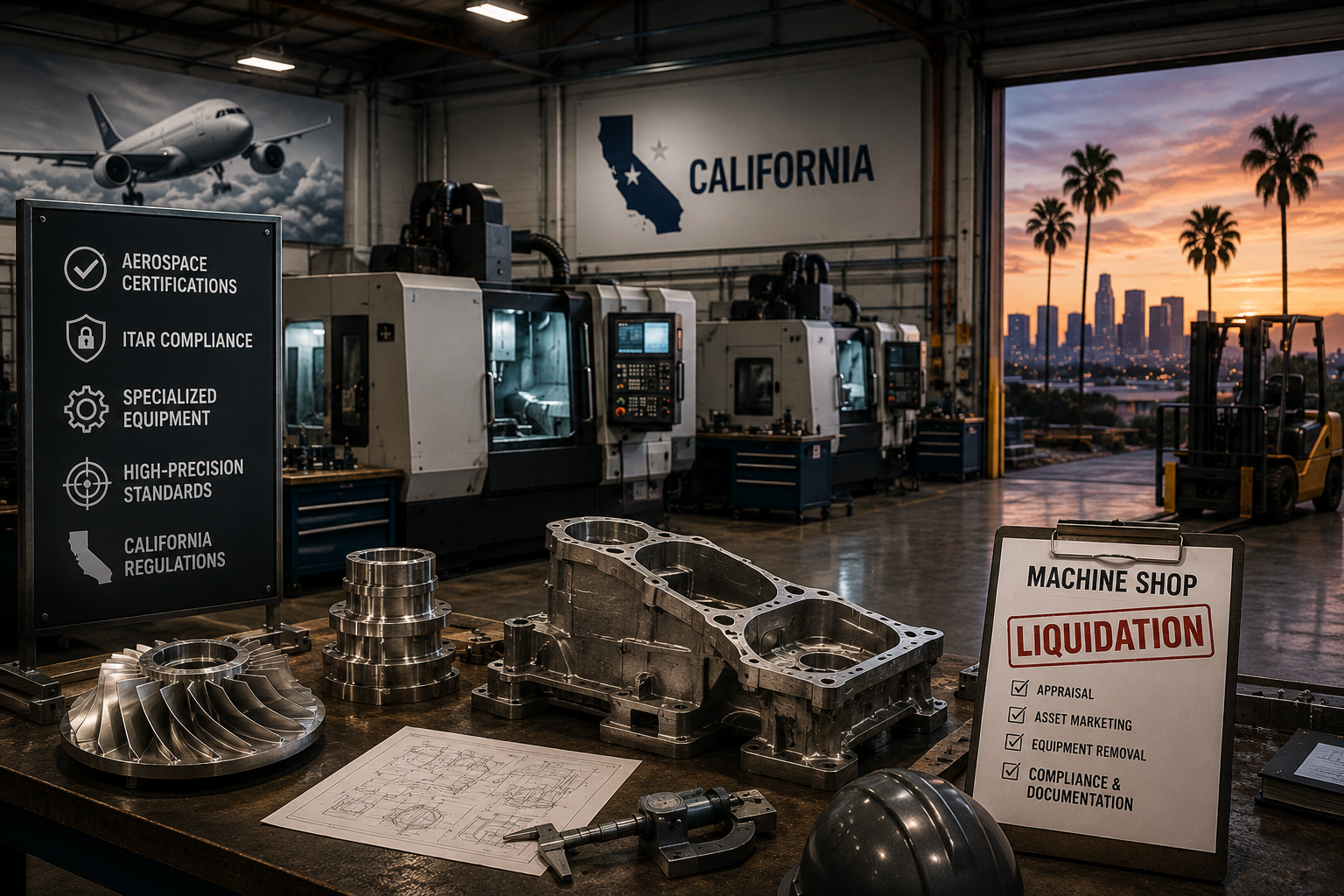
Liquidating an Aerospace Machine Shop in California: What Makes It Different
Export control, program-specific tooling, and California's regulatory layer mean an aerospace shop liquidation isn't a standard plant closure. Here's what to get right before equipment starts moving.
Diversifying vs. Downsizing: What to Do When One Customer Was Too Much of Your Business
Rebuild toward a broader customer base, or accept a smaller, leaner shop? Both are legitimate paths. Here's how to figure out which one actually fits your situation.

Right-Sizing Your Shop After a Revenue Drop: How Much Capacity to Actually Cut
Cut too little and you're still bleeding cash. Cut too much and you can't take on new work when it comes in. Here's how to find the actual number.
Which Machines to Sell First When Work Dries Up
Sell the wrong machine first and you're left with dead weight on the floor and a gap you actually needed. Here's the real logic behind sequencing it well.
You Just Lost Your Biggest Customer, What to Do With the Extra Equipment
One contract, gone, and suddenly you've got more machine time than work to fill it. Here's how to figure out what to sell, what to hold, and how not to panic either way.
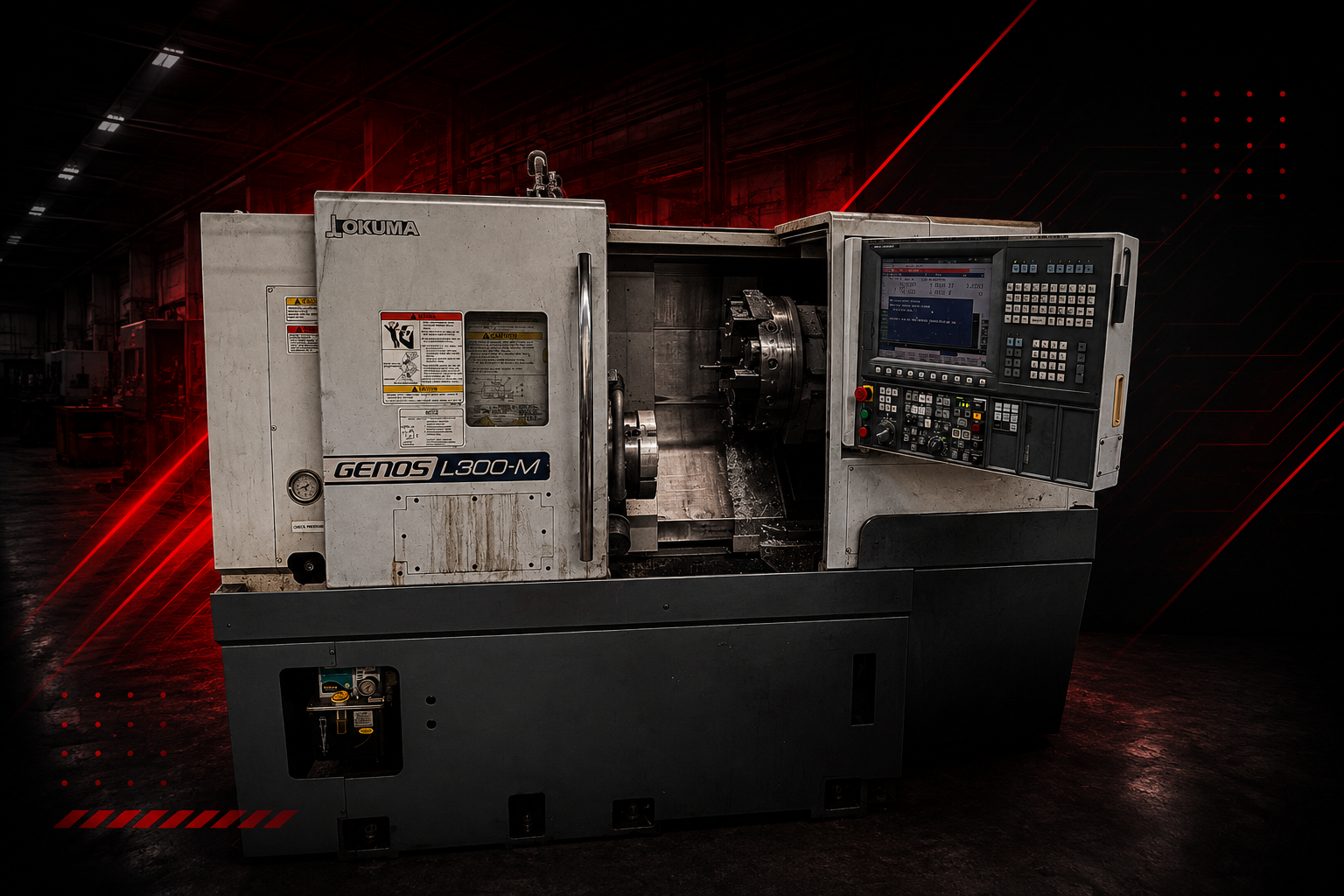
Okuma GENOS Resale Guide: What Buyers Actually Pay For
What used Okuma GENOS machines are asking, how models differ, and what moves price.
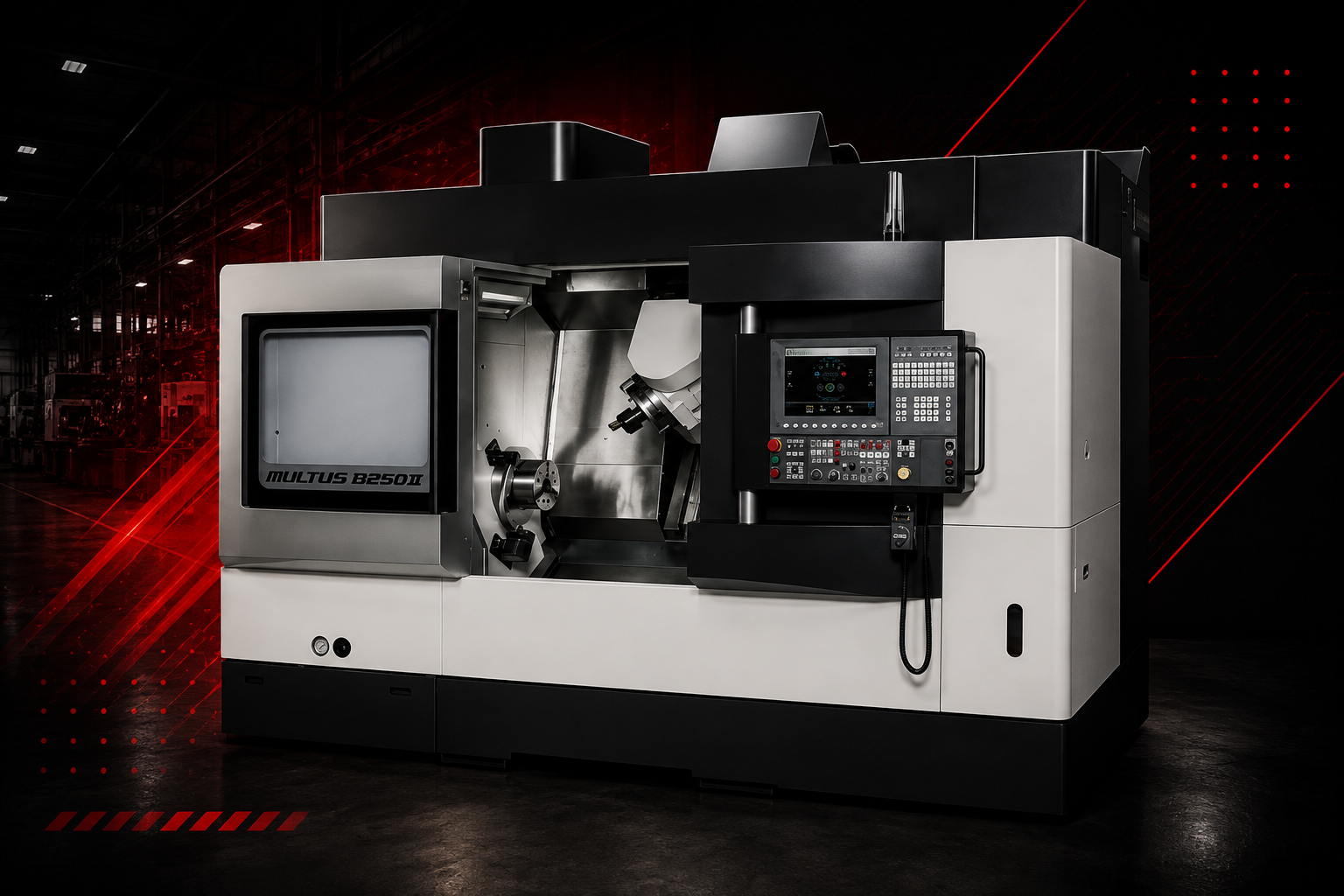
Okuma MULTUS Resale Guide: What Drives Value on Multi-Tasking Machines
How MULTUS series, size, spindles, turrets and OSP control change used multitasking machine value.
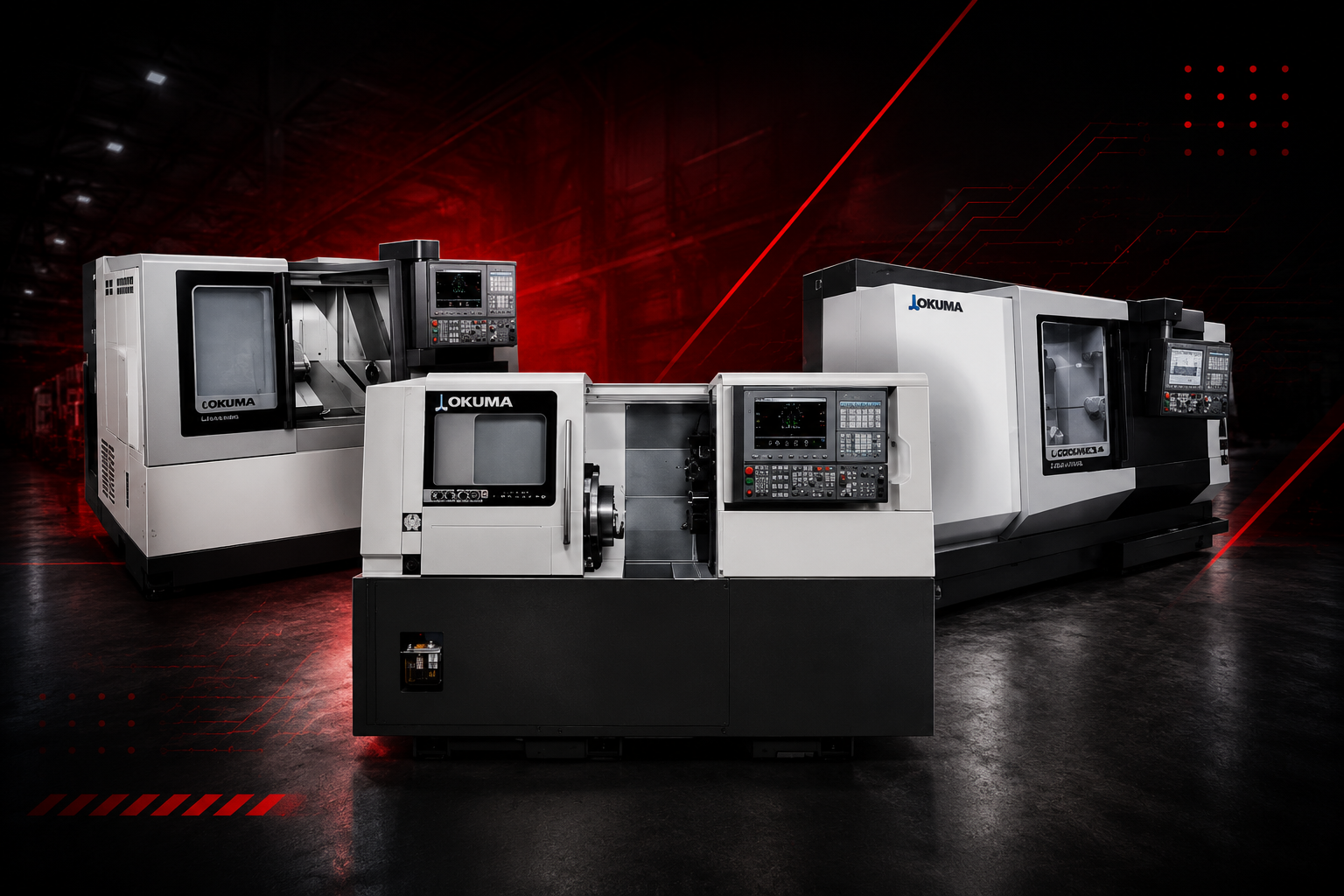
Okuma Resale Value Guide: Which Models Hold Their Value (and Which Don't)
What used Okuma machines are asking now and how OSP control generation and thermal design shape value.
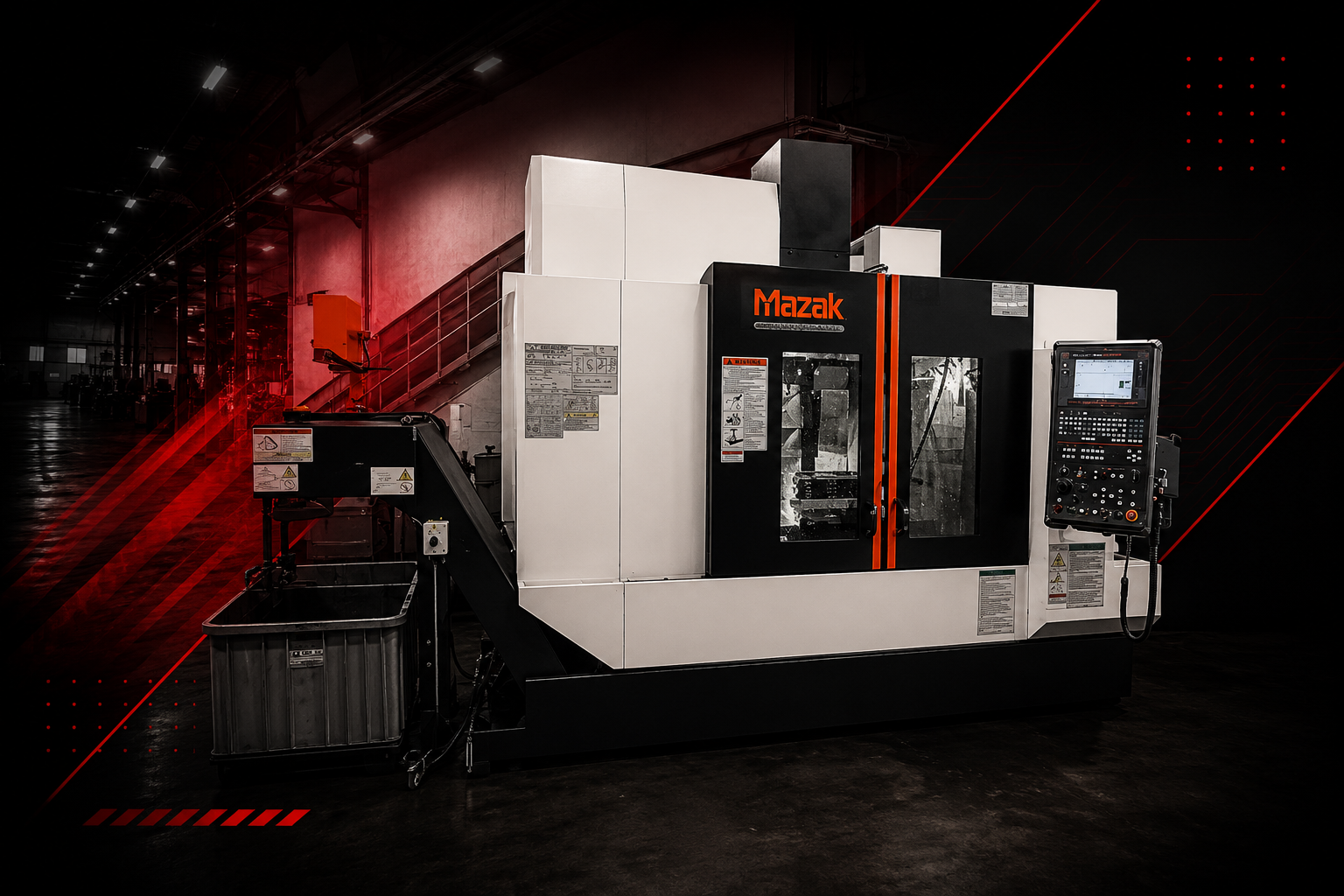
Mazak VCN Resale Guide: What Buyers Actually Pay For
What drives used Mazak VCN vertical machining center value, and how to price one against current listings.
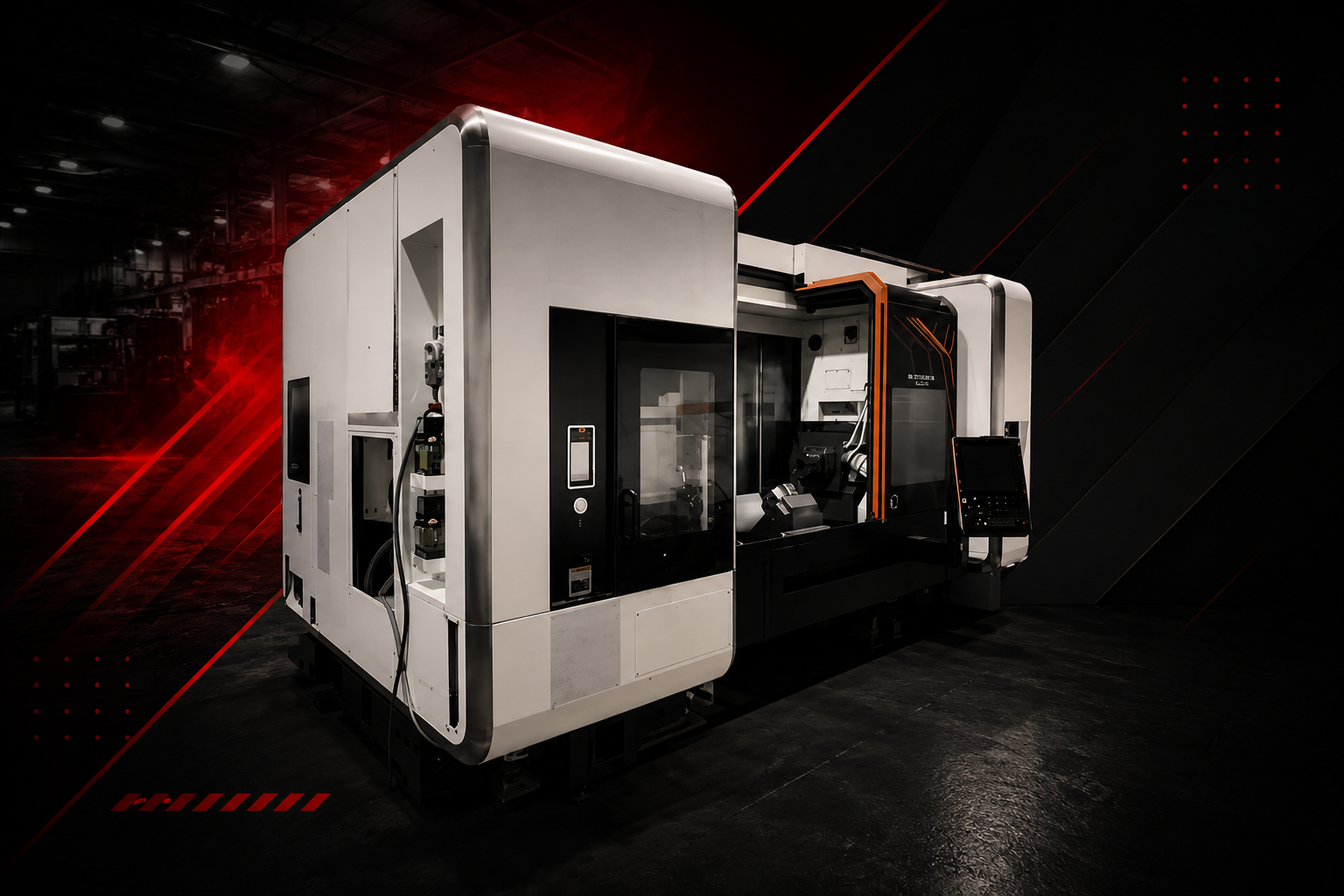
Mazak Integrex Resale Guide: What Drives Value on Multi-Tasking Machines
How INTEGREX series, chuck size, length and control change used multitasking machine value.
Mazak Resale Value Guide: Which Models Hold Their Value (and Which Don't)
What used Mazak machines are asking now, how control generation changes value, and which families sell fastest.
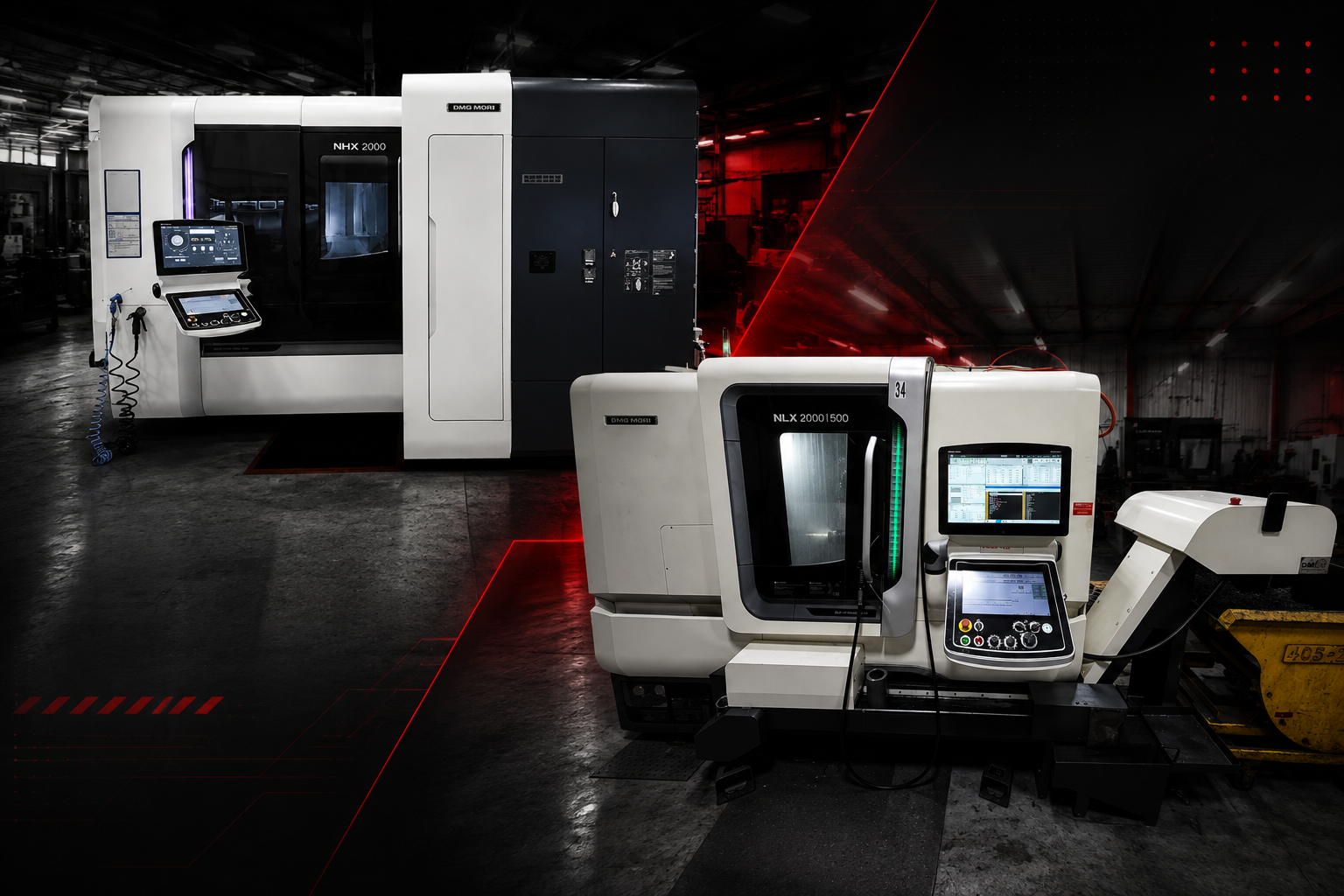
DMG Mori NLX Resale Guide: What Buyers Actually Pay For
How NLX 2500 generation, Y-axis, sub-spindle and control affect used turning center value.
DMG Mori NHX Resale Guide: 1st Gen vs. DCG, What Actually Changed
How NHX 5000 generation, hours, control and automation affect used horizontal machining center value.
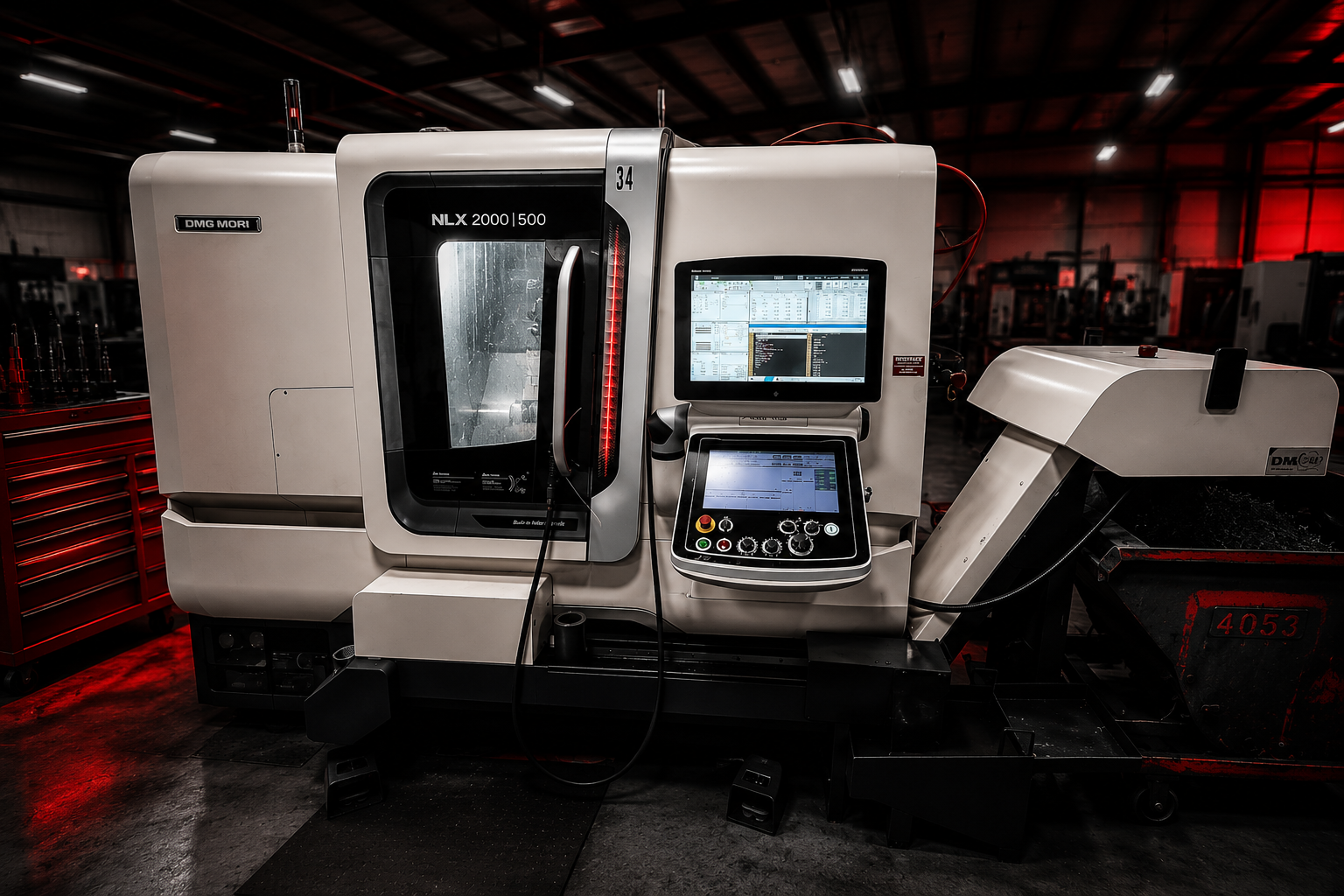
DMG Mori Resale Value Guide: Which Models Hold Their Value (and Which Don't)
What used DMG MORI machines are asking now and how generation and control affect value.
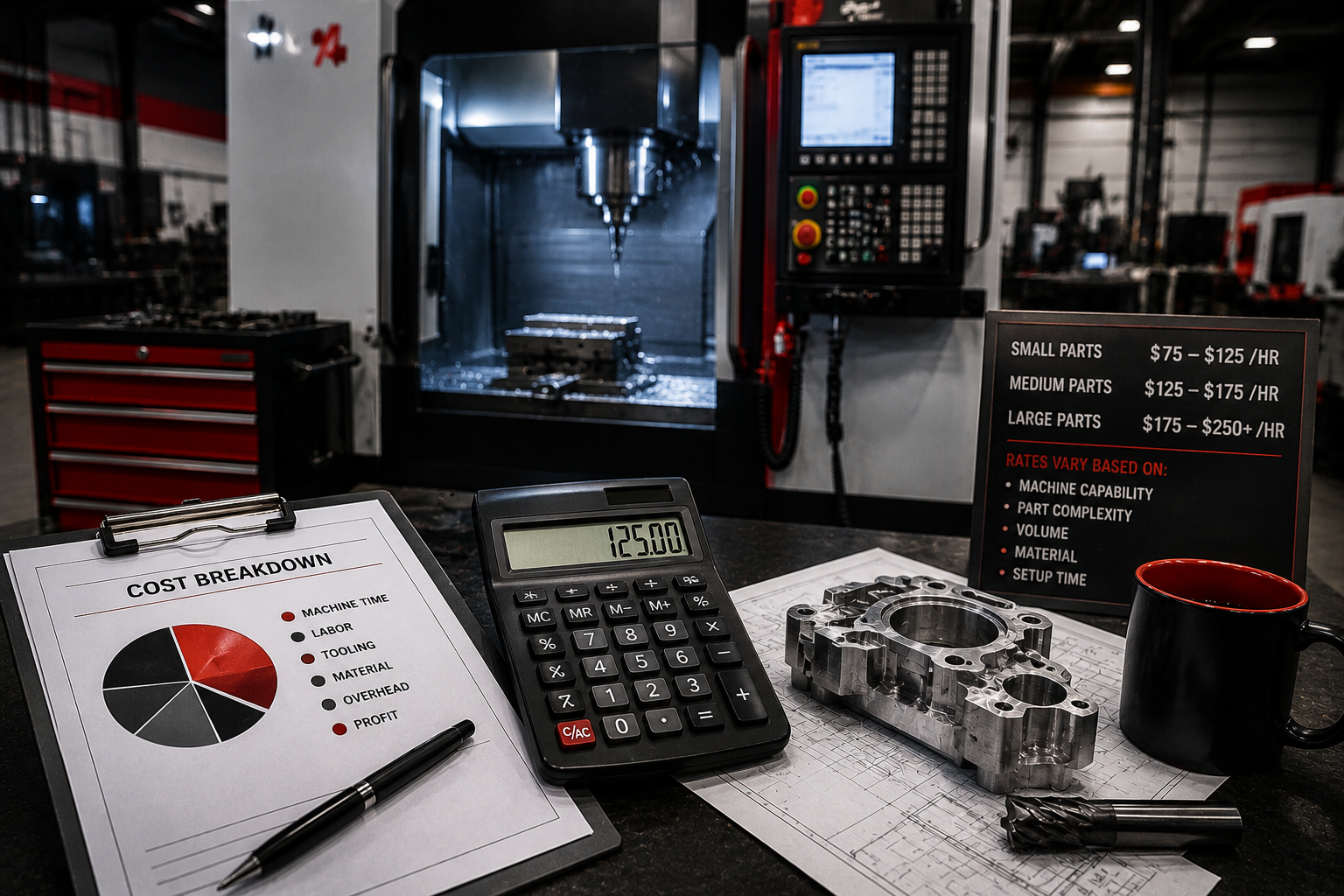
CNC Machining Cost Per Hour: What Shops Really Charge (2026)
Published U.S. shop rates for 3-axis and 5-axis CNC work, why they disagree, and how setup and cycle time decide the real price.
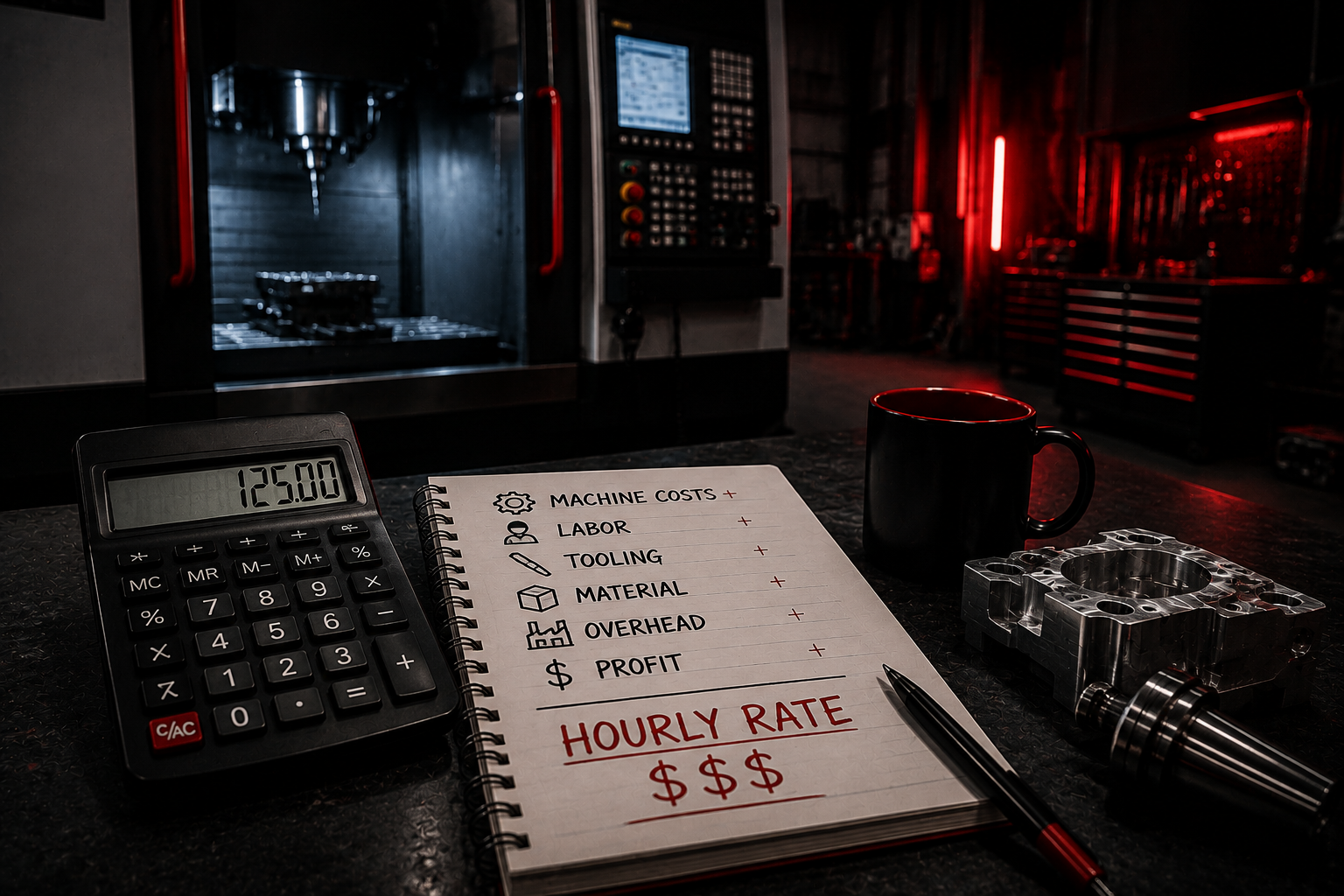
How to Set Your Machine Shop's Hourly Rate (So You Actually Turn a Profit)
Copying a competitor's rate isn't a strategy, it's a guess. Here's how to actually build your number from your own costs, machine by machine.
Post-Acquisition Redundancy: You Bought a Competitor, Now You've Got Two of Everything
The deal made sense on paper. Now you own two VMCs doing the same job and a maintenance culture that doesn't match your own. Here's how to sort out the equipment side of an acquisition.
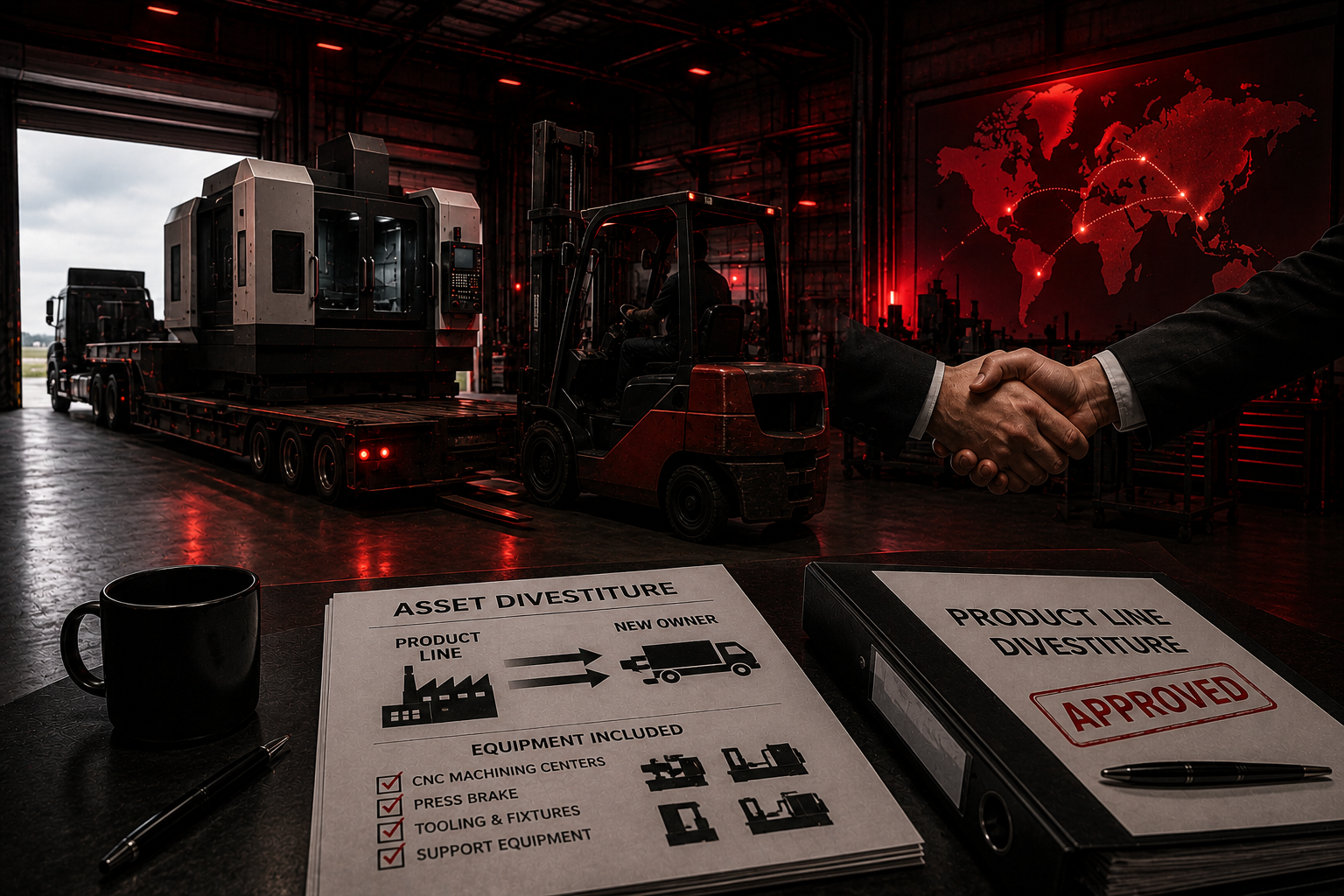
Divesting a Product Line: What Happens to the Equipment Behind It
Walking away from a product line means figuring out where the equipment behind it actually belongs, sold as a package, parted out, or kept for other work. Here's how to sort that out.
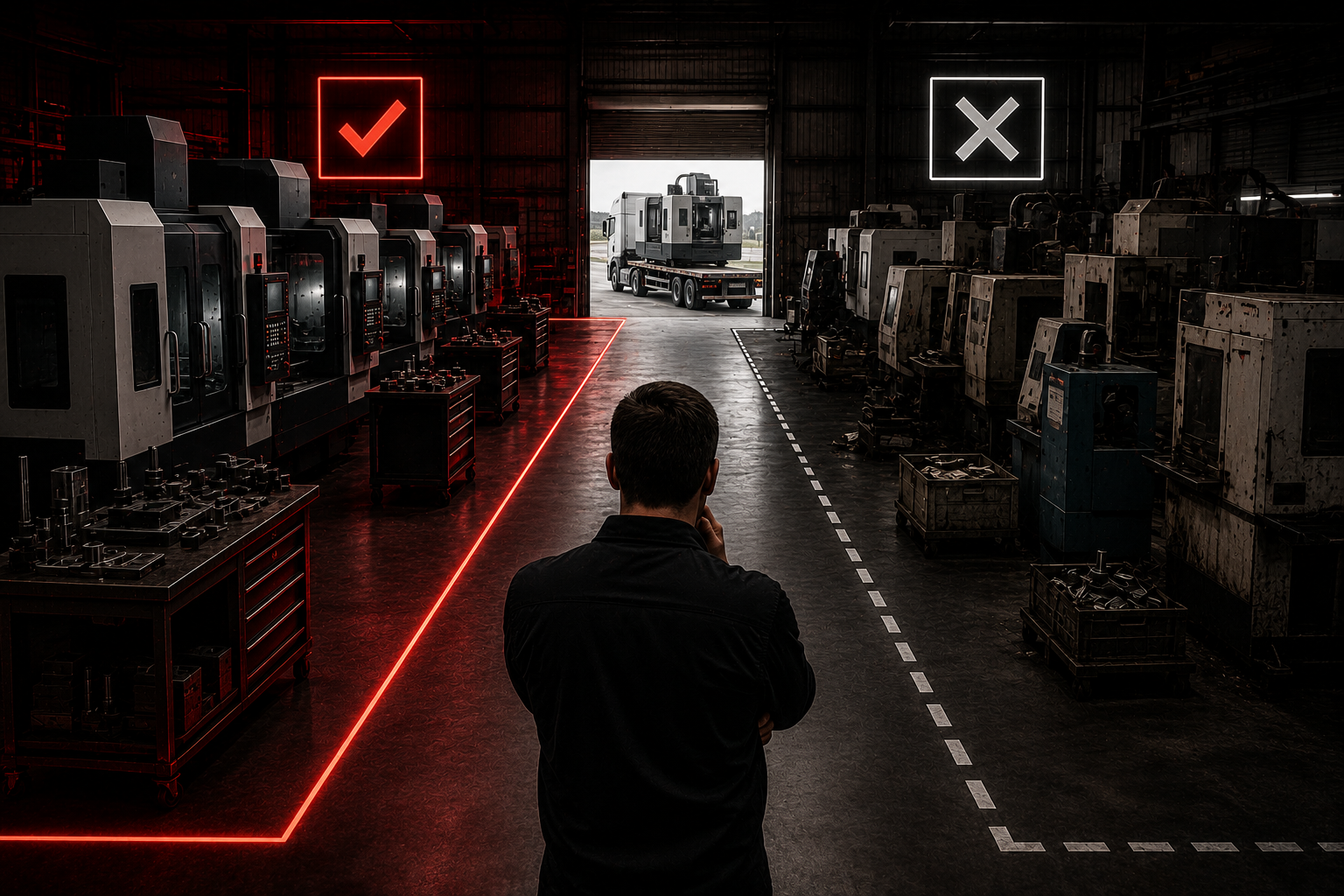
Downsizing Your Shop's Footprint: Deciding What Stays and What Goes
Getting smaller isn't just about square footage, it's deciding which machines actually earn their keep. Here's how to make that call with data instead of gut feel.
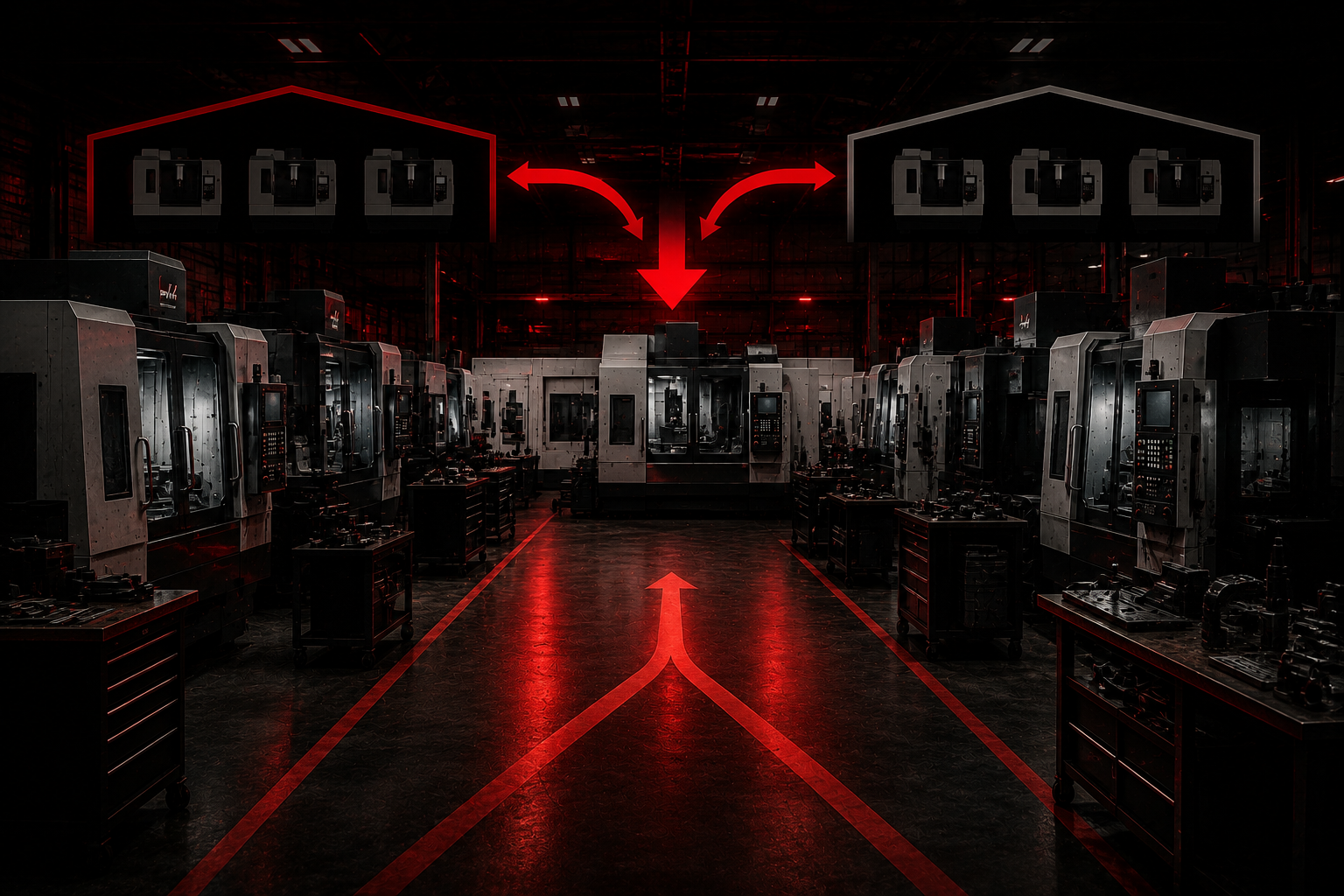
Merging Two Shops Into One Location: What to Do With Duplicate Machines
Combining two shops sounds simple on a spreadsheet, until you're standing on the floor looking at three machines doing the same job. Here's how to decide what stays.

Equipment Bought Before vs. During Marriage: Questions to Ask Your Attorney
When a machine was purchased, and how it was paid off, can change what's actually on the table in your settlement. Here's what to bring to your attorney, not what to assume on your own.
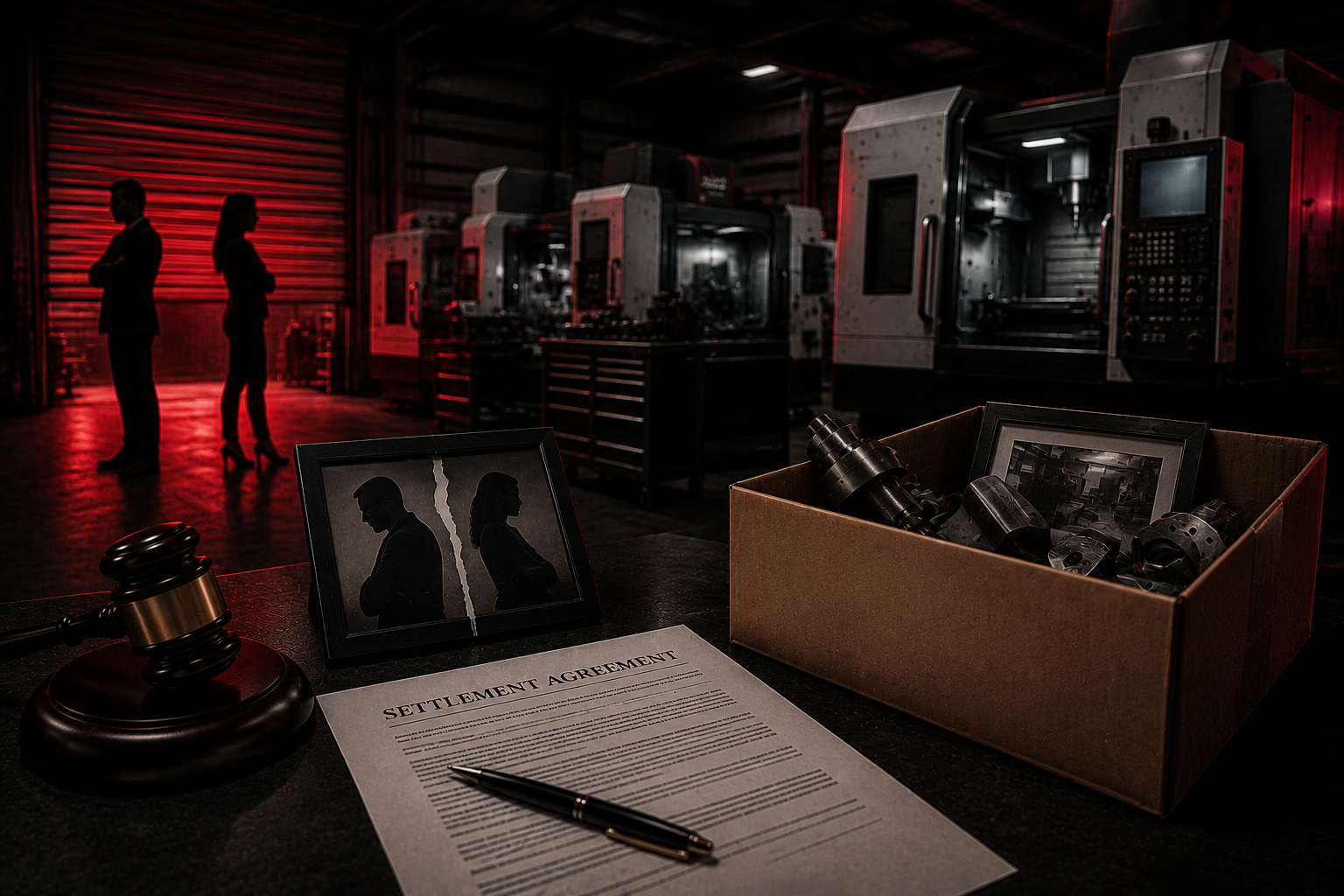
When a Divorce Settlement Forces You to Liquidate Shop Equipment
A buyout isn't always possible, and sometimes a court orders the equipment sold outright. Here's what that process actually looks like, and how to protect value even when the sale isn't optional.
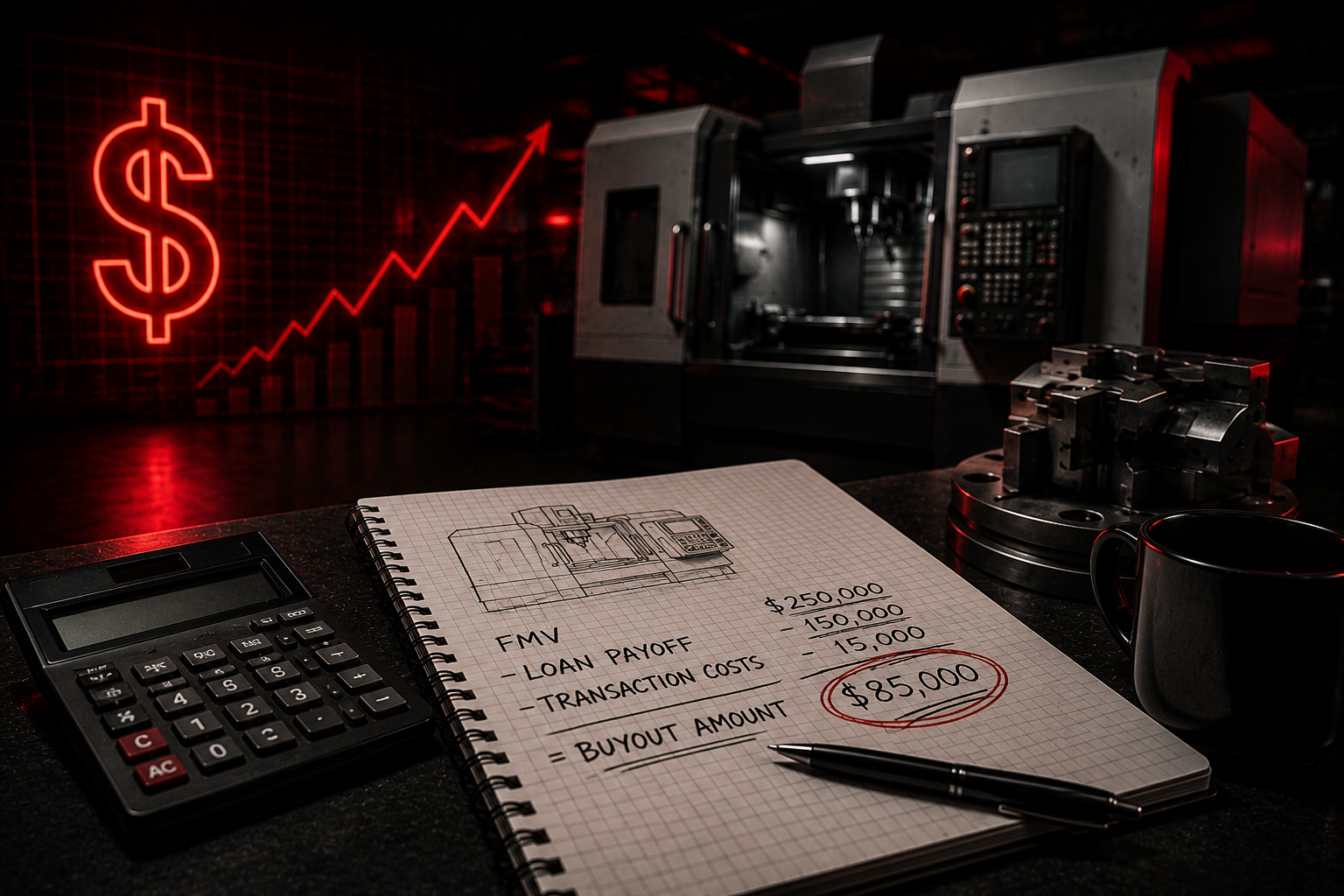
Buyout Math: Keeping the Shop and Paying Out Your Spouse’s Share
Wanting to keep the shop and being able to afford the buyout are two different things. Here's how the number actually gets built, and how owners actually pay it.
How Your Machine Shop's Equipment Gets Valued in a Divorce
The machines you rely on every day suddenly have a number attached to them, and that number affects everything else in the settlement. Here's how that number actually gets decided.

Negotiating With Your Equipment Lender Before It's Too Late
Lenders would almost always rather work something out than repossess. Here's what to actually ask for, and why timing this call matters more than anything else you do.
What Actually Happens to Your CNC Machine After Repossession
Once the truck leaves your shop, the process is out of your hands, but that doesn't mean you're powerless. Here's exactly what happens next, and where you still have leverage.
7 Warning Signs You're Headed for CNC Equipment Repossession, and What To Do About It
If you're behind on an equipment loan, the machines on your floor are collateral, not just tools. Here's how to spot trouble early enough to still have options.
Dissolving a Machine Shop Partnership? Here's What Happens to the Equipment
Dissolving a machine shop partnership and not sure what to do with the CNC equipment? Here's how valuation, buyouts, and equipment sales actually work.
Inherited Machine Shop Equipment? Here's What to Do Next
Inherited machine shop equipment and not sure what to do? Learn what your CNC machines are worth, your selling options, and how to get maximum value fast.
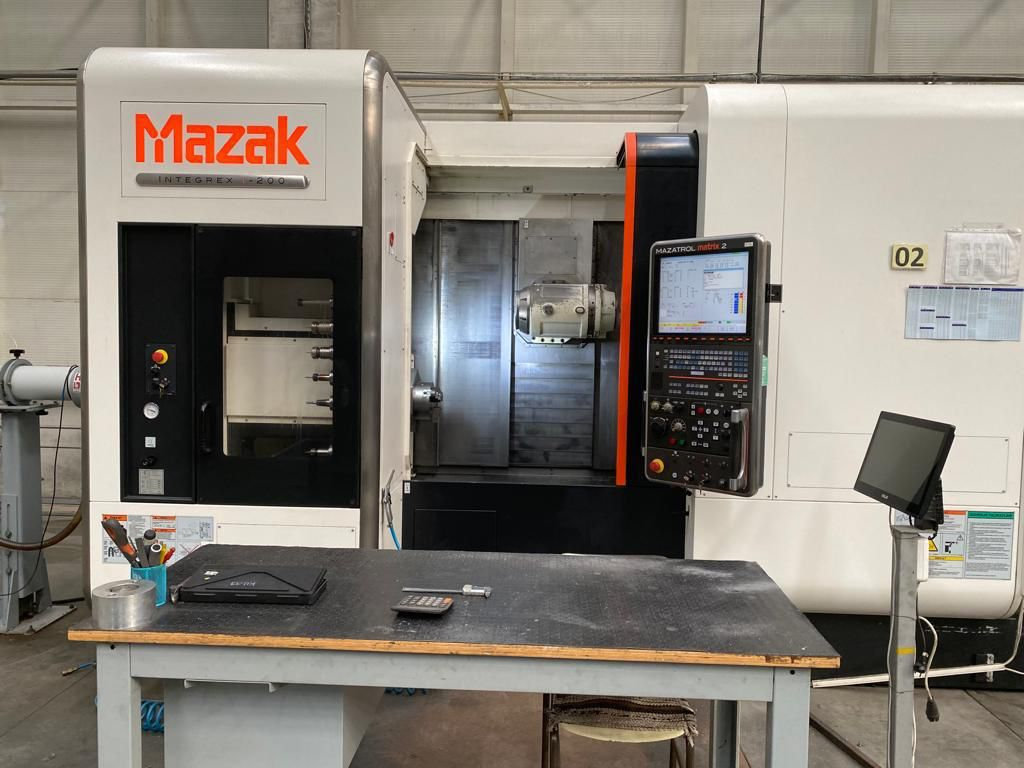
Sell Your Used Mazak CNC Machine: What It's Worth and How to Get Top Dollar (2026)
What used Mazak machines are asking now, what buyers check, and how to sell yours for the most.
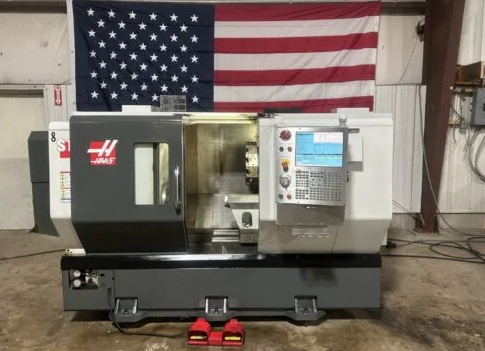
Sell Your Used Haas CNC Machine: What It's Worth and How to Get Top Dollar (2026)
What used Haas machines were last listed for, what moves the price, and how to sell yours, with figures from dealer listings we index.
Bankruptcy and Machine Shop Equipment: How to Get Maximum Value Before It's Gone
Facing bankruptcy and have machine shop equipment? Learn how to maximize value from your CNC machines before bankruptcy proceedings take control.
Retiring Machine Shop Owner? Here's How to Sell Your Equipment for Maximum Value
Retiring from your machine shop? retiring machine shop owner sell equipment.Learn how retiring machine shop owners get maximum value for CNC equipment — free valuation, no pressure.
What Happens to Machine Shop Closing Equipment?
Wondering what happens to machine shop closing equipment? Here's what shop owners actually get for their CNC machines — and how to avoid leaving money on the table.
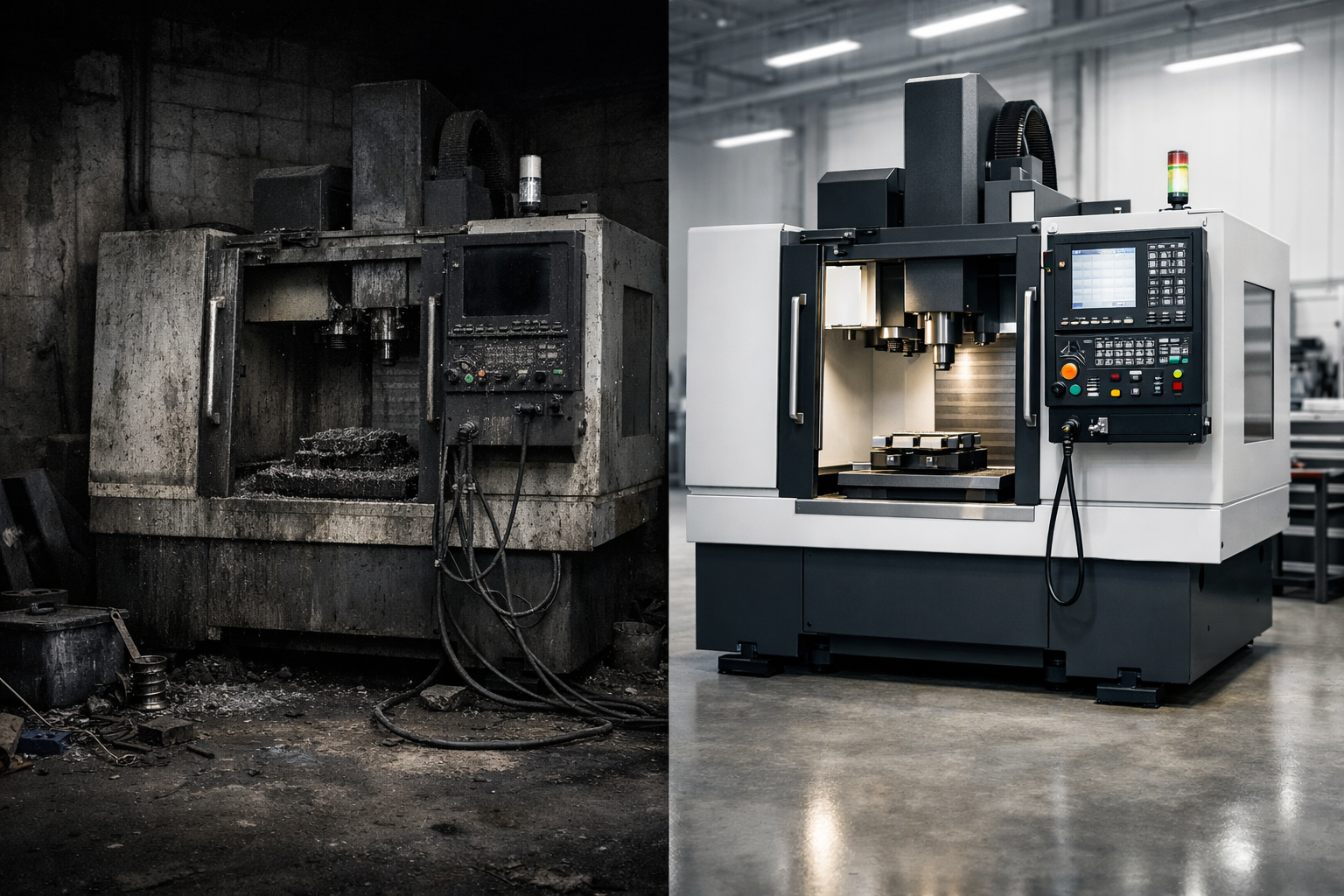
How Poor Maintenance Lowers CNC Value (Without Sellers Realizing)
How Poor Maintenance Lowers CNC Value (Without Sellers Realizing) In reality, poor maintenance lowers CNC value quietly, long before price negotiations ever begin. And most sellers don’t realize it’s happening because buyers rarely explain why they hesitate.

What Maintenance Buyers Check First on Used CNC Machines (Before Price)
When buyers evaluate used CNC machines, they don’t start with price. They start with risk. And one of the fastest ways buyers assess risk is by looking at maintenance, not through paperwork or long conversations, but through visual and operational signals that tell them how the machine was treated

Does Coolant Affect CNC Resale Value? What Buyers Notice Immediately
Does Coolant Affect CNC Resale Value? What Buyers Notice Immediately.But experienced buyers often notice something else first — coolant condition. Whether consciously or not, coolant tells buyers a story. And that story can either build confidence or quietly push them away. So yes, coolant absolute
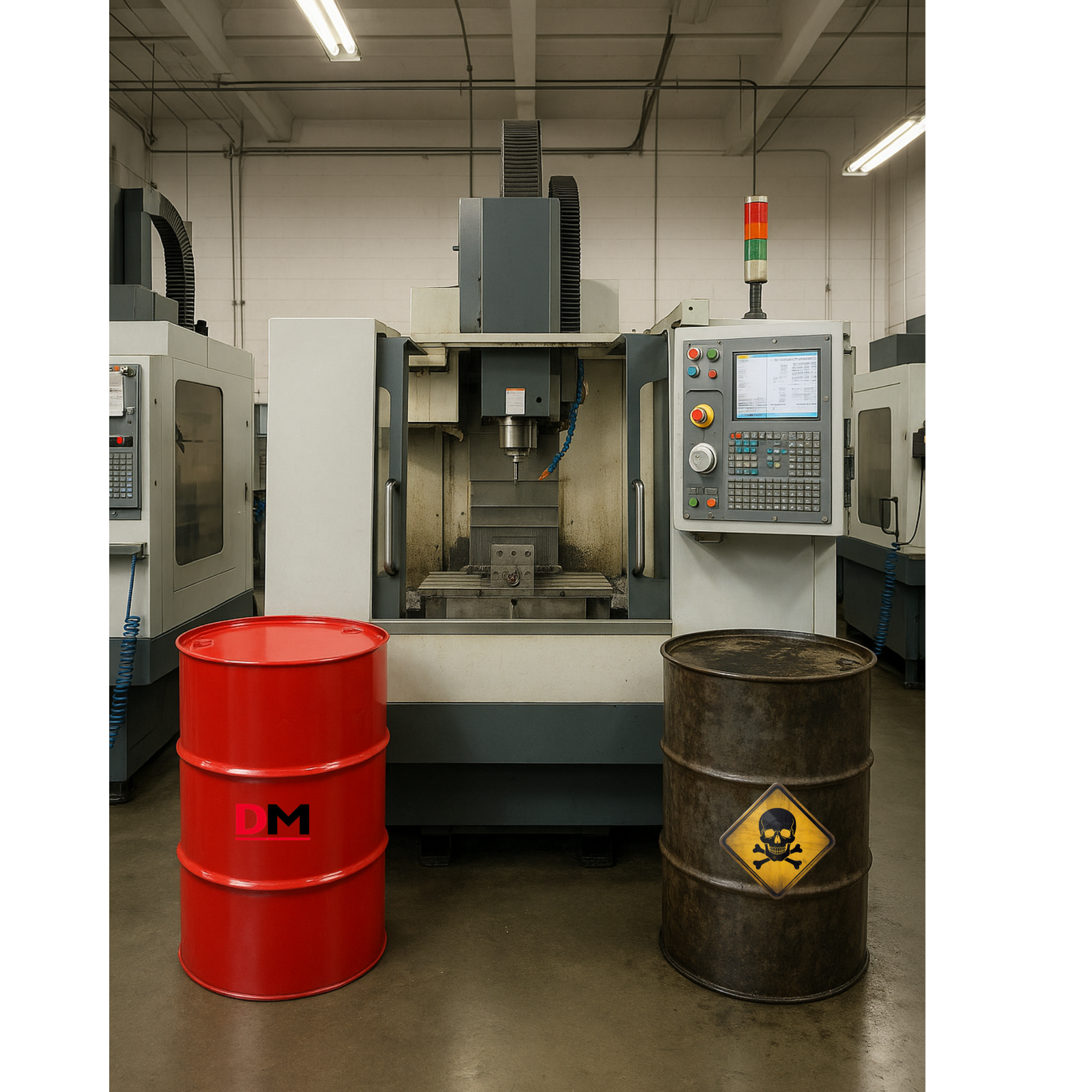
Machine Tool Coolant Problems: Why They Happen and How Shops Fix Them
Machine tool coolant problems are rarely caused by one big mistake. They build slowly, through small imbalances, inconsistent maintenance, and assumptions that coolant will “take care of itself.” By the time issues become obvious, shops are often dealing with odors, rust, poor finishes, shortened to
How to Sell Used Machine Tools Without Wasting Months or Leaving Money on the Table
A step-by-step plan for pricing, preparing and selling a used CNC machine, including when to start and which sales path to use.
What Scares Buyers Away From Used CNC Machines (And Why They Never Call)
The risks that make buyers skip a used CNC listing, with a table of fears and fixes.
How to Tell If a CNC Machine Is Overpriced (Before Months Are Wasted)
how to tell if a cnc machine is overpriced If your CNC machine is listed and getting little to no interest, the question almost every seller asks next is uncomfortable but necessary: Is my CNC machine overpriced or is the market just slow?
Why CNC Machines Don't Sell (Even When They Are Priced Fairly)
The real reasons used CNC machines sit with no inquiries, and what the price-change data in our index shows about what moves them.
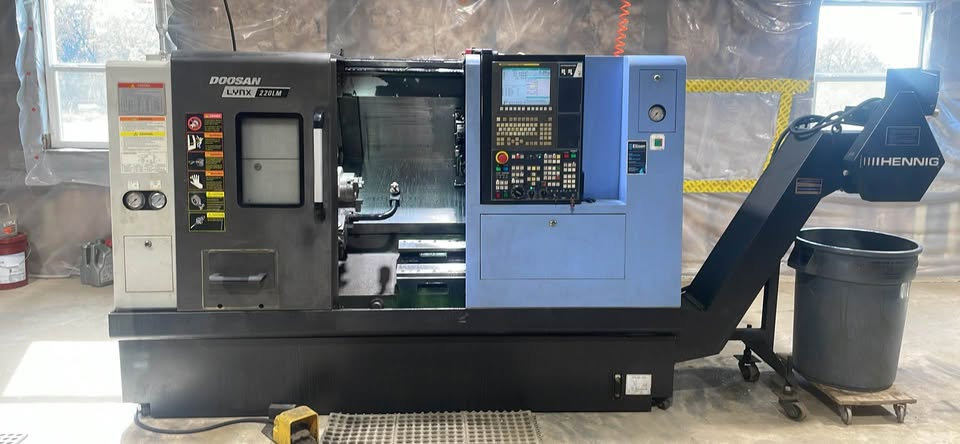
Doosan Lynx 220LMA CNC Lathe: A Versatile Used Machining Center for Precision Shops
If you’re in the market for a compact yet highly capable CNC lathe, the 2015 Doosan Lynx 220LMA is an excellent option that combines turning, live milling, and C-axis control in a single machine. Known for its reliability, versatility, and precision, this machine is ideal for job shops and productio
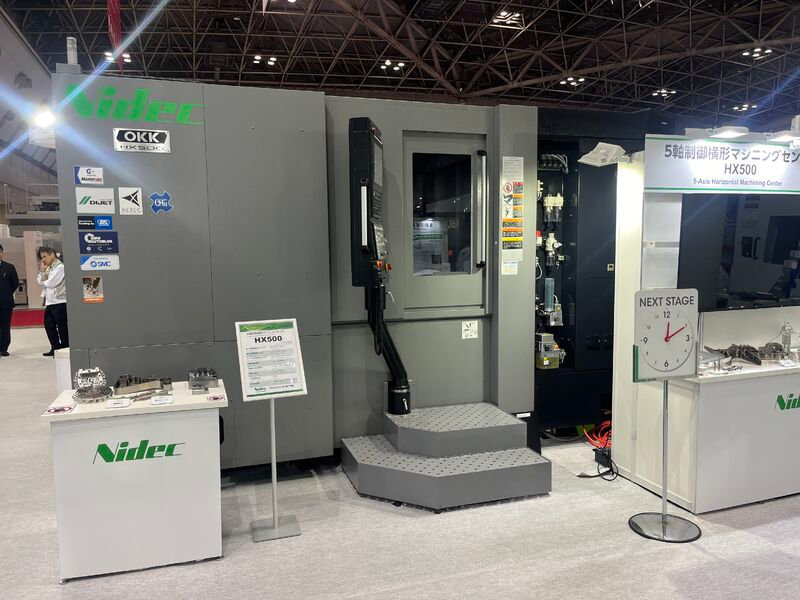
OKK HX500: OKK’s New Horizontal 5-Axis Machining Center Sets a New Standard for 2025
The OKK HX500 is the latest horizontal 5-axis machining center launched by Nidec OKK Corporation. Designed for high-precision, high-efficiency machining of complex parts, the HX500 was unveiled in 2025 and showcased at EMO Hannover 2025, one of the leading global machine tool exhibitions.
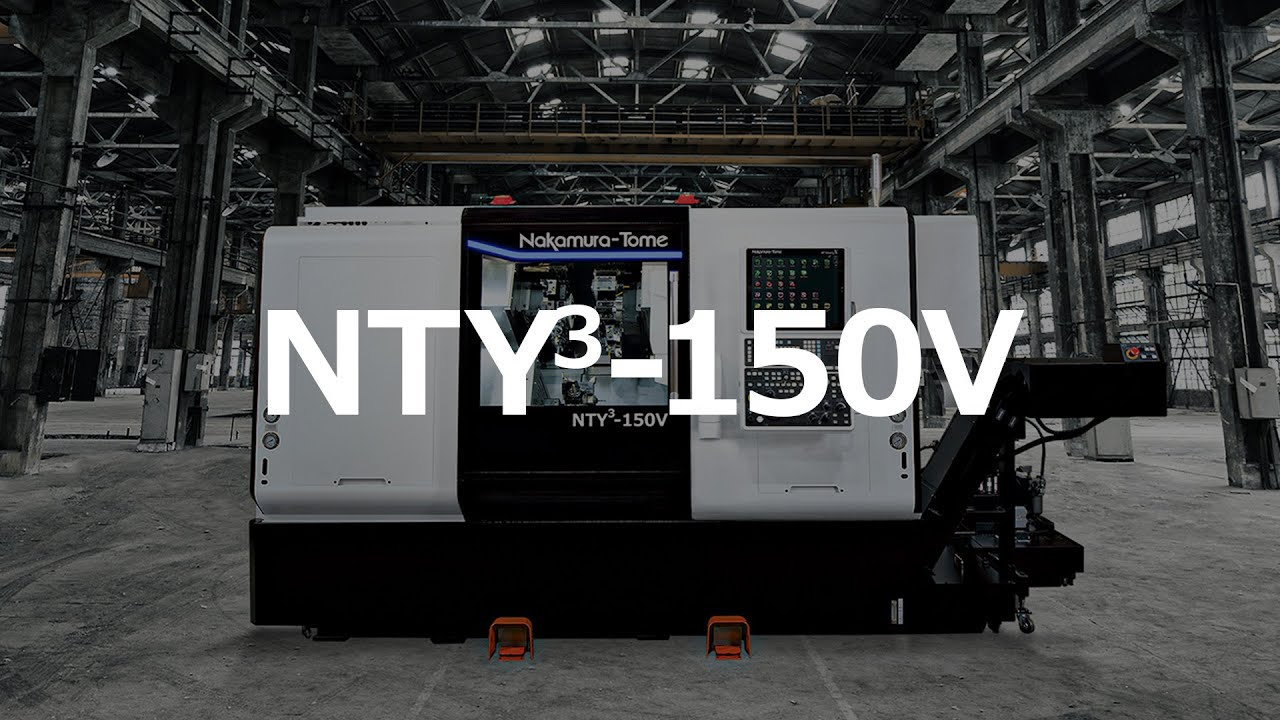
Inside the New Nakamura-Tome NTY-3-150V: The High-Speed CNC Lathe Redefining Precision Machining in 2025
Nakamura-Tome Precision Industry Co., Ltd. has officially launched its latest high-performance CNC multitasking lathe: the Nakamura-Tome NTY-3-150V. This new model represents a major step forward in speed, flexibility, and capability for precision machining and it’s already turning heads in the manu
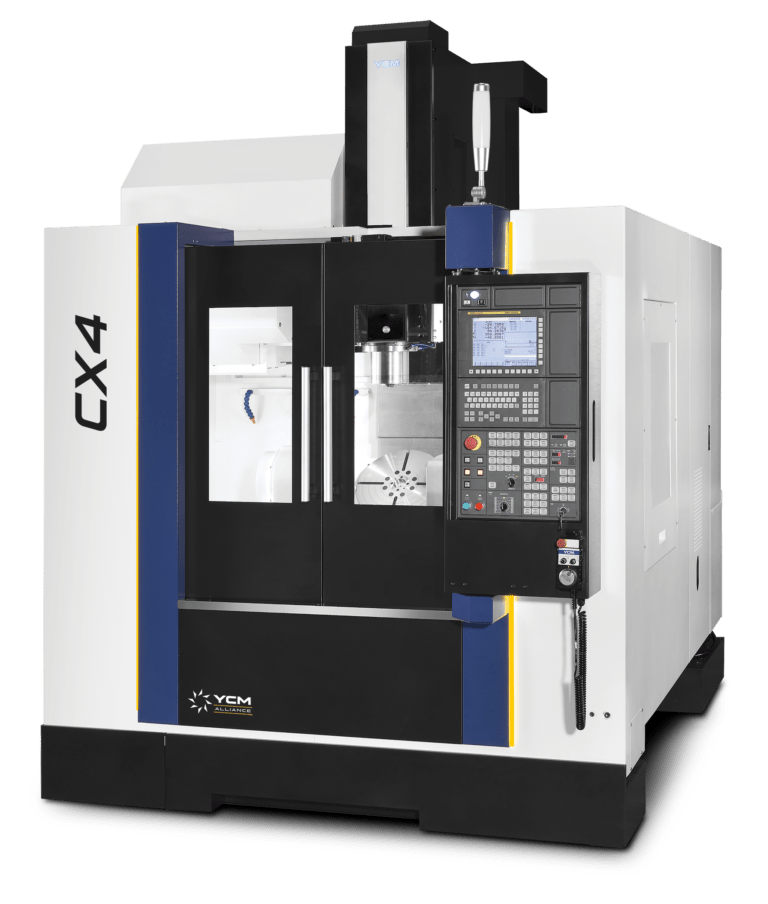
A Deep Dive into the YCM CF/CX Series 5-Axis Machines
In today’s competitive manufacturing landscape, precision, flexibility, and speed are more than advantages — they’re requirements. For shops tackling complex geometries, simultaneous 5-axis machining is no longer a luxury but a necessity. That’s where the YCM CF/CX Series 5-Axis Vertical Machining C
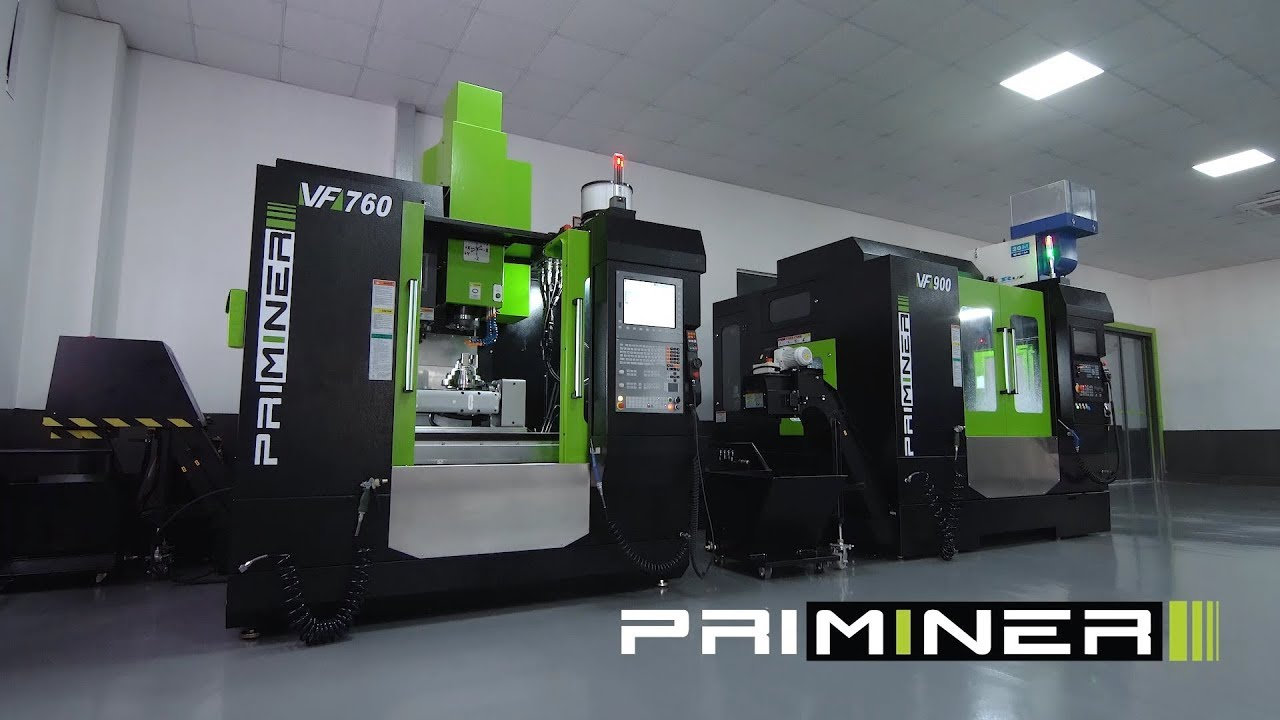
Priminer USA: Precision, Performance & Growth in American Manufacturing
Priminer USA represents a dynamic option for manufacturers seeking cutting-edge CNC machining solutions. Its blend of robust engineering, thoughtful financing, and growing exposure suggests a company that isn’t just passing through the U.S. market — but aiming to become a meaningful competitor in pr
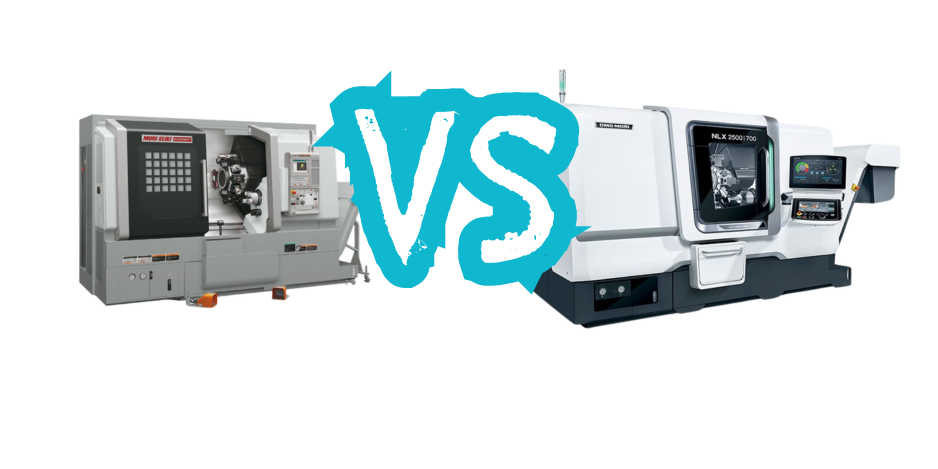
Mori Seiki vs DMG MORI Lathes: Old vs New CNC Turning Centers Compared
If you’re a machine shop owner, manufacturing engineer, or operations manager comparing Mori Seiki vs DMG MORI lathes, this guide breaks down the real-world differences between older Mori Seiki CNC lathes and newer DMG MORI turning centers—from reliability and cost to automation and long-term owners
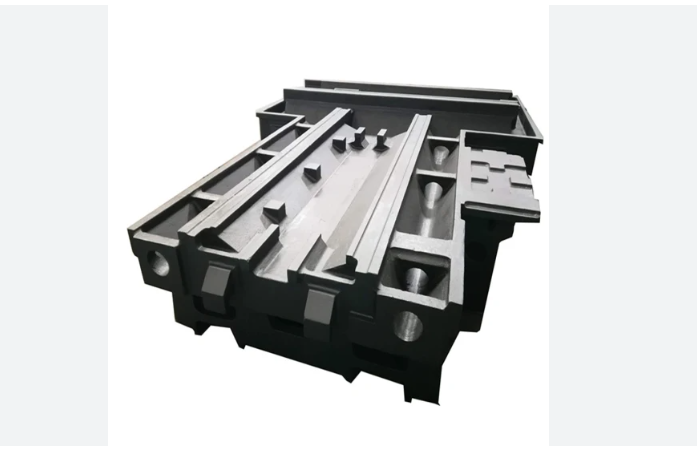
Meehanite Castings vs Mineral Cast Designs in 5-Axis Machining Centers
Meehanite Castings vs Mineral Cast Designs in 5-Axis Machining Centers. When evaluating a modern 5-axis machining center, spindle speed, rotary axis design, and control often get the spotlight. But one of the most important — and least understood — design decisions is the machine structure itself, s
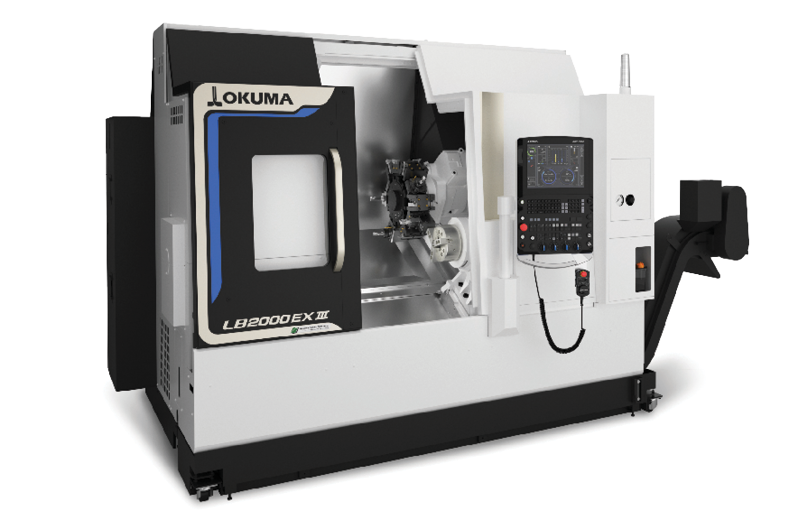
Okuma LB vs GENOS Lathes: Made-Where, Built-How, and Which Control You’re Actually Getting
Okuma LB vs GENOS lathes: where they sit in Okuma’s lineup When buyers compare Okuma LB vs GENOS lathes, the discussion usually centers on three things: where the machines are manufactured, how the core components differ, and whether there are meaningful CNC control distinctions. While both lines s
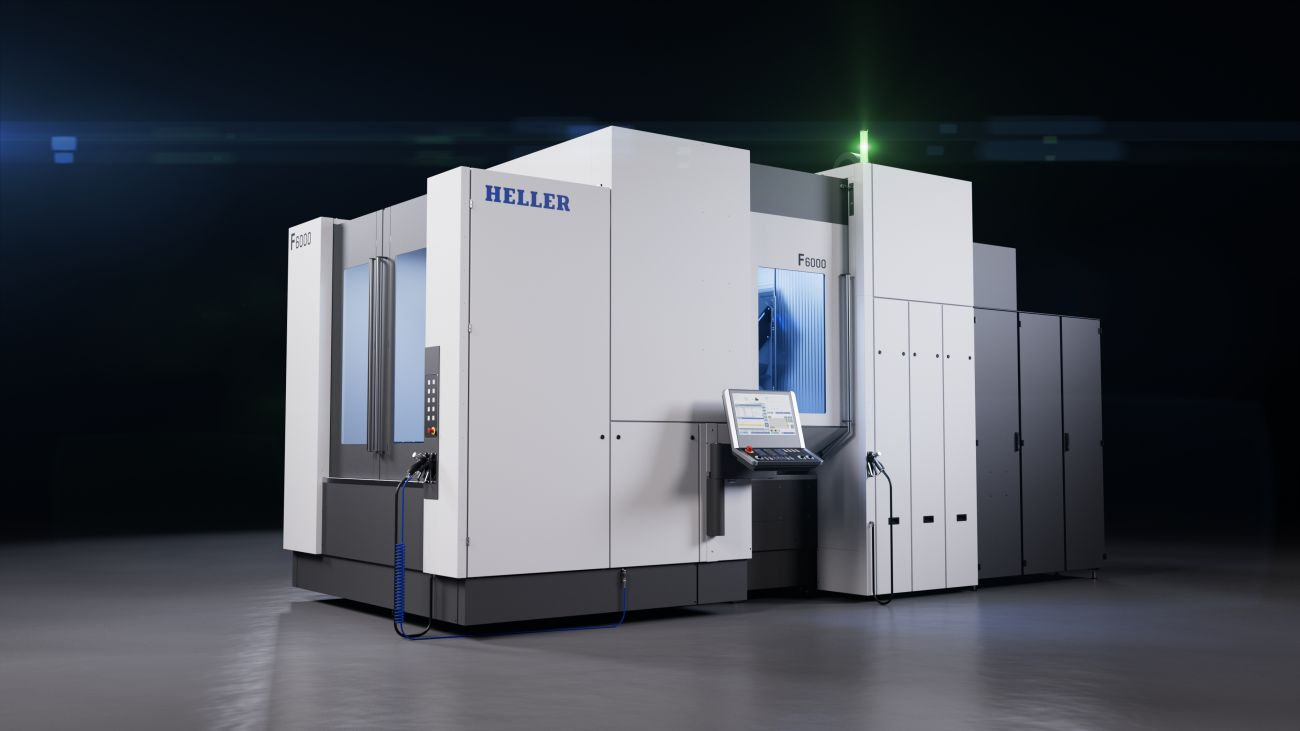
HELLER Machine Tools — Overview & Why They Matter
HELLER Machine Tools -Maschinenfabrik GmbH is a German, premium machine-tool builder best known for high-productivity horizontal and 5-axis machining centers used in automotive, aerospace, energy, and heavy industrial manufacturing. Founded in 1894 and headquartered in Nürtingen, Germany, HELLER is
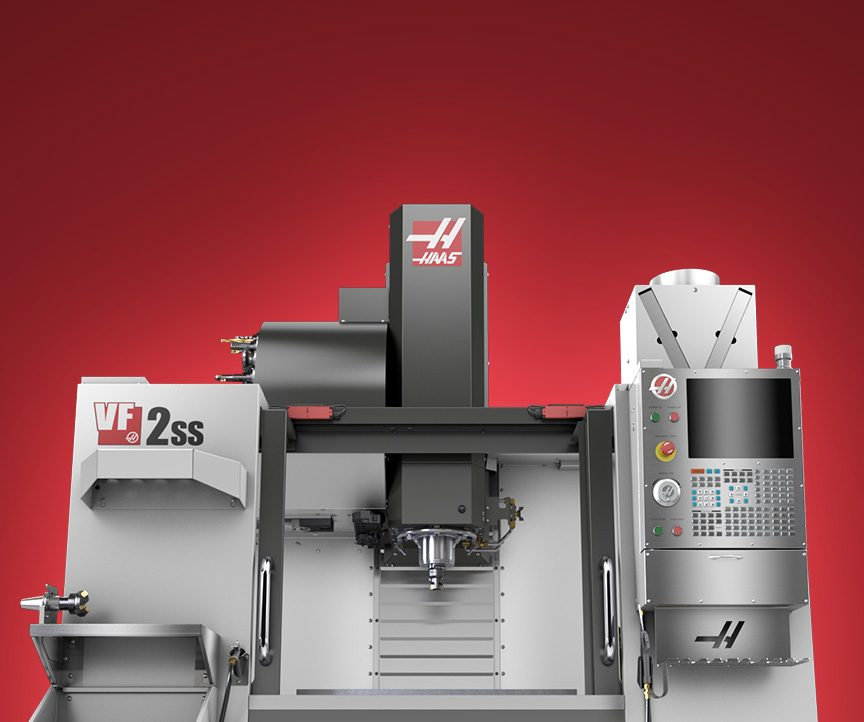
New with Haas Automation-2025 Announcements
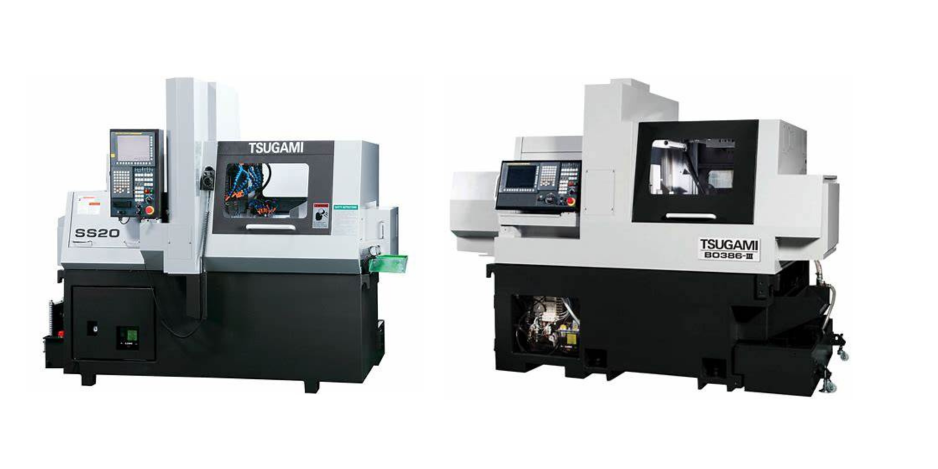
Tsugami Swiss Machines: Why They Dominate Precision CNC Turning in 2025
Buying and Selling Used CNC Machines- BY OWNER
Buying and selling used cnc machines by owner. Cutting the dealer out may save you thousands. Here is a guide when buying or selling by owner

Buying and selling Used CNC Machines- Blind Brokers
buying and selling with blind brokers is the industry standard and the greatest mistake one can make.
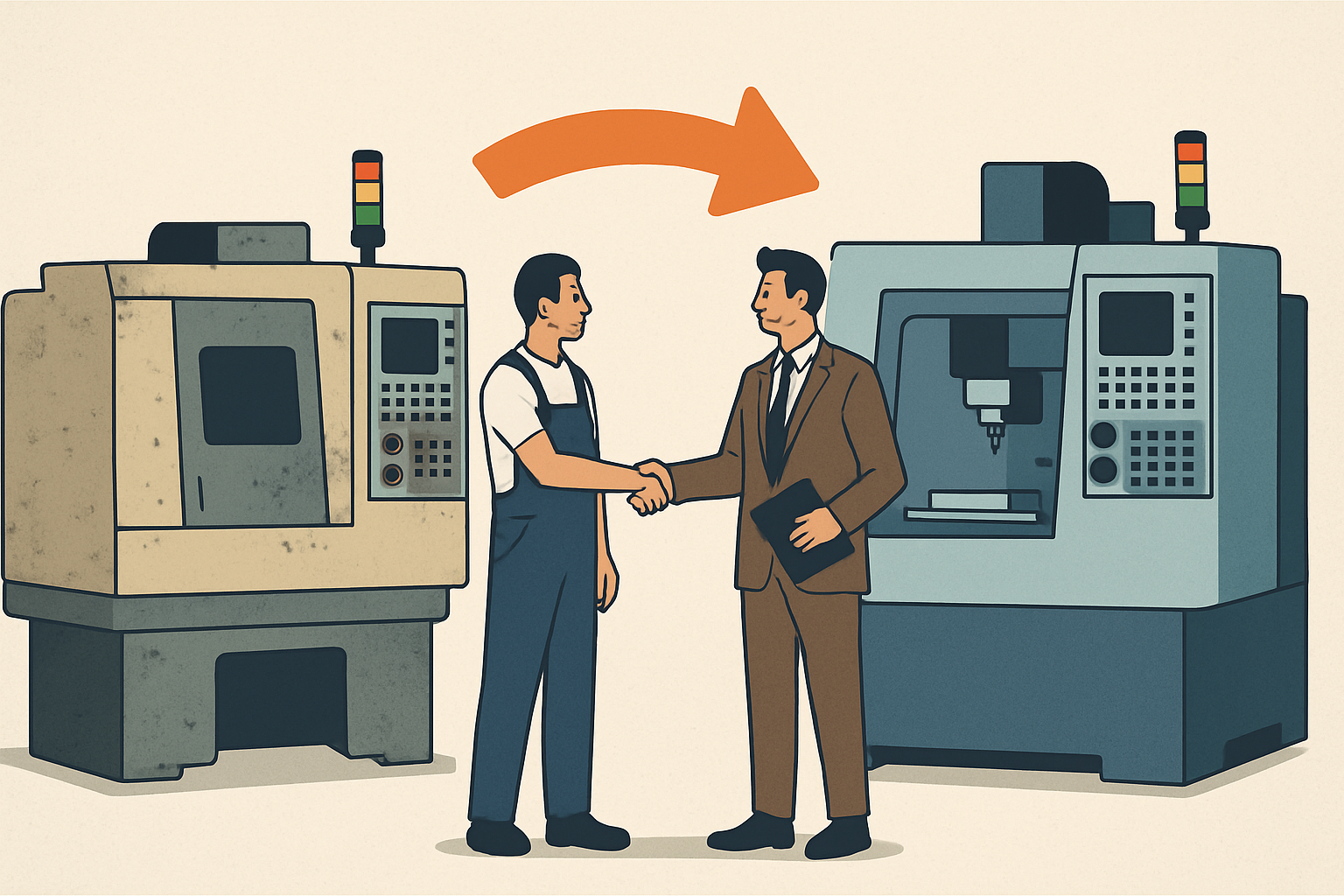
Secrets to Getting the Most for Your Used Machinery Trade-In
Secrets to Getting the Most for Your Used Machinery Trade-In When it’s time to upgrade your shop with new equipment, one of the biggest questions is what to do with your existing machine. Many shops choose to trade in their used machinery toward the purchase of new equipment—but the truth is, most b
Secrets to Selling Used CNC Machinery
Selling used CNC machinery doesn’t have to be complicated. With a well-presented machine, fair pricing, and transparent communication, you can attract serious buyers and close a smooth, profitable sale.
Machine Inspection Is the Most Important Step in Buying Used Equipment
Machine Inspection Is the Most Important Step in Buying Used Equipment